Let’s talk honestly for a minute. When you hear the word addiction, you probably feel the weight of it — whether you’ve lived it, seen it, or just tried to understand it. It’s one of those experiences that can feel impossible to describe plainly.
That’s exactly why metaphors help. They give shape to something that feels messy and overwhelming, transforming the invisible into something we can finally point to and say, Yes, that’s what it’s like.
1. Addiction is a storm that never stops circling
Meaning: Addiction feels relentless and turbulent.
Explanation: Just like a storm, it creates chaos and keeps returning if not addressed.
Examples:
- He tried to move forward, but addiction’s storm kept blowing him back.
- Her mind was a sky darkened by the storm of addiction.
2. Addiction is a shadow that follows everywhere
Meaning: It lingers and affects daily life.
Explanation: A shadow sticks close; addiction can feel just as constant.
Examples:
- No matter where he went, addiction’s shadow crept behind him.
- She felt like her shadow of addiction grew longer every day.
3. Addiction is quicksand pulling you under
Meaning: The more you struggle, the deeper it takes you.
Explanation: Quicksand represents the difficulty of escaping harmful habits.
Examples:
- He stepped in lightly, but addiction’s quicksand consumed him fast.
- The harder she fought, the deeper the quicksand of addiction dragged her.
4. Addiction is a cage with invisible bars
Meaning: You feel trapped even when the walls aren’t obvious.
Explanation: A metaphor for loss of freedom and control.
Examples:
- He lived in a cage of addiction no one else could see.
- Her choices felt limited by the invisible bars around her life.
5. Addiction is a fire that keeps demanding fuel
Meaning: It grows the more you feed it.
Explanation: The fire symbolizes consuming, escalating urges.
Examples:
- Every dose was more fuel thrown into addiction’s fire.
- She realized the fire would never stop burning until she stopped feeding it.
6. Addiction is a thief in the night
Meaning: It steals joy, time, or identity.
Explanation: Like a thief, addiction slowly takes what matters.
Examples:
- Addiction stole years from him like a silent thief.
- The thief of addiction took her peace long before she noticed.
7. Addiction is a tangled web
Meaning: It traps you in layers of complications.
Explanation: Like a spider’s web, it’s easy to enter and hard to escape.
Examples:
- He found himself stuck in addiction’s sticky web.
- Every attempt to fix things only pulled her deeper into the web.
8. Addiction is a heavy chain around the ankles
Meaning: It slows progress and makes life harder.
Explanation: Chains represent restriction and weight.
Examples:
- He tried to run, but addiction’s chains slowed every step.
- She felt the drag of addiction with every decision she made.
9. Addiction is a whisper that becomes a scream
Meaning: It starts small and grows louder over time.
Explanation: Urges intensify if not confronted early.
Examples:
- The quiet whisper of addiction became a scream he couldn’t ignore.
- She didn’t notice the whisper until it turned into a daily shout.
10. Addiction is a maze with no easy exit
Meaning: Finding a way out is confusing and difficult.
Explanation: The maze symbolizes the complicated path toward recovery.
Examples:
- Every turn he took in addiction’s maze felt wrong.
- She wandered the maze for years before finding a direction.
11. Addiction is a parasite feeding on your strength
Meaning: It drains energy and vitality.
Explanation: Like a parasite, it takes while giving nothing back.
Examples:
- Addiction fed on him until he felt hollow.
- She realized the parasite would never stop unless she removed it.
12. Addiction is a broken compass
Meaning: It misguides your decisions and direction.
Explanation: You lose your sense of purpose or path.
Examples:
- His broken compass of addiction pointed him nowhere.
- She followed addiction’s compass and became more lost each year.
13. Addiction is a speeding train you can’t jump off
Meaning: It moves too fast to escape easily.
Explanation: Once it gains momentum, stopping feels impossible.
Examples:
- He realized too late he was on addiction’s speeding train.
- She felt the ride was too fast to regain control.
14. Addiction is a magnet pulling you back
Meaning: It draws you toward old habits.
Explanation: Strong urges feel like magnetic force.
Examples:
- Even after quitting, addiction’s magnet tugged at him.
- The closer she got to healing, the stronger the pull felt.
15. Addiction is a cracked mirror
Meaning: It distorts how you see yourself.
Explanation: Self-perception becomes warped and unclear.
Examples:
- Addiction made his reflection look like a stranger in a cracked mirror.
- She could only see broken pieces of herself through addiction.
16. Addiction is a dark tunnel with no visible end
Meaning: It feels hopeless or endless.
Explanation: The tunnel represents fear and lack of light.
Examples:
- He wandered through addiction’s tunnel for years.
- She searched for a light that addiction kept hiding.
17. Addiction is a puppeteer pulling the strings
Meaning: It controls your actions.
Explanation: Like a puppet, you lose autonomy.
Examples:
- Addiction pulled his strings until he felt lifeless.
- She wanted freedom, but the puppeteer kept tugging.
18. Addiction is a sinking ship
Meaning: It drags everything down with it.
Explanation: Without intervention, everything collapses.
Examples:
- His life felt like a ship sinking under addiction’s weight.
- She tried to patch the holes, but addiction kept making more.
19. Addiction is a hungry wolf at the door
Meaning: It constantly lurks and threatens.
Explanation: The wolf represents danger and persistence.
Examples:
- Addiction’s wolf growled at him every morning.
- She felt its teeth waiting to strike when she let her guard down.
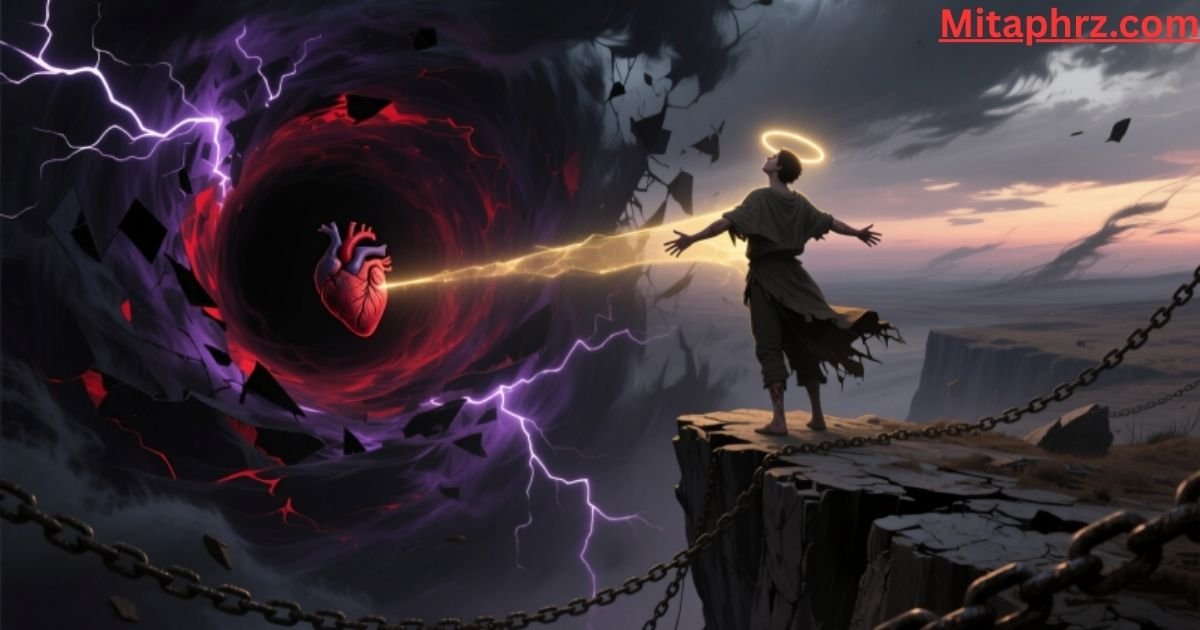
20. Addiction is a swirling vortex
Meaning: It pulls you downward with force.
Explanation: A vortex drags everything into its center.
Examples:
- He felt himself slipping into addiction’s vortex.
- She fought to escape the pull of the swirling chaos.
Conclusion:
Addiction can feel overwhelming, but understanding it through metaphors makes its effects clearer and easier to communicate. When you can name it, you can face it, and when you can face it, you can start to rise above it with clarity and strength.
Practical Exercise (10 Questions and Answers)
- Q: What does addiction as a storm represent?
A: Chaos, recurrence, and emotional turbulence. - Q: Why is addiction compared to a shadow?
A: Because it follows and affects many aspects of life. - Q: What does the quicksand metaphor highlight?
A: The difficulty of escape and the deepening pull. - Q: What do invisible bars in a cage symbolize?
A: Feeling trapped without visible restraints. - Q: Why is addiction described as fire?
A: It grows stronger when fed. - Q: What does the thief metaphor imply?
A: Addiction steals time, joy, and identity. - Q: What does a tangled web suggest?
A: Complexity and difficulty breaking free. - Q: Why is addiction likened to chains?
A: It weighs you down and slows progress. - Q: What does calling addiction a broken compass mean?
A: It misguides decision-making. - Q: What does a vortex metaphor communicate?
A: A strong downward pull that is hard to resist.