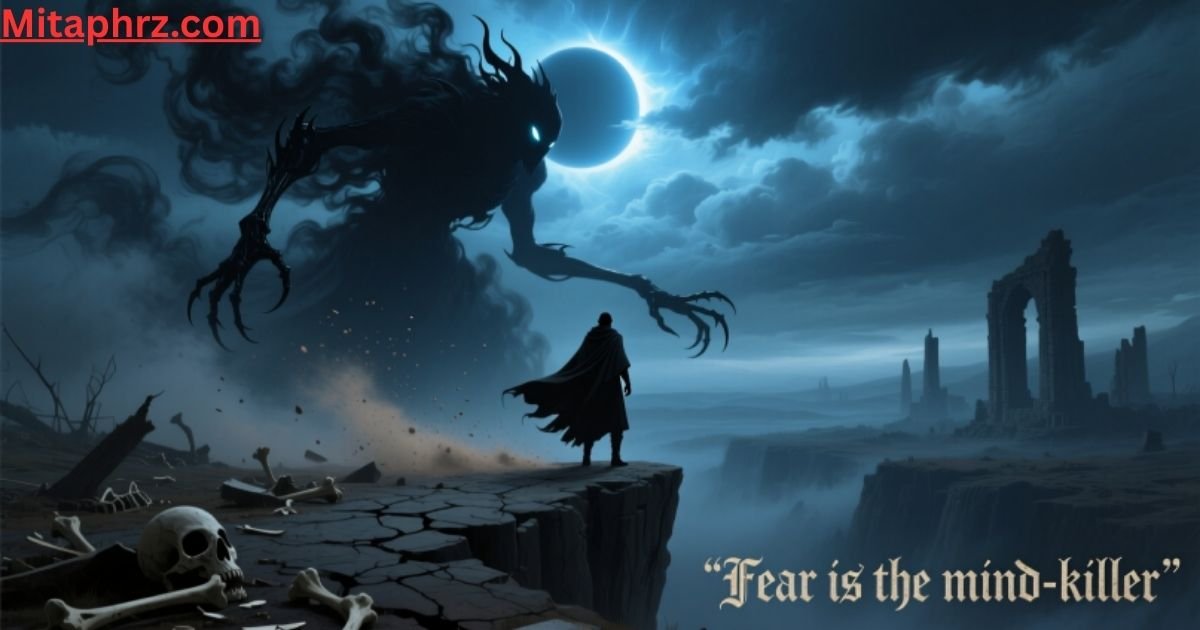
Fear is one of those emotions we try to outrun, hide from, or silence, yet it follows us everywhere. If you’re here, you probably want a clearer, more creative way to express what fear feels like. I get it. Sometimes plain words don’t cut it, and metaphors make things more vivid and real.
So let’s talk face-to-face for a second. Fear is messy, unpredictable, and loud, but the right metaphor can help you understand it, explain it, and even manage it a little better. Below, you’ll find twenty powerful metaphors for fear, each with meanings, explanations, and examples you can actually use.
1. Fear is a shadow that grows when you turn away
Meaning: Fear expands when ignored.
Explanation: Like a shadow, fear lengthens and darkens when you avoid facing its source.
Examples:
- The more I avoided the conversation, the bigger the shadow of fear became.
- Her fear stretched behind her like a long shadow she couldn’t outrun.
2. Fear is a storm waiting to break
Meaning: Fear builds pressure inside you.
Explanation: Just like a storm gathers in the sky, fear builds quietly until it erupts.
Examples:
- The fear inside him felt like a storm waiting to break.
- I could sense a storm of fear in my chest before the exam.
3. Fear is a cage made of your own thoughts
Meaning: Fear traps you mentally.
Explanation: Many fears are created and strengthened by internal beliefs.
Examples:
- My fear felt like a cage I locked myself inside.
- Her thoughts built a cage of fear around every decision.
4. Fear is a cold wind creeping under the door
Meaning: Fear sneaks in unexpectedly.
Explanation: Like a draft, fear can slip into moments you thought were safe.
Examples:
- A cold wind of fear crept into my confidence.
- His fear slipped in like a chill under the door.
5. Fear is a tight rope you walk alone
Meaning: Fear makes you feel unsteady.
Explanation: Every step feels risky, like balancing on a thin rope.
Examples:
- Making that choice felt like walking a tight rope of fear.
- She moved forward carefully, fear turning each step into a balance act.
6. Fear is a wildfire in the mind
Meaning: Fear spreads quickly.
Explanation: Once it begins, fear can jump from thought to thought uncontrollably.
Examples:
- One worry sparked a wildfire of fear in my mind.
- His fear spread like flames across every idea.
7. Fear is a locked door with your courage on the other side
Meaning: Fear separates you from confidence.
Explanation: It creates a barrier between you and the action you want to take.
Examples:
- My courage felt trapped behind a locked door of fear.
- She stood before the door of fear, unsure how to open it.
8. Fear is a thorn stuck in your heart
Meaning: Fear brings discomfort and pain.
Explanation: Like a thorn, fear pricks every emotional movement.
Examples:
- A thorn of fear pierced through his excitement.
- I felt a sharp thorn of fear when the phone rang.
9. Fear is an echo that keeps returning
Meaning: Fear repeats itself over time.
Explanation: Even after facing it, fear sometimes reappears like an echo.
Examples:
- An echo of fear followed me long after the event.
- Her fear came back like a distant echo in her mind.
10. Fear is a heavy chain dragging behind you
Meaning: Fear slows you down.
Explanation: You carry it everywhere, and it weighs on your actions.
Examples:
- Fear dragged behind me like a heavy chain.
- He felt the chain of fear pulling at his every move.
11. Fear is a fog that blurs your decisions
Meaning: Fear makes things unclear.
Explanation: It clouds logic and judgment.
Examples:
- A fog of fear made the choice hard to see.
- Her fear blurred the future like thick fog.
12. Fear is a ticking clock inside your chest
Meaning: Fear makes you anxious about time and outcomes.
Explanation: Like a countdown, fear creates pressure as moments pass.
Examples:
- I felt a ticking clock of fear before presenting.
- His chest thumped like a timer of fear.
13. Fear is a silent thief of confidence
Meaning: Fear takes away security quietly.
Explanation: It steals certainty slowly without you noticing.
Examples:
- Fear stole my confidence like a silent thief.
- A thief of fear kept taking her courage piece by piece.
14. Fear is a mountain standing in your path
Meaning: Fear feels overwhelming.
Explanation: It seems too big to overcome or climb.
Examples:
- That decision looked like a mountain of fear.
- She faced a towering mountain of fear before her interview.
15. Fear is a snake coiled inside your stomach
Meaning: Fear creates tension and discomfort.
Explanation: That tight, twisting sensation resembles something coiled and anxious.
Examples:
- A snake of fear curled inside my stomach.
- His fear tightened like a coil deep within.
16. Fear is a dark room with no exit
Meaning: Fear creates a sense of hopelessness.
Explanation: It makes you feel trapped with no way out.
Examples:
- My fear felt like being stuck in a dark room.
- Her fear walled her in like a room with no door.
17. Fear is a wave that knocks you off your feet
Meaning: Fear can be overwhelming and sudden.
Explanation: Like a wave, fear can crash over you without warning.
Examples:
- A wave of fear swept over me.
- His fear crashed into him like rough surf.
18. Fear is a whisper that becomes a shout
Meaning: Fear grows louder over time.
Explanation: It starts small and gets harder to ignore.
Examples:
- A whisper of fear turned into a shout during the meeting.
- Her fear grew louder until she couldn’t avoid it.
19. Fear is a knot tangled in your chest
Meaning: Fear creates emotional and physical tightness.
Explanation: That pressure feels like something tied and twisted.
Examples:
- A tight knot of fear sat in my chest.
- He untangled his fear slowly with deep breaths.
20. Fear is a mirror showing your doubts
Meaning: Fear exposes what you’re insecure about.
Explanation: It reflects the thoughts you try to hide from yourself.
Examples:
- Fear held up a mirror to my deepest doubts.
- Her fear reflected what she secretly worried about.
Conclusion
Fear is powerful, but understanding it through metaphors makes it easier to face and manage. Each metaphor highlights a different layer of fear, giving you clearer language to work with. Use these images to understand your reactions, express your emotions, and take steps toward a more fearless version of yourself.
Practical Exercise: 10 Questions With Answers
- What does fear as a shadow suggest?
It grows when ignored. - What does the storm metaphor imply?
Fear builds until it bursts. - What does fear as a cage represent?
Self-created mental limitations. - What does the cold wind metaphor show?
Fear slips in unexpectedly. - What does the tight rope metaphor highlight?
The risk and instability fear causes. - What does fear as wildfire mean?
Fear spreads rapidly. - What does the locked door metaphor reflect?
A barrier between fear and courage. - What does a thorn symbolize?
Painful emotional discomfort. - What does fear as fog represent?
Confusion and unclear choices. - What does fear as a mirror reveal?
Your underlying insecurities.