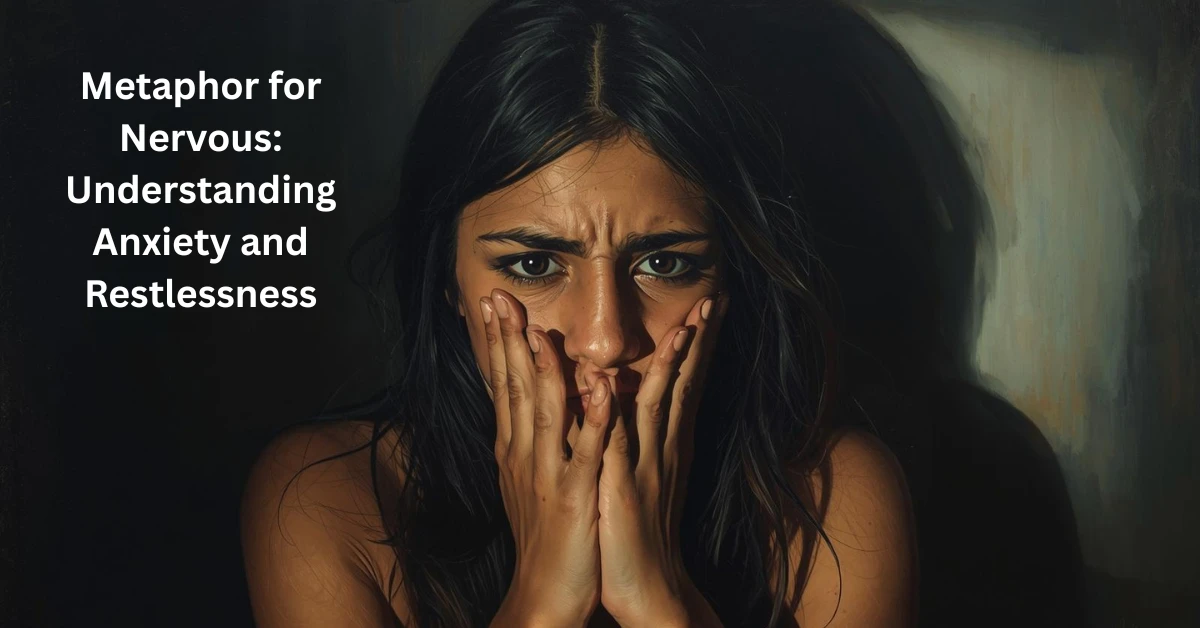
Metaphor for Nervous is like a butterfly trapped in your stomach, fluttering wildly with every thought and heartbeat. It’s that restless energy that makes your hands shake, your mind race, and your words stumble. This metaphor captures the physical and emotional experience of nervousness, showing how anxiety can feel both unpredictable and uncontrollable. Just like a storm before calm, being nervous reminds us we care deeply about the outcome, and that our emotions are alive and human.
Metaphor for nervous is a powerful way to describe feelings of anxiety, tension, or unease without just saying “I’m nervous.”
Think about it: when you say “I feel nervous,” it’s honest but flat. But when you say “My stomach is a fluttering bird,” suddenly the reader can feel the tension inside you. That’s what metaphors do: they turn abstract emotions into vivid, relatable images.
Being nervous isn’t just about physical reactions; it’s about anticipation, worry, excitement, or fear. Using metaphors allows writers, bloggers, and storytellers to capture that complex mix in a way that connects with the audience.
20 Metaphors for Nervous
In this guide, you’ll explore 20 creative metaphors for nervousness, along with their meanings, explanations, and examples. By the end, you’ll be able to describe nervousness in a way that is both vivid and engaging.
1. My stomach is a fluttering bird
- Meaning: Feeling anxious or uneasy
- Explanation: Suggests nervous energy moving inside
- Examples:
- Before the presentation, my stomach was a fluttering bird.
- She felt a fluttering bird in her stomach as the meeting began.
2. My heart is a drum pounding in a storm
- Meaning: Rapid heartbeat due to anxiety
- Explanation: Emphasizes physical tension
- Examples:
- My heart pounded like a drum in a storm.
- He felt his heart drumming in a storm as he waited.
3. My hands are trembling leaves
- Meaning: Shaky due to nervousness
- Explanation: Physical signs of anxiety
- Examples:
- My hands were trembling as I signed the paper.
- She held trembling leaves while stepping onto the stage.
4. My mind is a buzzing hive
- Meaning: Overactive thoughts
- Explanation: Racing, chaotic thinking
- Examples:
- My mind was a buzzing hive of worries.
- His brain felt like a buzzing hive before the exam.
5. My stomach is a knot of ropes
- Meaning: Tension in the stomach
- Explanation: Anxiety causes physical discomfort
- Examples:
- My stomach was a knot of ropes before the interview.
- She felt a knot of ropes twisting as she waited for the call.
6. My nerves are live wires
- Meaning: Feeling jumpy or on edge
- Explanation: Physical and emotional tension
- Examples:
- My nerves were live wires during the presentation.
- He felt like live wires were running through him.
7. My chest is a caged bird
- Meaning: Feeling trapped or restless
- Explanation: Conveys pressure and internal struggle
- Examples:
- My chest held a caged bird of anxiety.
- She felt a caged bird beating in her chest.
8. My thoughts are bouncing balls
- Meaning: Inability to focus
- Explanation: Mind racing uncontrollably
- Examples:
- My thoughts were bouncing balls, bouncing from worry to worry.
- He tried to calm his bouncing balls of ideas.
9. My knees are jelly
- Meaning: Weak and shaky legs
- Explanation: Physical manifestation of nervousness
- Examples:
- My knees turned to jelly as I walked on stage.
- She felt her knees like jelly before speaking.
10. My mind is a stormy sea
- Meaning: Turbulent, overwhelming thoughts
- Explanation: Confusion and anxiety combined
- Examples:
- My mind was a stormy sea of doubts.
- He navigated a stormy sea of nerves before the call.
11. My stomach is butterflies in a cage
- Meaning: Restless excitement
- Explanation: Common physical metaphor for nerves
- Examples:
- My stomach was in a state of butterflies before the test.
- She felt butterflies in a cage fluttering inside her.
12. My heart is a hammer
- Meaning: Rapid heartbeat
- Explanation: Anxiety manifesting physically
- Examples:
- My heart was a hammer as I waited for the results.
- He felt his heart hammering in his chest.
13. My thoughts are tangled threads
- Meaning: Confused thinking
- Explanation: Mind racing, unable to organize
- Examples:
- My thoughts were tangled threads in a knot of worry.
- She struggled with tangled threads of ideas.
14. My stomach is a tight drum
- Meaning: Tension and discomfort
- Explanation: Physical effects of nervousness
- Examples:
- My stomach felt like a tight drum during the speech.
- He could feel a tight drum of nerves in his belly.
15. My hands are ice
- Meaning: Cold from fear or anxiety
- Explanation: Nervous physical reaction
- Examples:
- My hands were ice as I reached for the microphone.
- She wiped her ice-cold hands before the interview.
16. My brain is a tangled web
- Meaning: Confused thoughts
- Explanation: Unable to think clearly
- Examples:
- My brain was a tangled web of what-ifs.
- He tried to untangle the web in his mind.
17. My nerves are coiled springs
- Meaning: Tension ready to snap
- Explanation: Energy and stress are building up
- Examples:
- My nerves were coiled springs waiting to burst.
- She felt like coiled springs under pressure.
18. My chest is a pressure cooker
- Meaning: Anxiety is building internally
- Explanation: Stress and anticipation are rising
- Examples:
- My chest was a pressure cooker before the test.
- He felt like a pressure cooker ready to explode.
19. My mind is a ticking clock
- Meaning: Counting down, anxious anticipation
- Explanation: Feeling time is running out
- Examples:
- My mind was a ticking clock before the call.
- She felt a ticking clock counting her nerves.
20. My body is a storm ready to erupt
- Meaning: Full-body anxiety
- Explanation: Nervous energy affects the entire body
- Examples:
- My body was a storm ready to erupt.
- He felt like a storm ready to burst with tension.
FAQs
1. What is a metaphor for nervous?
A metaphor for nervousness compares anxiety or tension to a vivid, tangible image.
2. Why use metaphors for nervous?
They make abstract emotions relatable and vivid.
3. Can nervous metaphors be physical?
Yes, many metaphors describe body sensations like the stomach, hands, or chest.
4. Are nervous metaphors only for writing?
No, they work in storytelling, blogs, speeches, and poetry.
5. Can metaphors show positive nervousness?
Yes, like excitement or anticipation.
6. How do I create my own nervous metaphors?
Think about how your body and mind feel when nervous and compare it creatively.
7. Can metaphors be combined?
Yes, multiple metaphors can be used as long as clarity is maintained.
8. How are metaphors different from similes?
Metaphors are something else directly; similes use “like” or “as.”
9. Are metaphors for nervous universal?
Many work universally, but cultural and personal context matter.
10. What is the best metaphor for nervous?
It depends on the intensity and type of nervousness you want to convey.
Conclusion:
Using a Metaphor for Nervous transforms simple statements into vivid experiences. Instead of just saying “I feel nervous,” you can show the physical and mental tension readers can actually feel. Metaphors make your writing more engaging, relatable, and memorable. With practice, you’ll craft your own metaphors for nervousness that bring scenes and emotions to life.
Next time you describe nervousness, don’t just tell it, let your metaphors show it.