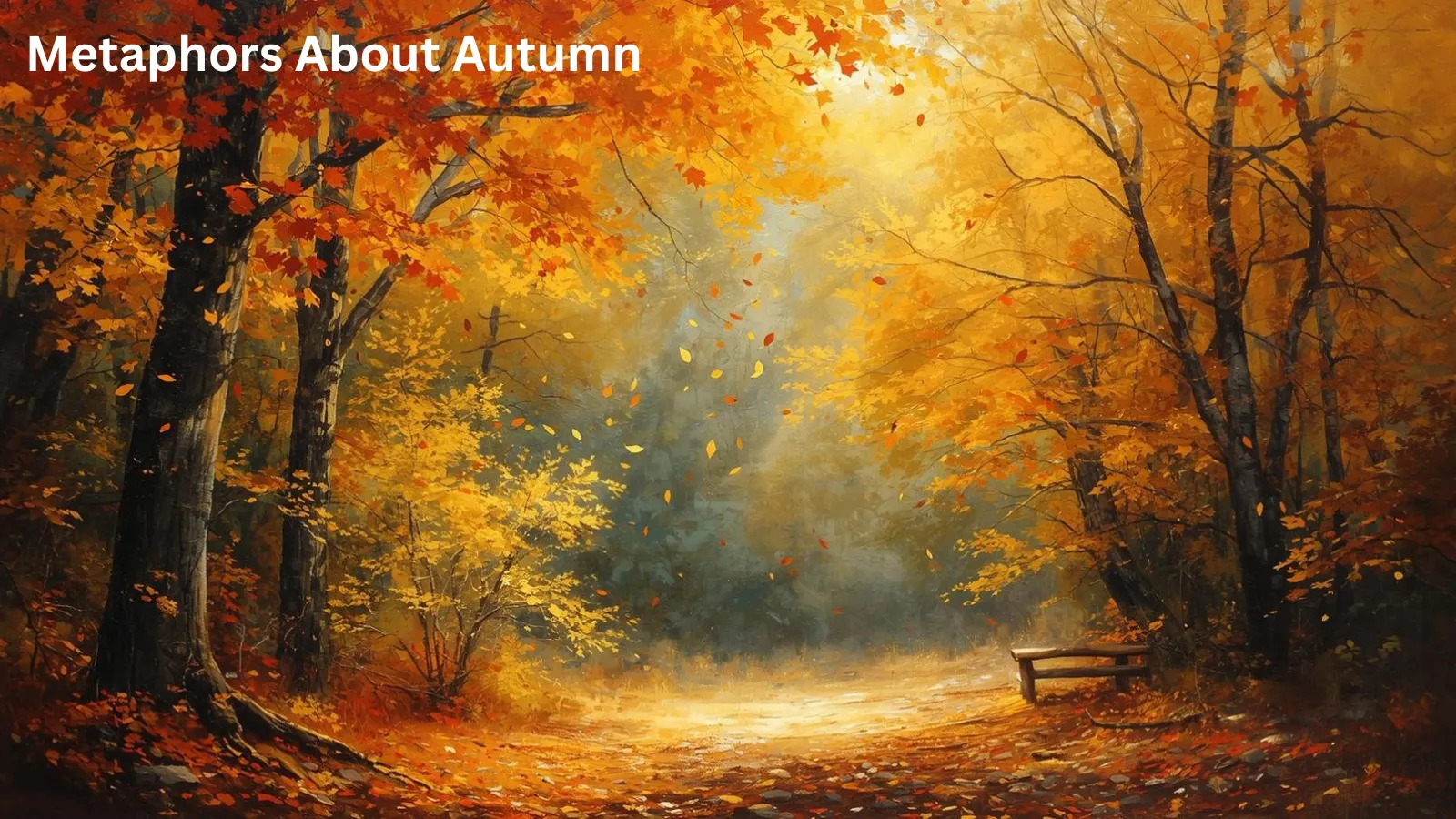
Metaphors about autumn are a wonderful way for students, teachers, and writers to capture change, reflection, and the beauty of transitions. Sometimes, describing the mix of warmth, melancholy, and transformation that autumn brings can feel tricky, leaving your writing dull or unclear. These metaphors turn the colors, falling leaves, and crisp air into vivid images that readers instantly connect with. On this page, you’ll discover creative ways to make your writing more expressive, memorable, and emotionally engaging. Keep reading and let your words fall gracefully, just like the leaves of autumn!
20 Metaphors About Autumn
1. Life is like falling leaves
Meaning: Life is transient and always changing
Explanation: Leaves fall, representing cycles, endings, and impermanence.
Examples:
• Her childhood memories drifted away like falling leaves.
• Relationships are like falling leaves, changing with time.
2. Autumn whispers secrets
Meaning: Subtle messages of change
Explanation: Autumn’s calm wind suggests quiet reflection and insight.
Examples:
• The breeze whispered secrets of the approaching winter.
• His thoughts felt like autumn whispering secrets to him.
3. Harvest of memories
Meaning: Gathering experiences or reflections
Explanation: Like crops, life experiences are collected and appreciated.
Examples:
• She enjoyed a harvest of memories from the past year.
• Autumn brought a harvest of memories in his mind.
4. Golden farewell
Meaning: Beautiful endings
Explanation: Autumn’s golden leaves symbolize endings that are still lovely.
Examples:
• The sunset gave a golden farewell to the day.
• Autumn offered a golden farewell to summer.
5. Chilling breeze of change
Meaning: Unavoidable transformations
Explanation: Cool autumn winds represent shifts in life or mood.
Examples:
• The chilling breeze of change swept through the town.
• He felt a chilling breeze of change in his career.
6. Falling into silence
Meaning: Calm, reflective moments
Explanation: As leaves fall quietly, autumn represents introspection.
Examples:
• The forest fell into silence, like nature reflecting.
• Her thoughts fell into silence with the autumn evening.
7. Rustling curtains of leaves
Meaning: Subtle movement or background change
Explanation: Leaves rustling show a gradual transformation.
Examples:
• Rustling curtains of leaves accompanied their walk.
• The park echoed with rustling curtains of leaves.
8. Autumn’s palette
Meaning: Variety of colors, emotions, or experiences
Explanation: Warm reds, oranges, and yellows symbolize diversity.
Examples:
• Her emotions mirrored autumn’s palette.
• The landscape displayed autumn’s palette of colors.
9. The fading sun
Meaning: Decline, endings, or reflection
Explanation: Shorter days symbolize cycles and temporality.
Examples:
• The fading sun reminded him of life’s impermanence.
• Autumn brought the fading sun to the horizon.
10. Crisp whispers
Meaning: Subtle hints of truth or realization
Explanation: Cool, fresh air represents insight or awakening.
Examples:
• The crisp whispers of autumn guided her decisions.
• He listened to the crisp whispers of the season.
11. Autumn tapestry
Meaning: Interwoven experiences or beauty
Explanation: Leaves and colors form a complex, harmonious picture.
Examples:
• Life unfolded like an autumn tapestry.
• The forest was an autumn tapestry of gold and red.
12. Falling like amber
Meaning: Slow, graceful decline
Explanation: Leaves turning amber show beauty in transition.
Examples:
• His hair fell like amber in the sunset light.
• Memories drifted gently, falling like amber.
13. Harvest moon
Meaning: Full reflection or culmination
Explanation: Autumn’s moon symbolizes completion or awareness.
Examples:
• The harvest moon reflected on the year’s achievements.
• She felt enlightened under the harvest moon.
14. Leaves dancing with the wind
Meaning: Flexibility or surrender to change
Explanation: Surrendering to natural forces shows adaptability.
Examples:
• His ideas moved like leaves dancing with the wind.
• The community adapted, leaves dancing with the wind.
15. Autumn’s embrace
Meaning: Comfort in change
Explanation: The season welcomes reflection and maturity.
Examples:
• She felt autumn’s embrace on her morning walk.
• The town basked in autumn’s embrace of calm.
16. Golden footsteps
Meaning: Memories left behind
Explanation: Footprints on autumn paths symbolize past experiences.
Examples:
• Her golden footsteps marked the trail of her journey.
• Life’s golden footsteps remind us of the past.
17. Whispering leaves of wisdom
Meaning: Lessons from experience
Explanation: Leaves falling symbolize insight gained over time.
Examples:
• The whispering leaves of wisdom guided his decisions.
• Autumn taught her lessons through whispering leaves.
18. Autumn sigh
Meaning: Gentle reflection or melancholy
Explanation: Soft wind represents introspection or nostalgia.
Examples:
• The autumn sigh reminded her of lost friends.
• He listened to the autumn sigh with a smile.
19. Flickering daylight
Meaning: Passing time or impermanence
Explanation: Shorter days emphasize fleeting moments.
Examples:
• The flickering daylight mirrored her fleeting thoughts.
• Autumn’s flickering daylight marked the end of the season.
20. Nature’s farewell
Meaning: Endings or transitions
Explanation: Autumn signals the close of summer and preparation for winter.
Examples:
• Trees swayed in nature’s farewell.
• Autumn whispered nature’s farewell to warmth.
Practical Exercise
| Question | Answer |
| What does “life is like falling leaves” represent? | Life is transient and always changing |
| What does “harvest of memories” symbolize? | Gathering experiences or reflections |
| What does “golden farewell” mean? | Beautiful endings |
| What does “chilling breeze of change” represent? | Unavoidable transformations |
| What does “rustling curtains of leaves” symbolize? | Subtle movement or background change |
| What does “autumn palette” mean? | Variety of colors, emotions, or experiences |
| What does “leaves dancing with the wind” represent? | Flexibility or surrender to change |
| What does “harvest moon” symbolize? | Full reflection or culmination |
| What does “autumn sigh” mean? | Gentle reflection or melancholy |
| What does “nature’s farewell” represent? | Endings or transitions |
FAQs
1. What are metaphors about autumn?
They are figurative expressions using autumn to describe change, endings, reflection, and beauty.
2. Why use autumn metaphors?
They make transitions, nostalgia, and seasonal moods relatable and vivid.
3. Can students use these metaphors?
Yes, for essays, poetry, or storytelling.
4. Are autumn metaphors only about leaves?
No, they also include sunlight, wind, colors, and reflections.
5. Can they describe emotions?
Yes, like melancholy, reflection, or hope.
6. Are autumn metaphors used in literature?
Yes, especially in poetry and descriptive writing.
7. Can writers invent their own autumn metaphors?
Absolutely, by linking seasonal imagery to feelings or experiences.
8. Can autumn metaphors be romantic?
Yes, they often convey warmth, beauty, or nostalgia.
9. Do these metaphors help with teaching figurative language?
Yes, they illustrate change, imagery, and emotional expression.
10. Can they be used in speeches or presentations?
Definitely, to evoke mood, reflection, or imagery.
Conclusion
Metaphors about autumn help writers, teachers, and students express change, reflection, and beauty in relatable and vivid ways. From “life is like falling leaves” to “nature’s farewell,” autumn metaphors capture the grace of endings, the warmth of memories, and the inevitability of change, making writing and expression more meaningful and memorable.