Metaphors for annoying are perfect for students, teachers, and writers who want to describe irritating or frustrating situations creatively. Sometimes, it’s hard to put into words exactly how bothersome someone or something feels, leaving your writing flat or your message unclear. These metaphors turn everyday annoyances into vivid, relatable images that make readers instantly understand your point. On this page, you’ll discover metaphors that help you express frustration, capture personality quirks, and make your writing stronger and more engaging. Keep reading and turn irritation into words that truly resonate!
20 Metaphors for Annoying
1. Like nails on a chalkboard
Meaning: Extremely irritating
Explanation: A high-pitched scraping sound evokes instant discomfort.
Examples:
• Her constant humming was like nails on a chalkboard.
• That ringtone was like nails on a chalkboard.
2. A mosquito buzzing in your ear
Meaning: Persistent irritation
Explanation: Small, constant annoyances that are hard to ignore.
Examples:
• His questions were like a mosquito buzzing in your ear.
• The notifications felt like a mosquito buzzing constantly.
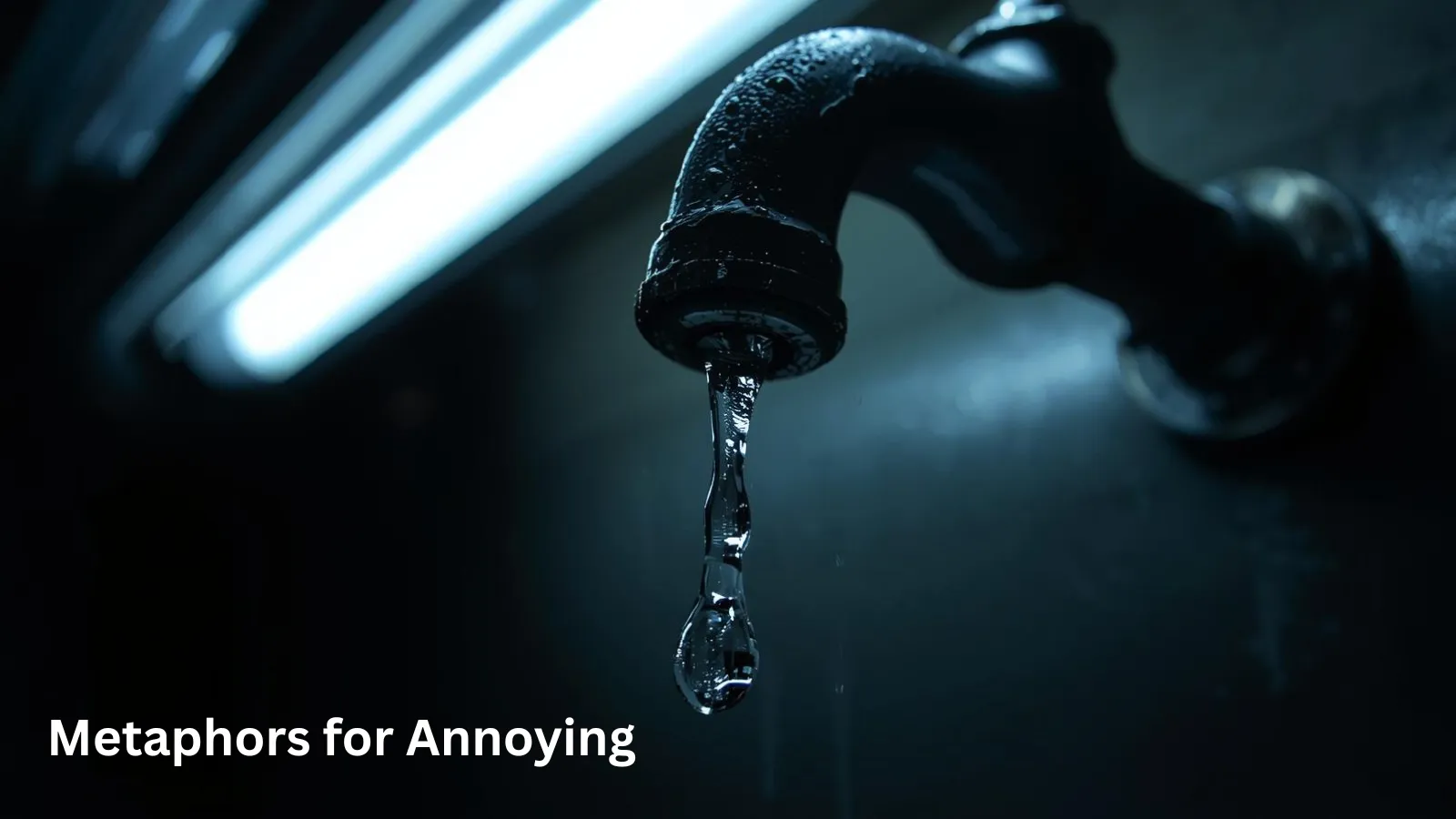
3. Like a dripping faucet
Meaning: Repetitive and frustrating
Explanation: Continuous minor disturbance builds irritation.
Examples:
• Her complaints were like a dripping faucet.
• That email reminder was like a dripping faucet.
4. A pebble in your shoe
Meaning: Small but persistent annoyance
Explanation: Tiny irritants can disrupt comfort or focus.
Examples:
• His constant interruptions were a pebble in my shoe.
• That minor error was a pebble in her day.
5. Like a squeaky wheel
Meaning: Someone demanding attention annoyingly
Explanation: The squeaky wheel gets noticed, often irritating others.
Examples:
• The coworker who complained nonstop was like a squeaky wheel.
• That persistent request was a squeaky wheel.
6. Like static on a radio
Meaning: Distracting and irritating
Explanation: Noise prevents clarity, annoying.
Examples:
• Her chatter was like static on a radio.
• The background noise was like static on a radio.
7. A fly at the picnic
Meaning: Unwelcome presence
Explanation: Minor disruptions spoil enjoyment.
Examples:
• He was like a fly at the picnic during the meeting.
• The sudden interruptions were flies at the picnic.
8. Like a broken record
Meaning: Repetitive and tiresome
Explanation: Repetition irritates over time.
Examples:
• His lecture repeated points like a broken record.
• She kept asking the same question like a broken record.
9. Like a dripping pen
Meaning: Small persistent annoyance
Explanation: Minor but continuous disruptions irritate.
Examples:
• His pen squeaked like a dripping pen.
• The teacher’s corrections were like a dripping pen.
10. A thorn in the side
Meaning: Ongoing bother
Explanation: Thorns cause discomfort, like persistent annoyances.
Examples:
• That coworker was a thorn in the side.
• The constant noise was a thorn in the side.
11. Like a squealing mouse
Meaning: High-pitched irritation
Explanation: Sharp sounds can be grating.
Examples:
• The alarm sounded like a squealing mouse.
• Her complaints were like a squealing mouse.
12. Like a sticky note explosion
Meaning: Overwhelmingly small annoyances
Explanation: Too many minor tasks piling up create irritation.
Examples:
• His reminders were a sticky note explosion.
• Emails were like a sticky note explosion.
13. Like a ringing bell that won’t stop
Meaning: Unending disturbance
Explanation: Continuous signals cause stress and annoyance.
Examples:
• The notifications were like a ringing bell that won’t stop.
• The alarm was like a ringing bell that won’t stop.
14. Like chewing on gravel
Meaning: Unpleasant experience
Explanation: Harsh, grating sensations evoke annoyance.
Examples:
• Listening to his complaints was like chewing on gravel.
• The scraping noise was like chewing on gravel.
15. Like static electricity shocks
Meaning: Minor but repeated irritations
Explanation: Small jolts accumulate frustration.
Examples:
• His comments were like static electricity shocks.
• The repeated errors felt like static electricity shocks.
16. Like a squeaky hinge
Meaning: Minor continuous annoyance
Explanation: Repetitive small noises irritate over time.
Examples:
• The door was like a squeaky hinge during class.
• His constant interruptions were like a squeaky hinge.
17. Like a persistent rain
Meaning: Constant, unrelenting irritation
Explanation: Steady, ongoing annoyances wear patience.
Examples:
• Her questions were like a persistent rain.
• The calls were like a persistent rain.
18. Like a buzzing alarm clock at 5 a.m.
Meaning: Sudden, unwanted disturbance
Explanation: Abrupt interruptions cause frustration.
Examples:
• His calls were like a buzzing alarm clock at 5 a.m.
• The early notifications felt like a buzzing alarm clock.
19. Like a weed in the garden
Meaning: Unwanted and invasive
Explanation: Weeds intrude where they’re not wanted, irritating.
Examples:
• That coworker was like a weed in the garden.
• Minor problems were like weeds in the garden.
20. Like sand in your shoes
Meaning: Small, persistent discomfort
Explanation: Irritating, hard-to-ignore issues accumulate.
Examples:
• That minor technical glitch was like sand in your shoes.
• The repetitive mistakes were like sand in your shoes.
Practical Exercise
| Question | Answer |
| What does “like nails on a chalkboard” represent? | Extremely irritating |
| What does “a pebble in your shoe” mean? | Small persistent annoyance |
| What does “squeaky wheel” symbolize? | Someone demanding attention annoyingly |
| What does “like a broken record” represent? | Repetitive and tiresome |
| What does “thorn in the side” mean? | Ongoing bother |
| What does “mosquito buzzing in your ear” symbolize? | Persistent irritation |
| What does “fly at the picnic” mean? | Unwelcome presence |
| What does “like sand in your shoes” represent? | Small discomforts that accumulate |
| What does “persistent rain” mean? | Constant irritation |
| What does “like a sticky note explosion” symbolize? | Overwhelming small annoyances |
FAQs
1. What are metaphors for annoying?
They are figurative expressions that describe irritation, persistent bother, or frustration.
2. Why use annoying metaphors?
They make irritation relatable and vivid.
3. Can students use these metaphors?
Yes, for essays, storytelling, or descriptive writing.
4. Are annoying metaphors humorous?
Often, but they can also convey genuine frustration.
5. Can they describe people or situations?
Yes, both people and circumstances.
6. Are annoying metaphors commonly used in literature?
Yes, especially for humor or emphasis.
7. Can they be combined with sensory imagery?
Yes, sounds, textures, or visuals enhance the metaphor.
8. Can writers invent their own annoying metaphors?
Absolutely, by linking irritating traits or events to vivid images.
9. Do these metaphors help in teaching figurative language?
Yes, they show expressive ways to describe emotions.
10. Can metaphors for annoying include everyday items?
Yes, like dripping faucets, nails, or mosquitoes.
Conclusion:
Metaphors for annoying turn frustration, irritation, and persistence into vivid images. From “nails on a chalkboard” to “sand in your shoes,” they let writers, students, and speakers describe annoyance creatively and clearly. These metaphors make everyday irritations relatable, engaging, and even a little humorous, transforming simple feelings into expressive, memorable language.