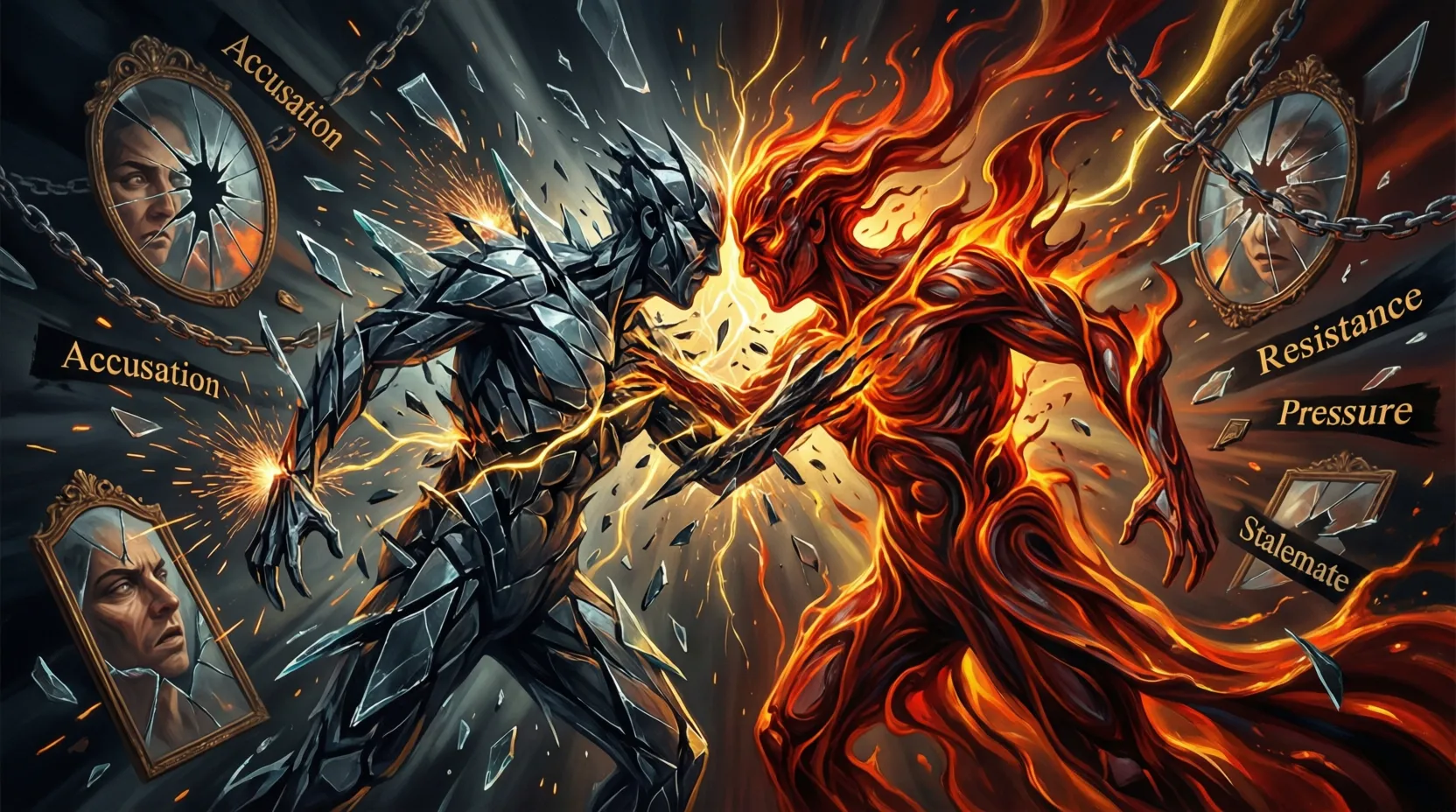
Metaphors for arguing help describe conflict, debate, and disagreement in vivid, relatable ways when ordinary words fall short. Students often struggle to explain disagreements in essays, writers want to show tension or confrontation creatively, and teachers look for examples that make arguments more understandable.
Simply saying “arguing” or “disagreeing” can feel flat or repetitive, but metaphors bring conflict to life. By comparing arguments to storms, fire, duels, or clashing waves, you create imagery that readers can feel and visualize.
If writing stories, essays, or reflections, using metaphors for arguing adds clarity, depth, and emotional impact, making disagreements more dramatic, engaging, and memorable in your writing.
20 Metaphors for Arguing
1. Arguing is a storm
Meaning: Intense conflict
Explanation: Powerful, chaotic, and overwhelming
Examples:
Their discussion became an arguing storm.
The debate erupted as a storm in the room.
2. Arguing is a battlefield
Meaning: Clash of ideas
Explanation: Strategy, defense, and attack matter
Examples:
The negotiation turned into a battlefield.
Arguments raged like soldiers on a battlefield.
3. Arguing is a fire
Meaning: Heated emotions
Explanation: Burns passionately and spreads quickly
Examples:
Their disagreement flared like arguing fire.
The debate ignited as a fire of words.
4. Arguing is a boxing match
Meaning: Direct confrontation
Explanation: Back-and-forth blows in words
Examples:
The discussion felt like a boxing match.
They exchanged points like punches in a boxing match.
5. Arguing is a tornado
Meaning: Chaotic energy
Explanation: Swirls of emotion and intensity
Examples:
Their argument spun like a tornado.
Words flew like debris in a tornado of anger.
6. Arguing is a tug of war
Meaning: Power struggle
Explanation: Both sides pull to win
Examples:
The conversation became a tug of war.
Ideas were pulled like ropes in a tug of war.
7. Arguing is a volcano
Meaning: Explosive
Explanation: Erupts after pressure builds
Examples:
Tension erupted as a volcano in the meeting.
Their debate burst like a volcano of emotions.
8. Arguing is a river in flood
Meaning: Overwhelming flow
Explanation: Rapid and unstoppable
Examples:
Words poured out like a river in flood.
The discussion surged as a river overflowing its banks.
9. Arguing is a stormy sea
Meaning: Turbulence
Explanation: Waves of emotion and conflict
Examples:
The team meeting was a stormy sea of opinions.
Arguments crashed like waves in a stormy sea.
10. Arguing is a chess game
Meaning: Strategic debate
Explanation: Moves planned and countered carefully
Examples:
Their negotiation was a chess game of words.
Each statement was a move in the arguing chess game.
11. Arguing is a sword fight
Meaning: Sharp and precise
Explanation: Words cut like blades
Examples:
They traded insults like a sword fight.
Arguments clashed like blades in a duel.
12. Arguing is a hurricane
Meaning: Intense and unstoppable
Explanation: Whirls of conflict and energy
Examples:
Their debate spun like a hurricane.
The discussion swept through the room like a hurricane.
13. Arguing is a volcano of words
Meaning: Built-up emotion
Explanation: Explosive speech after pressure
Examples:
The disagreement erupted as a volcano of words.
Anger spilled like a volcano of words.
14. Arguing is a forest fire
Meaning: Rapid spread
Explanation: Quickly consumes attention and energy
Examples:
The quarrel spread like a forest fire.
Arguments blazed through the team like a forest fire.
15. Arguing is a clash of titans
Meaning: Powerful opponents
Explanation: Intense confrontation of strong forces
Examples:
Their debate was a clash of titans.
Ideas collided as a clash of titans in the room.
16. Arguing is a whirlwind
Meaning: Confusion and chaos
Explanation: Moves rapidly and unpredictably
Examples:
The discussion became a whirlwind of opinions.
Words spun in the room like a whirlwind.
17. Arguing is a lightning strike
Meaning: Sudden impact
Explanation: Sharp, immediate, and surprising
Examples:
His words hit like a lightning strike.
The accusation struck like a lightning bolt.
18. Arguing is a sandstorm
Meaning: Blinding confusion
Explanation: Hard to see through chaos
Examples:
The debate was a sandstorm of conflicting ideas.
Arguments blew around like a sandstorm.
19. Arguing is a rollercoaster
Meaning: Emotional ups and downs
Explanation: Highs and lows of tension
Examples:
The discussion took them on a rollercoaster of emotions.
Their argument rose and fell like a rollercoaster.
20. Arguing is a cage fight
Meaning: Confined but intense
Explanation: Conflict happens in a limited space
Examples:
The debate felt like a cage fight.
Ideas clashed intensely like fighters in a cage.
Practical Exercise:
| Question | Answer |
| Which metaphor shows heated emotions? | Fire |
| Which metaphor shows strategy? | Chess game |
| Which metaphor shows chaos? | Tornado |
| Which metaphor shows power struggle? | Tug of war |
| Which metaphor shows sudden impact? | Lightning strike |
| Which metaphor shows overwhelming flow? | River in flood |
| Which metaphor shows rapid spread? | Forest fire |
| Which metaphor shows confined intensity? | Cage fight |
| Which metaphor shows turbulence? | Stormy sea |
| Which metaphor shows sharp confrontation? | Sword fight |
FAQs
- What are metaphors for arguing?
They symbolically describe conflict, disagreement, and debate. - Are these useful for essays?
Yes, especially for descriptive, analytical, or reflective writing. - Can students use them in exams?
Yes, they enhance clarity, imagery, and expression. - Do arguing metaphors show emotions?
Absolutely, they highlight tension, passion, and intensity. - Can teachers use them in class?
Yes, for creative writing, debate analysis, or illustrating conflict. - Are these metaphors flexible?
Yes, they work in essays, speeches, stories, and poetry. - Do metaphors improve writing quality?
Yes, they make arguments, disputes, and debates vivid and relatable. - Are they suitable for storytelling?
Yes, they depict confrontation and tension effectively. - Can writers adapt them?
Easily, for personal, fictional, or educational contexts. - Do they help readers visualize conflict?
Yes, metaphors make debates, disagreements, and arguments tangible.
Conclusion:
Metaphors for arguing turn abstract ideas of conflict, debate, and tension into vivid images. If arguing is a storm, a chess game, a tornado, or a forest fire, these metaphors help express intensity, strategy, and emotion clearly. Strong writing begins when conflict is not just described but truly visualized, and metaphors do exactly that.