Metaphors for balance help illustrate stability, harmony, and equilibrium in ways that plain words often can’t. Students often struggle to explain mental, emotional, or physical balance in essays. Writers want to show calm, control, or fairness creatively, and teachers look for vivid examples to make abstract ideas tangible.
Simply saying “balanced” can feel flat or repetitive, but metaphors bring the concept to life. By comparing balance to tightropes, scales, steady trees, or flowing rivers, you create imagery that readers can relate to and visualize.
If writing reflections, stories, or motivational pieces, using metaphors for balance adds depth, clarity, and emotional resonance, making the idea of harmony more engaging and memorable.
20 Metaphors for Balance
1. Balance is a tightrope
Meaning: Precision and focus
Explanation: Requires careful navigation
Examples:
Life felt like a balance on a tightrope.
He maintained balance as if walking a tightrope over a canyon.
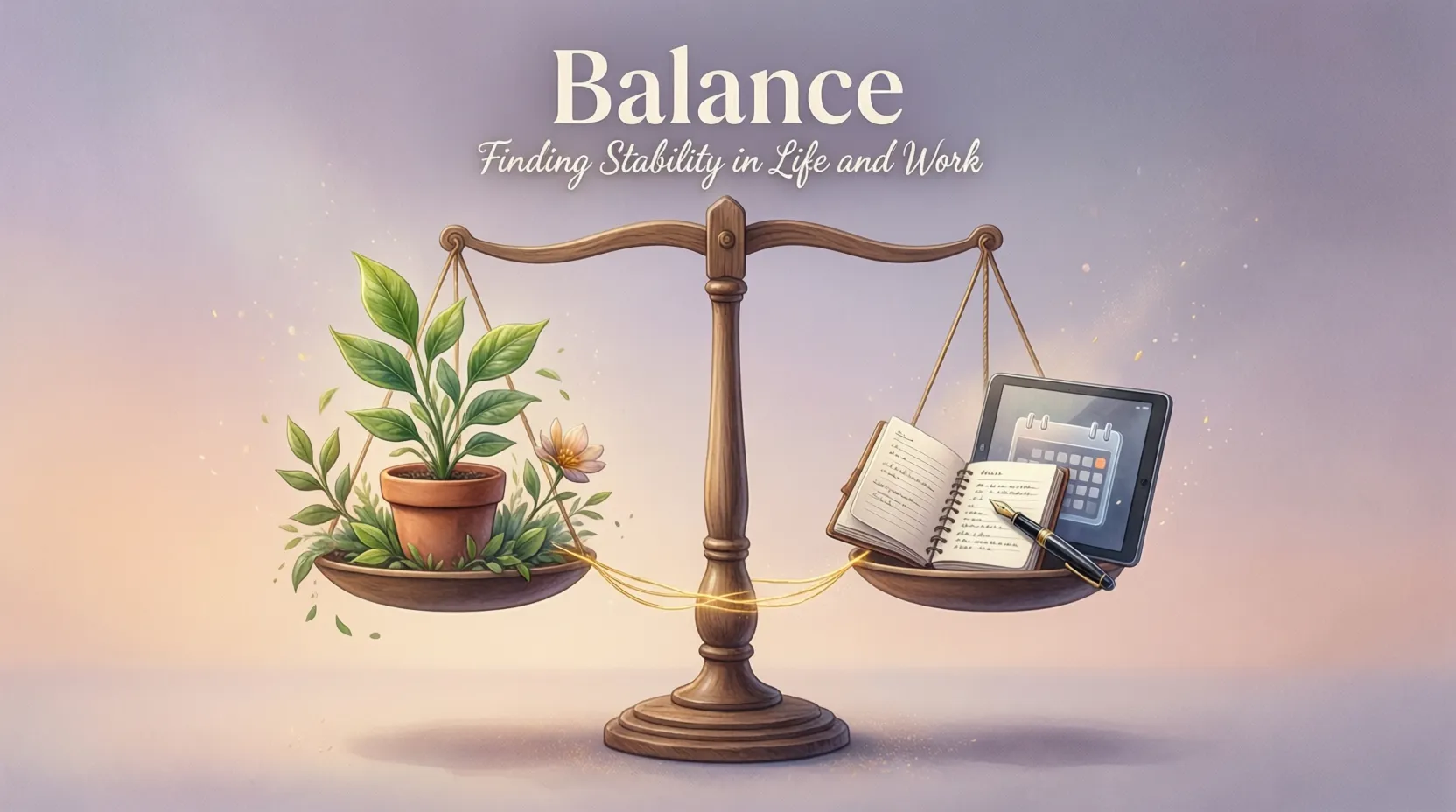
2. Balance is a scale
Meaning: Fairness and equality
Explanation: Measures and stabilizes opposing forces
Examples:
Her decisions were balanced as a scale.
The project required balance like weights on a scale.
3. Balance is a wheel
Meaning: Movement and stability
Explanation: Rolls smoothly when aligned
Examples:
Daily routine maintained balance like a wheel.
His life spun balanced as a perfectly aligned wheel.
4. Balance is a beam
Meaning: Steadiness
Explanation: Narrow and requires focus
Examples:
Her mind held balance as a beam.
He walked through challenges like balancing on a beam.
5. Balance is yin and yang
Meaning: Harmony
Explanation: Opposing forces coexist
Examples:
Life found balance as yin and yang.
Her emotions balanced like yin and yang.
6. Balance is a compass
Meaning: Direction and guidance
Explanation: Keeps things on course
Examples:
Work and life are balanced as a compass points north.
Decision-making felt balanced like a compass in hand.
7. Balance is water in a bowl
Meaning: Calmness
Explanation: Stays steady if undisturbed
Examples:
Her mind was balanced like water in a bowl.
He approached tasks with balance like still water.
8. Balance is a seesaw
Meaning: Equilibrium
Explanation: Moves but returns to the center
Examples:
Life’s ups and downs balanced like a seesaw.
Responsibilities are balanced as a seesaw in motion.
9. Balance is a tree
Meaning: Stability
Explanation: Deep roots support growth
Examples:
Her life stood balanced like a strong tree.
He remained balanced through challenges like a rooted tree.
10. Balance is a tightrope walker
Meaning: Skill and focus
Explanation: Maintains equilibrium under pressure
Examples:
He moved through decisions as balance like a tightrope walker.
She handled stress with balance like a tightrope walker over a crowd.
11. Balance is a boat in calm water
Meaning: Stability
Explanation: Floats evenly when guided
Examples:
His emotions were balanced like a boat in calm water.
She navigated life like a boat balanced in gentle waves.
12. Balance is a pendulum
Meaning: Rhythm
Explanation: Moves back and forth evenly
Examples:
Daily work-life balance swung like a pendulum.
Emotions are balanced as a pendulum’s steady swing.
13. Balance is a dancer
Meaning: Grace
Explanation: Moves skillfully while maintaining steadiness
Examples:
She handled chaos like a dancer in perfect balance.
Life requires balance as a dancer balances on stage.
14. Balance is a kite in the wind
Meaning: Adaptability
Explanation: Adjusts to maintain steadiness
Examples:
He flew through challenges balance like a kite in the wind.
Her plans balanced as a kite riding strong gusts.
15. Balance is a bridge
Meaning: Connection
Explanation: Supports weight evenly
Examples:
Relationships maintained balance like a strong bridge.
Teamwork was balanced like a bridge spanning a river.
16. Balance is a pendulum clock
Meaning: Timing
Explanation: Keeps consistent rhythm
Examples:
Daily tasks moved with balance like a pendulum clock.
Her schedule flowed balanced as a swinging pendulum.
17. Balance is a swimmer in water
Meaning: Control
Explanation: Stays afloat and moves smoothly
Examples:
She navigated stress balanced like a swimmer in water.
Work-life balance felt as natural as swimming in calm water.
18. Balance is a mountain
Meaning: Strength
Explanation: Firm, resilient, and grounded
Examples:
Her stability was balanced like a mountain.
He faced challenges balanced like a mountain in a storm.
19. Balance is a bicycle
Meaning: Coordination
Explanation: Moves forward while staying upright
Examples:
Life felt balanced as riding a bicycle.
He maintained balance like pedaling a bike steadily.
20. Balance is a calm lake
Meaning: Peace
Explanation: Reflects clarity and stability
Examples:
Her mind mirrored balance like a calm lake.
Emotions settled, balanced like water in a quiet lake.
Practical Exercise:
| Question | Answer |
| Which metaphor shows steadiness? | Beam |
| Which metaphor shows harmony? | Yin and yang |
| Which metaphor shows adaptability? | Kite in the wind |
| Which metaphor shows rhythm? | Pendulum |
| Which metaphor shows strength? | Mountain |
| Which metaphor shows coordination? | Bicycle |
| Which metaphor shows calmness? | Water in a bowl |
| Which metaphor shows guidance? | Compass |
| Which metaphor shows control? | Swimmer in water |
| Which metaphor shows fairness? | Scale |
FAQs
- What are metaphors for balance?
They symbolically describe stability, harmony, and equilibrium. - Are these useful for essays?
Yes, especially for reflective, descriptive, or philosophical writing. - Can students use them in exams?
Yes, they enhance clarity and imagery. - Do balance metaphors show emotional stability?
Absolutely, they highlight control, calmness, and harmony. - Can teachers use them in class?
Yes, for creative writing, life skills, or explanation of abstract concepts. - Are these metaphors flexible?
Yes, they work in essays, stories, speeches, and poetry. - Do metaphors improve writing quality?
Yes, they make abstract ideas of balance tangible and relatable. - Are they suitable for storytelling?
Yes, they depict characters or situations with stability and harmony. - Can writers adapt them?
Easily, for personal, educational, or creative contexts. - Do they help readers visualize balance?
Yes, metaphors make harmony and equilibrium vivid and understandable.
Conclusion:
Metaphors for balance turn abstract ideas of stability, harmony, and control into vivid images. If balance is a tightrope, scale, pendulum, or calm lake, these metaphors help express steadiness, rhythm, and equilibrium clearly. Strong writing begins when balance is not just described but visualized, and metaphors do exactly that.