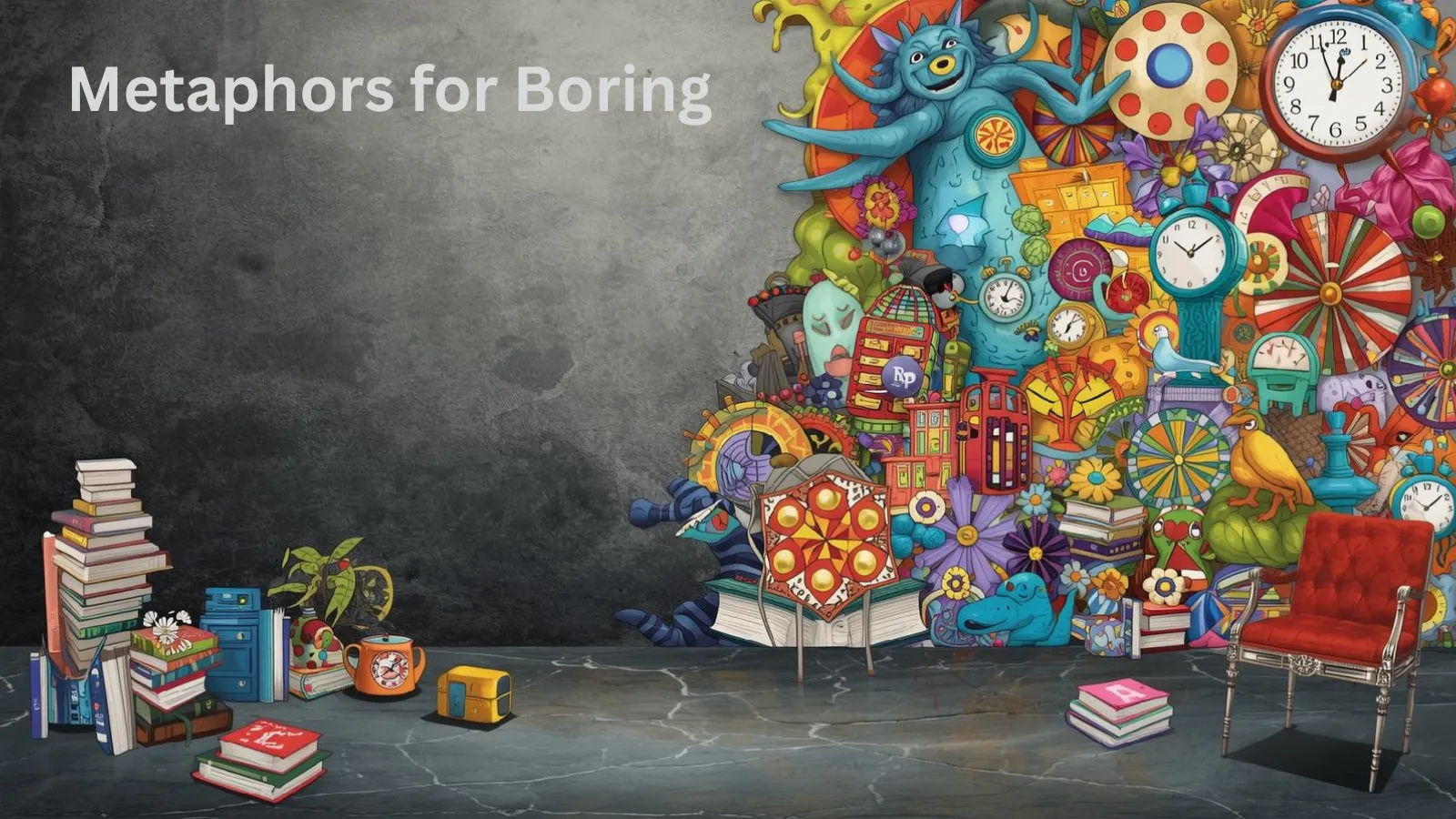
Metaphors for boring are exactly what you need when trying to describe dull, tedious, or lifeless situations in a way that actually captures attention. It’s frustrating when your writing or speech feels flat, and no matter what you say, people just yawn or lose interest. Using these metaphors can turn ordinary, boring moments into vivid, relatable images that make your readers feel and understand your point. On this page, you’ll discover creative ways to express monotony, dullness, or lack of excitement, making your writing stronger, more engaging, and easier to connect with. Keep reading and transform boring into brilliantly expressive storytelling!
20 Metaphors for Boring
1. Watching paint dry
Meaning: Extremely dull
Explanation: A slow, uneventful activity symbolizes boredom.
Examples:
• The lecture was like watching paint dry.
• That meeting felt like watching paint dry.
2. Like a flat soda
Meaning: Lifeless and unexciting
Explanation: Flat soda has no fizz, like a boring situation.
Examples:
• The party was like a flat soda.
• His story was like a flat soda—no excitement.
3. As exciting as a snail race
Meaning: Slow and dull
Explanation: Snail races are tedious, showing lack of thrill.
Examples:
• The documentary was as exciting as a snail race.
• The event felt like a snail race.
4. Watching grass grow
Meaning: Extremely slow and dull
Explanation: Grass grows slowly, representing tediousness.
Examples:
• The lecture was like watching grass grow.
• Waiting in line was like watching grass grow.
5. Like a broken record
Meaning: Repetitive and boring
Explanation: Repeated content creates monotony.
Examples:
• He repeated the story like a broken record.
• The instructions felt like a broken record.
6. As thrilling as a beige wall
Meaning: Colorless and dull
Explanation: Beige walls are plain and unremarkable.
Examples:
• The presentation was as thrilling as a beige wall.
• That speech was like staring at a beige wall.
7. Like a library at midnight
Meaning: Quiet, still, and boring
Explanation: Emptiness represents dullness.
Examples:
• The meeting was like a library at midnight.
• Her lecture felt like a library at midnight.
8. As lively as a sleeping cat
Meaning: Completely inactive
Explanation: Sleepiness shows a lack of energy or excitement.
Examples:
• The party was as lively as a sleeping cat.
• The discussion felt like a sleeping cat.
9. Like reading the phone book
Meaning: Tedious and boring
Explanation: Mundane content symbolizes dullness.
Examples:
• The list was like reading the phone book.
• That task felt like reading the phone book.
10. Like a cloudy day with no wind
Meaning: Dull and stagnant
Explanation: Nothing moves or changes; everything feels flat.
Examples:
• The day was like a cloudy day with no wind.
• Her story felt like a cloudy day.
11. Like chewing cardboard
Meaning: Unpleasantly boring
Explanation: Cardboard is tough and tasteless, representing tediousness.
Examples:
• The speech was like chewing cardboard.
• That assignment felt like chewing cardboard.
12. As dull as a rusty nail
Meaning: Lifeless and uninteresting
Explanation: Rust removes shine; dull nails represent monotony.
Examples:
• The lecture was as dull as a rusty nail.
• His explanation felt like a rusty nail.
13. Like watching clouds drift slowly
Meaning: Slow and boring
Explanation: Clouds drift without action or drama.
Examples:
• The meeting was like watching clouds drift slowly.
• The play dragged, like clouds drifting.
14. As exciting as stale bread
Meaning: Completely uninteresting
Explanation: Stale bread lacks freshness or appeal.
Examples:
• His joke was as exciting as stale bread.
• The course material felt like stale bread.
15. Like a turtle on a treadmill
Meaning: Slow and pointless
Explanation: Slow effort without progress equals boredom.
Examples:
• The lecture was like a turtle on a treadmill.
• His explanation felt like a turtle on a treadmill.
16. As captivating as a blank page
Meaning: Empty and dull
Explanation: A blank page holds nothing interesting.
Examples:
• The essay felt as captivating as a blank page.
• The activity was like a blank page.
17. Like listening to a dripping faucet
Meaning: Repetitive and monotonous
Explanation: Repetition creates boredom.
Examples:
• The teacher repeated instructions like a dripping faucet.
• The sound felt like a dripping faucet.
18. As lively as a parking lot at midnight
Meaning: Completely lifeless
Explanation: Emptiness and stillness represent dullness.
Examples:
• The event was as lively as a parking lot at midnight.
• The room felt like a parking lot at midnight.
19. Like counting grains of sand
Meaning: Tedious and endless
Explanation: Endless repetition equals boredom.
Examples:
• The task felt like counting grains of sand.
• Waiting was like counting grains of sand.
20. As entertaining as watching a wall dry
Meaning: Extremely dull
Explanation: Watching paint dry or walls is famously boring.
Examples:
• The lecture was as entertaining as watching a wall dry.
• The meeting felt like watching a wall dry.
Practical Exercise
| Question | Answer |
| What does watching paint dry represent? | Extremely dull |
| What does a broken record show? | Lifelessness |
| What does a snail race mean? | Slow and boring |
| What does like a broken record show? | Repetition |
| What does a beige wall represent? | Colorless dullness |
| What does a sleeping cat mean? | Inactivity |
| What does reading the phone book show? | Tediousness |
| What does a cloudy day with no wind represent? | Stagnation |
| What does a turtle on a treadmill symbolize? | Slow, pointless effort |
| What does watching a wall dry mean? | Extremely dull |
FAQs
1. What are metaphors for boring?
They are figurative images that describe dull, uninteresting, or tedious situations.
2. Why use metaphors for boring?
They make descriptions more vivid and relatable.
3. Can students use these metaphors?
Yes, for essays or creative writing.
4. Are boring metaphors only humorous?
Not necessarily, but humor often helps.
5. Can metaphors describe work or school boredom?
Absolutely.
6. Do metaphors improve storytelling?
Yes, they turn dull scenes into relatable imagery.
7. Can writers invent their own boring metaphors?
Yes, using imagery of dullness or stagnation.
8. Are boring metaphors useful in conversation?
Yes, to describe tedious situations effectively.
9. Do they help in teaching figurative language?
Yes, students learn how imagery conveys feeling.
10. Can metaphors for boring include sensory images?
Yes, like taste, sound, or sight to enhance the effect.
Conclusion:
Metaphors for boring turn flat, lifeless situations into vivid images, helping writers, speakers, and students express monotony clearly. By using metaphors like watching paint dry, a flat soda, or counting grains of sand, you make the dullness relatable, visual, and even humorous. These metaphors don’t just describe boredom—they bring it to life in a way your audience can feel.