Metaphors for fear help students, teachers, and writers express anxiety, dread, and intense emotion when plain words feel too weak. Sometimes, it’s hard to capture the icy grip, racing heart, or paralyzing tension of fear without sounding flat or repetitive.
These metaphors turn fear into vivid, relatable images that readers instantly understand and feel.
On this page, you’ll discover creative ways to make your writing more expressive, suspenseful, and emotionally powerful. Keep reading and let your words convey fear with clarity, intensity, and impact, making every reader feel the tension you want to create!
20 Metaphors for Fear
1. Fear is a shadow
Meaning: Always lurking, follows you
Explanation: Fear is subtle but persistent
Examples:
- Fear followed him like a shadow.
- She couldn’t escape the shadow of fear.
2. Fear is a storm
Meaning: Intense and overwhelming
Explanation: Emotion can overpower rational thought
Examples:
- A storm of fear gripped her heart.
- Panic hit like a storm during the blackout.
3. Fear is a cage
Meaning: Restricts action
Explanation: Prevents people from moving forward
Examples:
- Fear trapped him in a cage of doubt.
- The fear of failure felt like a cage.
4. Fear is ice
Meaning: Freezes action
Explanation: Stops decision-making
Examples:
- Fear turned his hands to ice.
- She stood frozen, fear as cold as ice.
5. Fear is a predator
Meaning: Stalks and hunts
Explanation: Always present and dangerous
Examples:
- Fear prowled like a predator.
- Anxiety circled him like a predator waiting to strike.
6. Fear is a shadowy tunnel
Meaning: Dark and confusing
Explanation: Path unclear, uncertainty
Examples:
- Walking through fear felt like a shadowy tunnel.
- His mind wandered in a shadowy tunnel of fear.
7. Fear is a dark cloud
Meaning: Ominous and looming
Explanation: Emotion hangs over you
Examples:
- A dark cloud of fear hovered above.
- Fear darkened her thoughts like a cloud.
8. Fear is a whisper
Meaning: Subtle but persistent
Explanation: Quiet voice that causes doubt
Examples:
- Fear whispered warnings in his ear.
- The fear was just a whisper, yet it paralyzed her.
9. Fear is a wall
Meaning: Blocks progress
Explanation: Stops you from moving forward
Examples:
- Fear built a wall in front of him.
- Anxiety was a wall she couldn’t climb.
10. Fear is a shadowed forest
Meaning: Confusing and dark
Explanation: Hard to navigate, unknown
Examples:
- Fear led him through a shadowed forest.
- Her mind wandered in a shadowed forest of doubt.
11. Fear is a beast
Meaning: Aggressive and threatening
Explanation: Hard to control
Examples:
- Fear roared like a beast.
- The beast of fear attacked without warning.
12. Fear is a tightrope
Meaning: Balancing risk and danger
Explanation: Walking carefully to avoid harm
Examples:
- Facing the exam felt like walking a tightrope of fear.
- Every decision was a tightrope of fear.
13. Fear is a frozen lake
Meaning: Appears solid but unsafe
Explanation: Can break under pressure
Examples:
- His confidence was a frozen lake of fear.
- She moved cautiously over the frozen lake of fear.
14. Fear is a maze
Meaning: Confusing and trapping
Explanation: Hard to find a way out
Examples:
- His thoughts were trapped in a maze of fear.
- The maze of fear blocked her path forward.
15. Fear is a shadow monster
Meaning: Imaginary yet terrifying
Explanation: Exaggerates danger
Examples:
- Fear became a shadow monster in his mind.
- Every sound seemed the work of a shadow monster.
16. Fear is a heavy chain
Meaning: Restrains movement
Explanation: Emotion prevents freedom
Examples:
- Fear bound him like a heavy chain.
- Anxiety wrapped her in heavy chains.
17. Fear is a dark river
Meaning: Flowing and engulfing
Explanation: Emotion moves and overwhelms
Examples:
- Fear swept him along a dark river.
- Her thoughts were drowned in a dark river of fear.
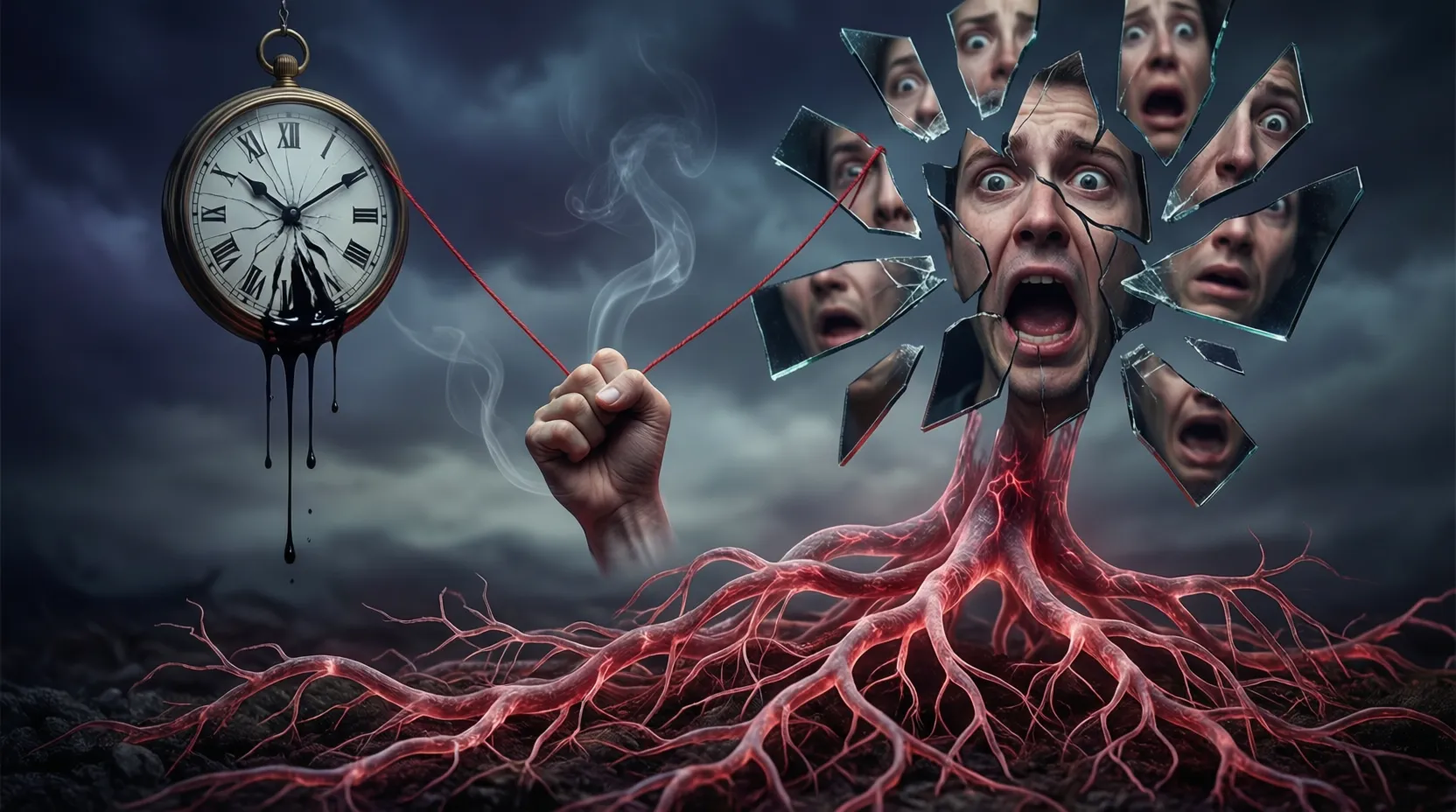
18. Fear is a ticking clock
Meaning: Builds pressure over time
Explanation: Creates urgency and tension
Examples:
- The approaching deadline was a ticking clock of fear.
- Fear ticked like a relentless clock in his mind.
19. Fear is a tight knot
Meaning: Emotional tension
Explanation: Feeling nervous and uneasy
Examples:
- Fear twisted his stomach into a tight knot.
- Her chest tightened with a knot of fear.
20. Fear is a creeping vine
Meaning: Slowly spreading
Explanation: Gradually takes over thoughts and emotions
Examples:
- Fear crept like a vine through his mind.
- Anxiety grew like a creeping vine around her confidence.
Practical Exercise: Q&A Table
| Question | Answer |
| 1. Which metaphor represents fear that restricts action? | Cage |
| 2. Which metaphor represents fear that freezes you? | Ice |
| 3. Which metaphor represents fear as a lurking danger? | Predator |
| 4. Which metaphor represents subtle, quiet fear? | Whisper |
| 5. Which metaphor represents fear that blocks progress? | Wall |
| 6. Which metaphor represents fear as overwhelming and intense? | Storm |
| 7. Which metaphor represents confusing and unknown fear? | Shadowed forest |
| 8. Which metaphor represents fear building pressure over time? | Ticking clock |
| 9. Which metaphor represents fear as emotional tension? | Tight knot |
| 10. Which metaphor represents slowly spreading fear? | Creeping vine |
FAQs
1. Why use metaphors for fear?
They make abstract emotions visual, relatable, and easier to understand.
2. Are these metaphors helpful for students?
Yes, for essays, stories, and descriptive writing.
3. Can writers use them in suspense or horror scenes?
Absolutely, they increase tension and immersion.
4. Do metaphors simplify the understanding of emotions?
Yes, they turn intangible feelings into imagery.
5. Can teachers use them for figurative language lessons?
Yes, they are perfect for explaining emotional expressions.
6. Are metaphors for fear positive or negative?
Mostly negative, representing caution or danger.
7. Can metaphors show subtle fear?
Yes, like whispers or shadows.
8. Should metaphors be used in moderation?
Yes, balance improves clarity and impact.
9. Can metaphors make writing more engaging?
Definitely, they enhance drama and emotional depth.
10. Do metaphors for fear help in storytelling?
Yes, they make suspense and tension more vivid.
Conclusion:
Metaphors for fear turn invisible emotions into tangible, vivid, and relatable imagery. From shadows and storms to creeping vines and tight knots, these metaphors help students, writers, and educators express anxiety, tension, and caution in ways that are impactful, memorable, and engaging.