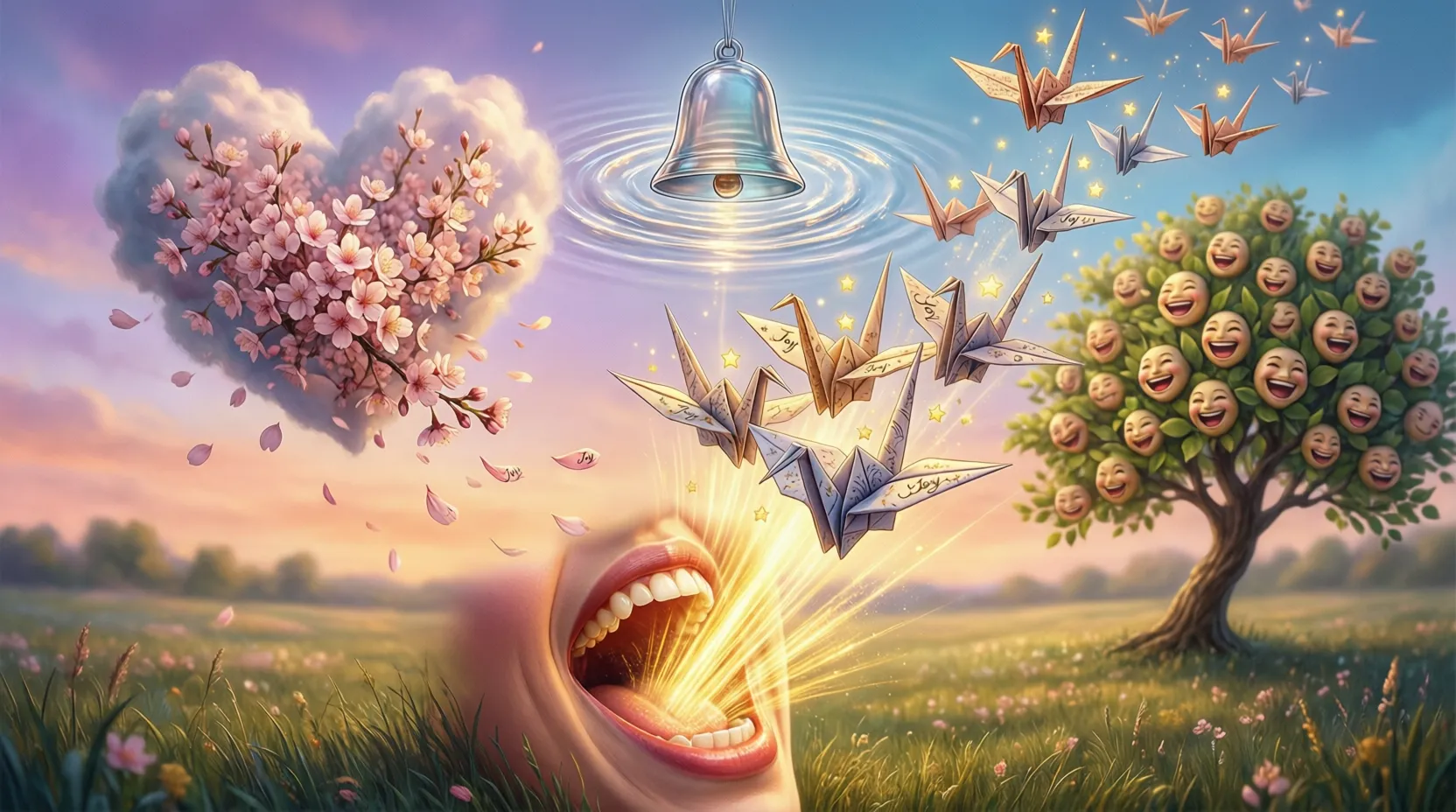
Metaphors for laughing help students, teachers, and writers express joy, humor, and delight in a vivid, relatable way. Sometimes, it’s hard to capture the sound, feeling, or contagious energy of laughter without sounding flat or repetitive.
These metaphors turn laughing into images that readers instantly understand and connect with, making your writing more lively and engaging. On this page, you’ll discover creative ways to make your descriptions of laughter sharper, more expressive, and memorable. Keep reading and let your words spread happiness, energy, and the irresistible charm of a good laugh!
20 Metaphors for Laughing
1. Laughing is a bubbling brook
Meaning: Natural and continuous joy
Explanation: Soft, flowing laughter
Examples:
- Her laughter gurgled like a bubbling brook.
- The children’s giggles were a bubbling brook.
2. Laughing is a sunbeam
Meaning: Bright and uplifting
Explanation: Spreads warmth and happiness
Examples:
- His laughter was a sunbeam in the room.
- Her joy shone like a sunbeam.
3. Laughing is a wildfire
Meaning: Spreads quickly
Explanation: Contagious and energetic
Examples:
- Laughter spread through the crowd like wildfire.
- His joke ignited a wildfire of giggles.
4. Laughing is music
Meaning: Pleasant and harmonious
Explanation: Melodic, enjoyable sound
Examples:
- Her laugh was music to everyone’s ears.
- The group’s laughter sounded like music.
5. Laughing is a gust of wind
Meaning: Sudden and refreshing
Explanation: Brings relief and energy
Examples:
- His laugh blew in like a gust of wind.
- Her chuckle was a refreshing gust of wind.
6. Laughing is fireworks
Meaning: Explosive and exciting
Explanation: Sudden burst of joy
Examples:
- Laughter erupted like fireworks.
- Their jokes caused laughter like fireworks.
7. Laughing is a bubbling volcano
Meaning: Cannot be contained
Explanation: Strong and energetic laughter
Examples:
- His laughter erupted like a bubbling volcano.
- She laughed so hard it was a bubbling volcano.
8. Laughing is a ringing bell
Meaning: Clear and cheerful
Explanation: High-pitched and noticeable
Examples:
- Her laughter rang like a bell.
- The classroom echoed with laughter like ringing bells.
9. Laughing is a flowing river
Meaning: Continuous and natural
Explanation: Smooth, rhythmic laughter
Examples:
- Their laughter flowed like a river.
- Her chuckles moved like a flowing river.
10. Laughing is a spark
Meaning: Starts joy
Explanation: Small laugh that ignites bigger laughter
Examples:
- His giggle was a spark that set off a room of laughter.
- A tiny joke sparked laughter in the group.
11. Laughing is a balloon
Meaning: Light and airy
Explanation: Elevates mood
Examples:
- Her laugh floated like a balloon.
- His chuckle lifted the room like a balloon.
12. Laughing is sunshine after rain
Meaning: Relief and happiness
Explanation: Brightens a gloomy moment
Examples:
- Her laughter was sunshine after rain.
- The joke brought sunshine after a stressful day.
13. Laughing is a bubbling fountain
Meaning: Continuous and lively
Explanation: Energetic and refreshing
Examples:
- Her laughter poured like a bubbling fountain.
- Their laughter bubbled like a fountain.
14. Laughing is a playful breeze
Meaning: Gentle and fun
Explanation: Light-hearted and soothing
Examples:
- Laughter drifted like a playful breeze.
- Her giggles were a playful breeze.
15. Laughing is a rainbow
Meaning: Colorful and uplifting
Explanation: Brings joy and brightness
Examples:
- His laughter painted the day like a rainbow.
- Her chuckle colored the room like a rainbow.
16. Laughing is fireworks in the heart
Meaning: Exciting and emotional
Explanation: Creates inner joy
Examples:
- Their jokes ignited fireworks in the heart.
- Her laughter set fireworks in the heart.
17. Laughing is a melody of bells
Meaning: Clear, joyful sound
Explanation: Harmonious and pleasant
Examples:
- Her laughter chimed like a melody of bells.
- The room echoed with a melody of bells from their laughter.
18. Laughing is a playful kitten
Meaning: Cute and infectious
Explanation: Innocent, light-hearted laughter
Examples:
- Her laughter pounced like a playful kitten.
- The children laughed like playful kittens.
19. Laughing is a sunrise
Meaning: Brings new energy
Explanation: Brightens the environment
Examples:
- His laughter was a sunrise after a long night.
- Her giggles brought a sunrise to everyone’s day.
20. Laughing is a sparkling stream
Meaning: Continuous, joyful, and lively
Explanation: Flows with energy and delight
Examples:
- Her laughter ran like a sparkling stream.
- Laughter sparkled through the room like a stream.
Practical Exercise
Questions & Answers
- Which metaphor represents contagious laughter?
Answer: Wildfire - Which metaphor shows gentle and light-hearted laughter?
Answer: Playful breeze - Which metaphor shows continuous laughter?
Answer: Flowing river - Which metaphor represents bright and uplifting laughter?
Answer: Sunbeam - Which metaphor shows explosive laughter?
Answer: Fireworks - Which metaphor shows joyful, innocent laughter?
Answer: Playful kitten - Which metaphor represents laughter bringing relief?
Answer: Sunshine after rain - Which metaphor shows laughter as energy and fun?
Answer: Spark - Which metaphor represents harmonious sound?
Answer: Music - Which metaphor represents cheerful, clear laughter?
Answer: Ringing bell
FAQs
1. Why use metaphors for laughing?
They turn the act of laughing into vivid, expressive imagery, making writing more engaging.
2. Can students use them in essays?
Yes, for narrative, descriptive, or reflective writing.
3. Are they useful for storytelling?
Absolutely, they convey character emotions and atmosphere.
4. Can teachers use these metaphors?
Yes, to explain figurative language and emotion.
5. Do metaphors exaggerate laughter?
They enhance vividness without exaggerating.
6. Can they show contagious laughter?
Yes, like wildfire or bubbling brook.
7. Are these metaphors formal or creative?
They work in both academic and creative writing.
8. Can they inspire positivity in readers?
Yes, laughter metaphors create joy and relatability.
9. Can these be used in speeches?
Yes, to create an emotional connection.
10. How many metaphors should be used?
Use enough to enhance understanding and imagery without cluttering the text.
Conclusion:
Metaphors for laughing help writers describe joy and amusement in lively, memorable ways. They turn simple laughter into vivid images that convey energy, freedom, and emotional release. By using these metaphors, writing becomes more playful and expressive, allowing readers to feel the happiness behind the moment. Whether in stories, poems, or everyday writing, metaphors for laughing bring warmth, movement, and life to joyful scenes.