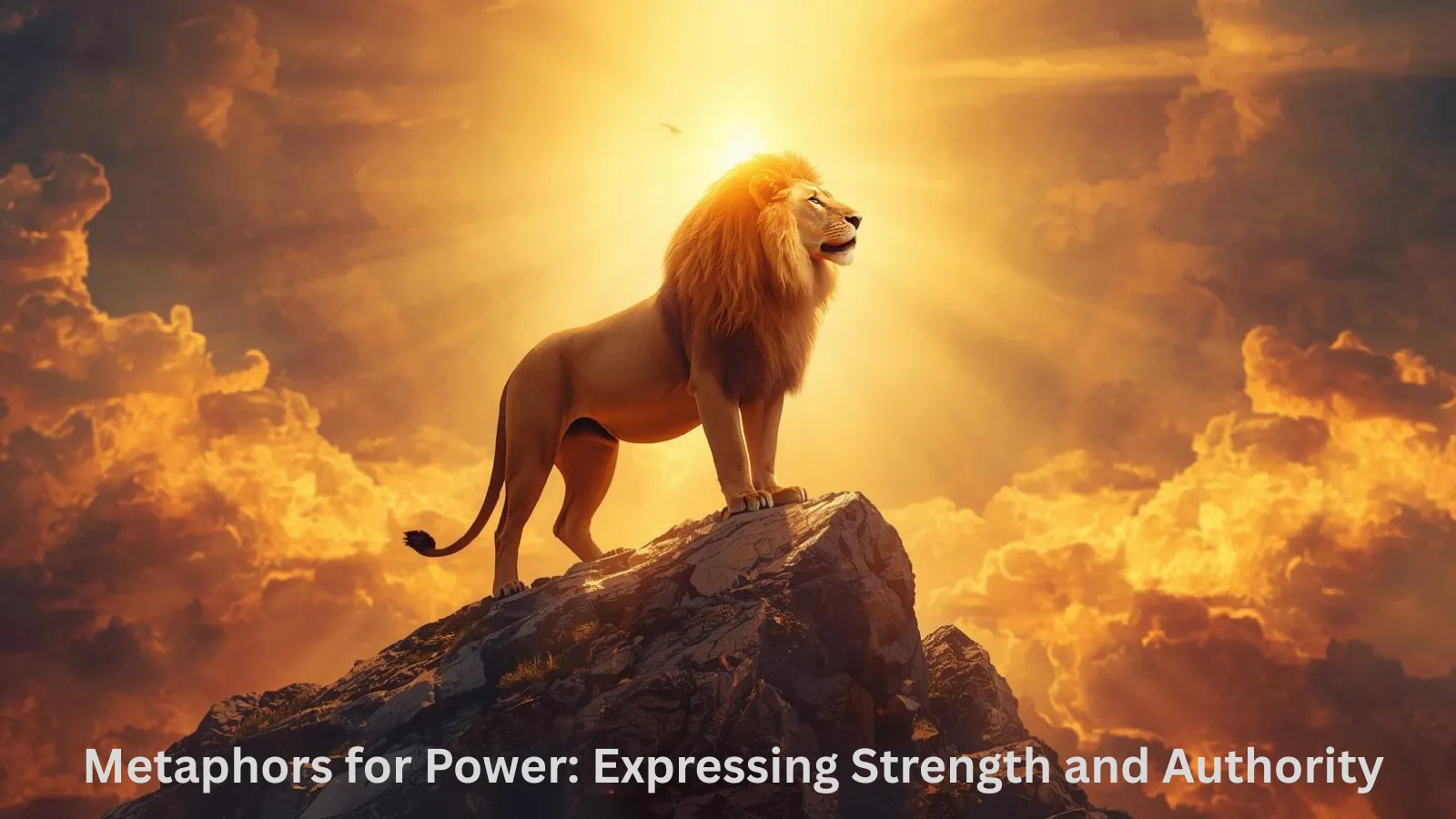
Metaphors for power are perfect for students, teachers, and writers who want to express strength, influence, and authority in a vivid, impactful way. Sometimes, it’s hard to capture control, dominance, or energy without sounding flat or repetitive, leaving your writing less compelling.
These metaphors turn abstract concepts of power into clear, relatable images that readers instantly understand and feel. On this page, you’ll discover creative ways to make your writing stronger, more persuasive, and emotionally engaging. Keep reading and let your words command attention and resonate with the force of true power!
20 Metaphors for Power
1. A lion roaring in the jungle
Meaning: Dominance and authority
Explanation: Represents confidence and natural leadership
Examples:
- The CEO entered the room like a lion roaring in the jungle.
- Her presence was commanding, like a lion roaring.
2. A raging river
Meaning: Unstoppable force
Explanation: Power flows relentlessly
Examples:
- His influence spread like a raging river.
- The movement surged forward like a raging river.
3. A mountain standing tall
Meaning: Stability and strength
Explanation: Unyielding power and resilience
Examples:
- She was a mountain standing tall amidst challenges.
- His resolve was like a mountain, unshakable.
4. Fire is consuming everything
Meaning: Transformative energy
Explanation: Power that changes the environment
Examples:
- His ideas spread like fire, consuming everything.
- Passion burned in him like fire consuming a forest.
5. A storm on the horizon
Meaning: Imminent force
Explanation: Power approaching with intensity
Examples:
- The new policy hit like a storm on the horizon.
- Her authority was like a storm on the horizon.
6. The sun at noon
Meaning: Maximum energy and dominance
Explanation: Center of attention and influence
Examples:
- He shone in the boardroom like the sun at noon.
- Her ideas radiated like the sun at its peak.
7. A tower reaching the clouds
Meaning: Height and superiority
Explanation: Power and status that rise above all
Examples:
- The company stood like a tower reaching the clouds.
- His achievements rose like a tower reaching the clouds.
8. A wolf leading the pack
Meaning: Leadership and control
Explanation: Natural authority within a group
Examples:
- She moved through the team like a wolf leading the pack.
- He directed the project like a wolf leading the pack.
9. Thunder echoing across valleys
Meaning: Audible, far-reaching impact
Explanation: Power that commands attention
Examples:
- His words echoed like thunder across valleys.
- Leadership reverberated like thunder.
10. A river carving mountains
Meaning: Slow but unstoppable influence
Explanation: Persistent power that shapes the world
Examples:
- Ideas carved society like a river carving mountains.
- Her steady efforts were like a river shaping valleys.
11. A volcano erupting
Meaning: Sudden, overwhelming force
Explanation: Power released explosively
Examples:
- His anger erupted like a volcano.
- The protest rose like a volcano erupting.
12. Lightning striking the earth
Meaning: Sudden, decisive impact
Explanation: Quick and powerful influence
Examples:
- His decision struck like lightning.
- Innovation hit the market like lightning striking.
13. A gale is tearing through the forest
Meaning: Strong, overwhelming presence
Explanation: Power affects everyone in its path
Examples:
- His leadership was like a gale tearing through the forest.
- Opinions spread like a gale through the town.
14. Iron in the hand
Meaning: Strength and control
Explanation: Firm, decisive power
Examples:
- He ruled the office with an iron hand.
- The manager acted with iron in the hand.
15. A blazing comet
Meaning: Dynamic, visible power
Explanation: Quick, bright, and attention-grabbing
Examples:
- Her career rose like a blazing comet.
- The team’s innovation shone like a blazing comet.
16. Roots gripping deep earth
Meaning: Foundational strength
Explanation: Deep, stable power that sustains
Examples:
- Her influence was roots gripping deep earth.
- The family business remained strong, like roots gripping the soil.
17. A fortress unyielding
Meaning: Defense and strength
Explanation: Protective and controlled power
Examples:
- Their security was a fortress unyielding.
- Authority was maintained like a fortress, unyielding.
18. A storm-driven sail
Meaning: Harnessed energy
Explanation: Controlled power that propels forward
Examples:
- The team advanced like a storm-driven sail.
- Her ambition moved like a storm-driven sail.
19. A giant awakening
Meaning: Latent, immense power
Explanation: Hidden strength becoming active
Examples:
- The company awakened like a giant stirring.
- His potential emerged like a giant awakening.
20. A forge shaping steel
Meaning: Transformative power
Explanation: Strength applied to create or mold
Examples:
- Experience shaped leaders like a forge shaping steel.
- Challenges forged him like steel in a fire.
Practical Exercise
| Question | Answer |
| Which metaphor shows natural dominance? | Lion roaring in the jungle |
| A lion roaring in the jungle | Raging river |
| Which shows stability? | Mountain standing tall |
| Which shows sudden explosive power? | Volcano erupting |
| Which shows leadership? | Wolf leading the pack |
| Which shows persistent shaping influence? | River carving mountains |
| Which shows an unstoppable force? | Blazing comet |
| Which shows deep, stable strength? | Which shows a visible dynamic impact? |
| Which shows guidance and defense? | Fortress unyielding |
| Which shows transformative energy? | Forge shaping steel |
FAQs
1. What are metaphors for power?
Figurative expressions that describe strength, influence, and impact.
2. Why use them?
They make writing about authority and control vivid, relatable, and memorable.
3. Can students use them in essays?
Yes, especially for leadership, science, or narrative writing.
4. Are they good for stories?
Perfect to show dominance, growth, or transformation.
5. Can they describe emotions?
Yes, like confidence, control, or intensity.
6. Are these metaphors formal?
They can be used in both formal and creative contexts.
7. Can teachers use them?
Yes, for figurative language or leadership lessons.
8. Can they inspire creativity?
Absolutely—they make power vivid and dynamic.
9. Can they show sudden and gradual power?
Yes, like “lightning striking the earth” and “river carving mountains.”
10. How many metaphors should be used in writing?
Use naturally—quality, clarity, and relevance matter most.
Conclusion:
Metaphors for power help us express strength, influence, and authority in a vivid and relatable way. They turn abstract concepts of control, leadership, and dominance into memorable images that resonate with readers. By using these metaphors, writers can make descriptions of power more compelling, emotional, and impactful. Whether in storytelling, essays, or speeches, metaphors for power give words to strength, inspire confidence, and help readers truly understand the weight and presence of authority.