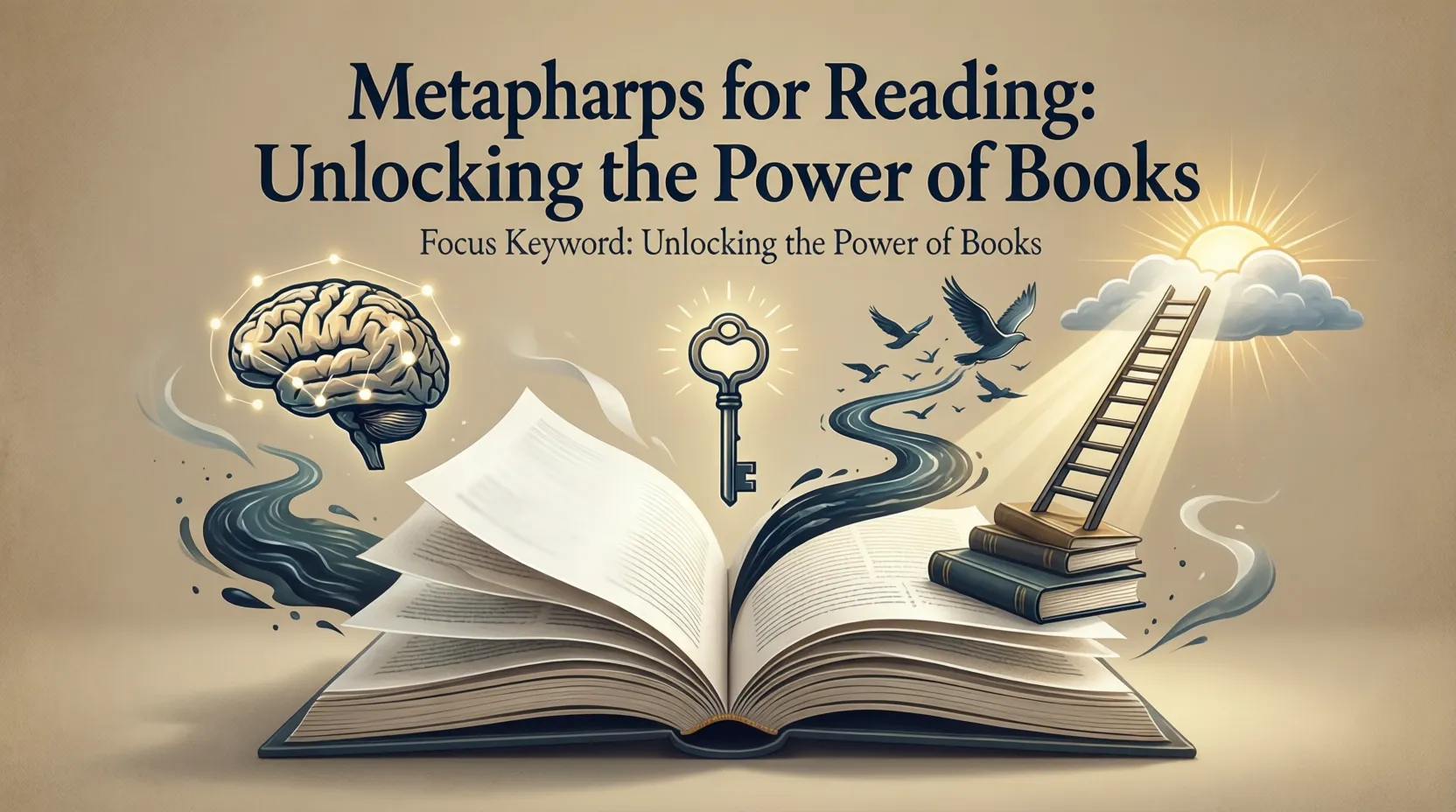
Metaphors for reading are perfect for students, teachers, and writers who want to express the joy, discovery, and escape that books can bring. Sometimes, it’s hard to explain the thrill of diving into a story, learning new ideas, or losing yourself in pages without sounding flat or repetitive. These metaphors turn the act of reading into vivid, relatable images that readers instantly connect with. On this page, you’ll discover creative ways to make your writing about reading more engaging, expressive, and inspiring. Keep reading and let your words transport your audience, just like the magic of reading itself!
20 Metaphors for Reading
1. Reading is a journey through time
Meaning: Exploring history and past ideas
Explanation: Books transport you to different eras
Examples:
- Reading history felt like a journey through time.
- Each novel took her on a journey through time.
2. A key to hidden doors
Meaning: Unlocking knowledge and secrets
Explanation: Reading opens new perspectives
Examples:
- Books are a key to hidden doors of wisdom.
- Reading unlocked doors she never knew existed.
3. A bridge to imagination
Meaning: Connecting reality with creativity
Explanation: Reading allows the mind to explore possibilities
Examples:
- Stories acted as a bridge to imagination.
- Books built a bridge to her creative world.
4. A lantern in the dark
Meaning: Guidance and enlightenment
Explanation: Books provide clarity and understanding
Examples:
- Reading was a lantern in the dark of confusion.
- Knowledge lit up her mind like a lantern.
5. Diving into a sea of words
Meaning: Immersive experience
Explanation: Absorbing content deeply
Examples:
- He dived into a sea of words every evening.
- Reading the novel felt like diving into a sea of words.
6. A treasure chest of wisdom
Meaning: Valuable knowledge and insights
Explanation: Books hold precious ideas and lessons
Examples:
- Each page was a treasure chest of wisdom.
- The library was a treasure chest of knowledge.
7. A garden of ideas
Meaning: Growth and exploration
Explanation: Reading cultivates the mind
Examples:
- Her mind blossomed like a garden of ideas.
- Reading nurtured a garden of ideas in him.
8. A mirror to the soul
Meaning: Reflection and self-discovery
Explanation: Books help you understand yourself
Examples:
- Poetry was a mirror to the soul.
- Reading philosophy felt like a mirror to the soul.
9. A compass for thought
Meaning: Guidance and direction
Explanation: Helps navigate ideas and opinions
Examples:
- Books served as a compass for thought.
- Reading guided her like a compass for life decisions.
10. A river carrying knowledge
Meaning: Continuous learning
Explanation: Information flows and accumulates
Examples:
- Each book was a river carrying knowledge.
- Essays felt like rivers carrying new insights.
11. A staircase to understanding
Meaning: Step-by-step learning
Explanation: Reading builds knowledge gradually
Examples:
- Novels are a staircase to understanding life.
- She climbed the staircase to understanding through reading.
12. A spark igniting curiosity
Meaning: Inspiring interest and questions
Explanation: Reading motivates exploration
Examples:
- That article was a spark igniting curiosity.
- Books ignited curiosity in young minds.
13. A window to new worlds
Meaning: Exploration and adventure
Explanation: Reading shows places, cultures, and ideas
Examples:
- Every story was a window to new worlds.
- Reading history opened a window to past civilizations.
14. A cozy fireplace
Meaning: Comfort and warmth
Explanation: Books provide emotional solace
Examples:
- She read by a cozy fireplace of stories.
- Novels were a cozy fireplace on lonely nights.
15. A puzzle waiting to be solved
Meaning: Engaging and challenging
Explanation: Some books provoke thought and problem-solving
Examples:
- Mystery novels are a puzzle waiting to be solved.
- Reading detective stories felt like solving a puzzle.
16. A flight through imagination
Meaning: Freedom and creativity
Explanation: Reading allows the mind to soar
Examples:
- The story lifted her on a flight through imagination.
- Fantasy novels gave him a flight through imagination.
17. Seeds of knowledge
Meaning: Planting ideas
Explanation: Reading instills lessons for future growth
Examples:
- Books planted seeds of knowledge in her mind.
- Each chapter sowed seeds of knowledge.
18. A key turning the lock
Meaning: Unlocking understanding
Explanation: Reading provides clarity
Examples:
- Philosophy books turned the key to understanding life.
- Every textbook was a key turning the lock of curiosity.
19. A tapestry of stories
Meaning: Interconnected narratives
Explanation: Different books combine to form a bigger picture
Examples:
- The library was a tapestry of stories.
- Each chapter added a thread to the tapestry of tales.
20. A gentle rain nourishes the mind
Meaning: Continuous and subtle learning
Explanation: Reading slowly nurtures the intellect
Examples:
- Short stories were like a gentle rain nourishing the mind.
- Reading poetry felt like a gentle rain nurturing creativity.
Practical Exercise
| Question | Answer |
| Which metaphor shows exploration? | Window to new worlds |
| Which shows guidance? | Compass for thought |
| Which shows reflection? | Mirror to the soul |
| Which shows step-by-step learning? | Staircase to understanding |
| Which shows immersive reading? | Diving into a sea of words |
| Which shows comfort? | Cozy fireplace |
| Which shows inspiration? | Spark igniting curiosity |
| Which shows continuous learning? | River carrying knowledge |
| Which shows unlocking knowledge? | Which shows the growth of ideas? |
| Which shows growth of ideas? | Garden of ideas |
FAQs
1. What are metaphors for reading?
Figurative expressions that describe the experience, impact, and benefits of reading.
2. Why use them?
They make writing about reading vivid, engaging, and relatable.
3. Can students use them in essays?
Yes, perfect for descriptive or reflective writing.
4. Are they good for stories?
Yes, to show imagination, exploration, and intellectual growth.
5. Can they describe emotions?
Yes, like comfort, curiosity, and inspiration.
6. Are these metaphors formal?
They can be used in both formal and creative contexts.
7. Can teachers use them?
Yes, for figurative language or literacy lessons.
8. Can they inspire creativity in writing?
Absolutely—they make reading come alive for readers.
9. Can they show both challenge and comfort?
Yes, like “puzzle waiting to be solved” and “cozy fireplace.”
10. How many metaphors should be used in writing?
Use naturally—quality and clarity ensure maximum impact.
Conclusion:
Metaphors for reading help us understand books as more than just words on a page—they become journeys, doors, and mirrors of thought. These metaphors add depth and imagination to writing, making the act of reading feel alive and meaningful. By using them, writers can better express curiosity, learning, and personal growth. Whether you are a student, teacher, or lifelong reader, metaphors for reading turn simple ideas into powerful images that stay with the reader.