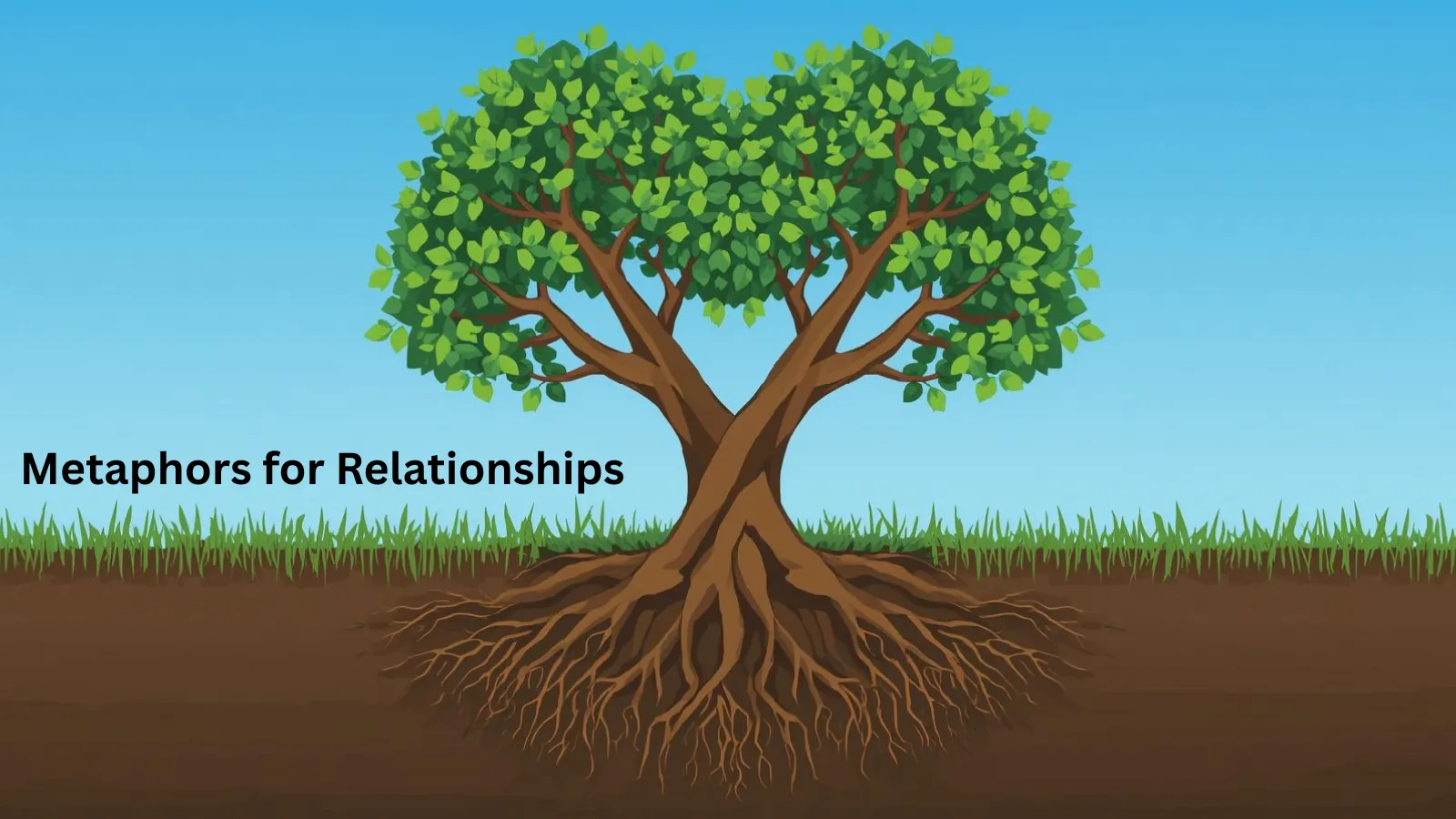
Metaphors for relationships help students, teachers, and writers express the complexity, beauty, and challenges of human connections when simple words aren’t enough. It can be frustrating to describe love, trust, conflict, or intimacy without sounding repetitive or flat. These metaphors turn emotions and interactions into vivid, relatable images that readers immediately understand and feel. On this page, you’ll discover creative ways to make your writing about relationships stronger, more engaging, and emotionally resonant. Keep reading and let your words capture the depth, connection, and dynamics that make every relationship unique!
20 Metaphors for Relationships
1. A bridge between hearts
Meaning: Emotional connection
Explanation: Link that brings people together
Examples:
- Friendship is a bridge between hearts.
- Her advice built a bridge between generations.
2. A rope tied with trust
Meaning: Strong relationship based on reliability
Explanation: Trust binds people together
Examples:
- Their bond was like a rope tied with trust.
- Marriage is a rope tied with trust.
3. A garden of love
Meaning: Relationship nurtured over time
Explanation: Growth and care are required
Examples:
- They cultivated a garden of love.
- Family relationships flourish like a garden of love.
4. A chain of support
Meaning: Continuous assistance and connection
Explanation: Each person linked strengthens the whole
Examples:
- Friends form a chain of support.
- Employees created a chain of support for the project.
5. A mirror reflecting emotions
Meaning: People reflect each other’s feelings
Explanation: Mutual understanding and empathy
Examples:
- In friendship, a mirror reflects emotions.
- Couples often act as mirrors reflecting moods.
6. A delicate web
Meaning: Fragile, complex relationship
Explanation: Must be handled with care
Examples:
- Their partnership was a delicate web.
- Office dynamics are often a delicate web.
7. A lighthouse in the fog
Meaning: Guidance and hope
Explanation: Someone who helps in confusion
Examples:
- She is a lighthouse in the fog of my struggles.
- Mentors act as lighthouses in professional life.
8. A woven tapestry
Meaning: Complex, interlinked connections
Explanation: Every thread contributes to beauty
Examples:
- Family is a woven tapestry.
- Life experiences create a woven tapestry of friendships.
9. A knot that binds
Meaning: Strong emotional or legal bond
Explanation: A connection that is hard to break
Examples:
- Marriage is a knot that binds.
- Friendship formed a knot that survived years.
10. A ship navigating storms
Meaning: Relationship enduring hardships
Explanation: Steady progress despite challenges
Examples:
- Their love was a ship navigating storms.
- Teamwork survives like a ship navigating storms.
11. Roots in the same soil
Meaning: Shared origin or values
Explanation: Strong foundational connection
Examples:
- They are friends with roots in the same soil.
- Siblings have roots in the same soil.
12. A bridge built brick by brick
Meaning: Slowly developing trust or bond
Explanation: Patience is required to strengthen the relationship
Examples:
- They built their friendship brick by brick.
- Trust in business grows like a bridge built brick by brick.
13. A dance in harmony
Meaning: Coordinated, smooth relationship
Explanation: Synchrony between people
Examples:
- Their marriage is a dance in harmony.
- Teamwork flowed like a dance in harmony.
14. A candle passing flame
Meaning: Sharing warmth, love, or inspiration
Explanation: Mutual care spreads positivity
Examples:
- Friendship is a candle passing flame.
- Teachers light candles, passing the flame to students.
15. A tangled vine
Meaning: Complicated or messy relationship
Explanation: Difficult to navigate
Examples:
- Office politics can be a tangled vine.
- Some relationships grow like tangled vines.
16. A beacon of trust
Meaning: Guiding light in the relationship
Explanation: Dependable and reassuring presence
Examples:
- She is a beacon of trust for her friends.
- His honesty is a beacon of trust in business.
17. Threads of understanding
Meaning: Small connections forming a strong bond
Explanation: Communication builds relationships
Examples:
- Threads of understanding strengthen friendships.
- Families are woven with threads of understanding.
18. A safe harbor
Meaning: Emotional safety
Explanation: Place of comfort
Examples:
- She is a safe harbor in troubled times.
- Home is a safe harbor in life.
19. A river connecting lands
Meaning: Flowing communication linking people
Explanation: The relationship evolves and flows
Examples:
- Social media is a river connecting lands.
- Friendship is a river connecting hearts.
20. A rock in shifting sands
Meaning: Steadfast support
Explanation: Reliability amid change
Examples:
- Mom is a rock in shifting sands.
- Trusted friends are rocks in shifting sands.
Practical Exercise
| Question | Answer |
| Which metaphor shows emotional safety? | Safe harbor |
| Which represents guidance? | Lighthouse in the fog |
| Which shows a fragile bond? | Delicate web |
| Which shows steady support? | Rock in shifting sands |
| Which represents patience in trust-building? | Bridge built brick by brick |
| Which shows shared origin? | Roots in the same soil |
| Which represents mutual care? | Candle passing flame |
| Which shows harmony? | Dance in harmony |
| Which shows complex relationship? | Tangled vine |
| Which shows steadfastness? | Chain of support |
FAQs
1. What are metaphors for relationships?
Figurative expressions that describe bonds, emotions, or dynamics between people.
2. Why use them?
They make connections vivid, emotional, and relatable.
3. Can students use them in essays?
Yes, for storytelling, descriptive, or reflective writing.
4. Are they good for speeches?
Yes, they help audiences feel the depth of relationships.
5. Can writers use them in fiction?
Absolutely, to show emotional depth.
6. Are these metaphors formal or informal?
They work in both settings depending on the context.
7. Can they describe family relationships?
Yes, many are perfect for family bonds.
8. Can they describe friendships?
Yes, metaphors convey trust, harmony, and support.
9. Can they be used for romantic relationships?
Yes, to highlight closeness, challenges, and care.
10. How many metaphors should I use in writing?
Use naturally, focusing on quality and clarity.
Conclusion:
Metaphors for relationships turn abstract connections into vivid, emotional images. From “a rope tied with trust” to “a rock in shifting sands,” these metaphors help students, teachers, and writers communicate bonds, love, and understanding in a way that resonates deeply and stays memorable.