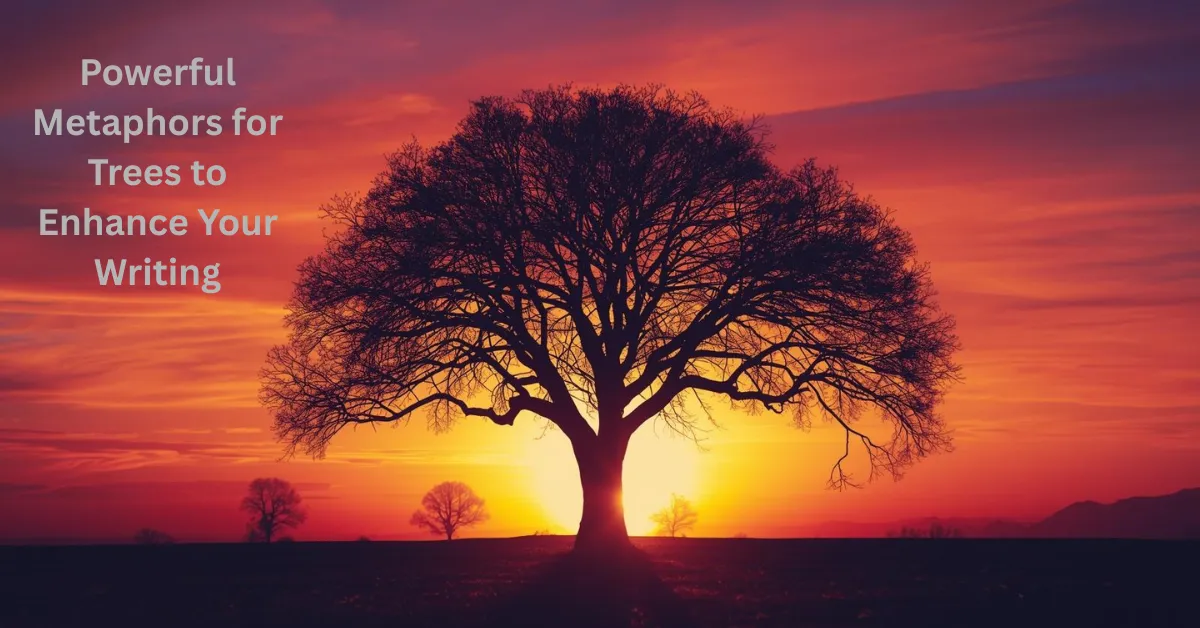
Metaphors for trees help writers turn a simple description into something vivid and meaningful. When you just say “there are many trees,” it may sound plain and forgettable. But when you compare trees to something powerful like guardians, towers, or silent storytellers, the image instantly becomes clearer and more engaging. That’s the power of metaphors. They add emotion, depth, and creativity to your writing. If you’re working on an essay, poem, story, or descriptive paragraph, using tree metaphors can help your ideas feel more alive and memorable. In this article, you’ll discover creative metaphors for trees that make your writing stronger and more expressive.
If you’re looking for a metaphor for trees, chances are you want your writing to sound more vivid and meaningful. Maybe you’re writing an essay, a poem, or a story, and simply saying “the tree is tall” or “the tree has many branches” feels a little too plain. When you use metaphors, though, something interesting happens: your words suddenly feel more alive. A tree can become a silent teacher, a green giant, or even a bridge between earth and sky.
Think about trees for a moment. They stand quietly for years, sometimes even centuries, watching seasons change and life move around them. Because of that, trees naturally represent ideas like strength, patience, protection, and growth. That’s exactly why writers, poets, and storytellers often use them as metaphors.
20 Metaphors for trees
In this guide, we’ll explore 20 creative metaphors for trees, along with their meanings, explanations, and examples. These ideas will help you describe trees in a more imaginative way and make your writing more engaging and memorable.
1. Trees Are Nature’s Guardians
Meaning: Trees protect and watch over the land.
Explanation: Just like guardians protect something valuable, trees provide shelter, shade, and balance in the environment.
Examples:
- The tall oaks stood like nature’s guardians, protecting the forest floor.
- Along the road, the old trees felt like silent guardians watching travelers pass.
2. Trees Are Living Towers
Meaning: Trees symbolize height and strength.
Explanation: Towers are tall and strong structures, and trees resemble them as they rise high above the ground.
Examples:
- The pine trees stood like living towers against the sunset sky.
- In the valley, the giant cedar looked like a tower of life.
3. Trees Are the Earth’s Lungs
Meaning: Trees help the planet breathe.
Explanation: Trees produce oxygen and absorb carbon dioxide, just like lungs help a body breathe.
Examples:
- Forests are often called the Earth’s lungs because they clean the air.
- Without trees, our planet would lose its natural lungs.
4. Trees Are Timekeepers of the Earth
Meaning: Trees represent the passage of time.
Explanation: Tree rings record years of growth, making trees natural keepers of history.
Examples:
- The ancient oak was a timekeeper of the earth.
- Every ring in the trunk told a story from the past.
5. Trees Are Green Umbrellas
Meaning: Trees provide shade and protection.
Explanation: The wide canopy of a tree spreads like an umbrella, protecting people and animals from the sun and rain.
Examples:
- We rested under the tree’s green umbrella on a hot afternoon.
- The park was filled with natural umbrellas providing cool shade.
6. Trees Are Nature’s Pillars
Meaning: Trees support ecosystems.
Explanation: Just like pillars hold up buildings, trees support wildlife and maintain the balance of nature.
Examples:
- Trees are nature’s pillars, holding the forest ecosystem together.
- Birds and insects depend on these green pillars.
7. Trees Are Silent Teachers
Meaning: Trees symbolize wisdom and patience.
Explanation: Trees grow slowly and quietly, reminding us that great things take time.
Examples:
- The old maple felt like a silent teacher sharing life lessons.
- Sitting under the tree made me feel like I was learning from nature.
8. Trees Are Living Libraries
Meaning: Trees hold history and stories.
Explanation: Because they live for so long, trees witness generations of change.
Examples:
- The forest felt like a living library full of stories.
- Every ancient tree seemed like a book written by time.
9. Trees Are Nature’s Sculptures
Meaning: Trees symbolize natural beauty.
Explanation: Their shapes, branches, and curves often look like works of art created by nature.
Examples:
- The twisted branches looked like nature’s sculptures.
- Each tree was a masterpiece shaped by wind and time.
10. Trees Are Green Giants
Meaning: Trees represent power and size.
Explanation: Large trees resemble giants standing proudly in the landscape.
Examples:
- The redwoods stood as green giants in the forest.
- Walking among them felt like visiting a land of gentle giants.
11. Trees Are Bridges Between Earth and Sky
Meaning: Trees connect nature’s elements.
Explanation: Their roots dig deep into the soil while their branches reach toward the sky.
Examples:
- The tree looked like a bridge between earth and sky.
- Its branches stretched upward as if touching the clouds.
12. Trees Are Nature’s Cathedrals
Meaning: Trees create peaceful and sacred spaces.
Explanation: Tall forests often feel quiet and majestic, like a cathedral.
Examples:
- The forest felt like nature’s cathedral.
- Sunlight filtering through leaves looked like stained glass.
13. Trees Are the Backbone of the Forest
Meaning: Trees provide strength and structure.
Explanation: Just like a backbone supports the body, trees support the forest ecosystem.
Examples:
- Trees are the backbone of the forest.
- Without them, the woodland would collapse.
14. Trees Are Patient Giants
Meaning: Trees symbolize patience and endurance.
Explanation: Trees grow slowly but remain strong for decades or even centuries.
Examples:
- The old oak stood like a patient giant in the field.
- Storms passed, but the tree remained steady.
15. Trees Are Nature’s Mirrors
Meaning: Trees reflect the seasons and environment.
Explanation: Their leaves change color and fall, showing the cycle of nature.
Examples:
- Trees are nature’s mirrors, showing the arrival of autumn.
- Their leaves reflected the changing seasons.
16. Trees Are Guardians of Wildlife
Meaning: Trees protect animals and birds.
Explanation: Many animals rely on trees for shelter, food, and nesting.
Examples:
- The tall trees acted as guardians of wildlife.
- Birds built their homes safely in the branches.
17. Trees Are the Hands of the Earth
Meaning: Trees reach outward like arms.
Explanation: Their branches spread out like hands stretching toward the sky.
Examples:
- The branches looked like the hands of the earth reaching upward.
- The tree extended its arms toward the sunlight.
18. Trees Are Nature’s Breath
Meaning: Trees represent life and oxygen.
Explanation: Trees help sustain life by producing the oxygen we breathe.
Examples:
- Forests are truly nature’s breath.
- The air felt fresher among the trees.
19. Trees Are Roots of Stability
Meaning: Trees symbolize grounding and strength.
Explanation: Their deep roots represent stability and strong foundations.
Examples:
- The banyan tree stood as a symbol of stability and grounding.
- Its roots held the earth firmly.
20. Trees Are Green Warriors
Meaning: Trees fight against environmental damage.
Explanation: Trees help combat pollution and improve the planet’s health.
Examples:
- Every tree is a green warrior protecting the Earth.
- Planting more trees adds warriors to nature’s defense.
FAQs
1. What is a metaphor for trees?
A metaphor for trees is a figure of speech that compares trees to something else to highlight qualities like strength, growth, wisdom, or protection.
2. Why are trees commonly used as metaphors?
Trees symbolize powerful ideas such as life, stability, patience, and resilience, making them perfect for creative comparisons.
3. What are some common metaphors for trees?
Common examples include nature’s guardians, green giants, silent teachers, living towers, and the earth’s lungs.
4. How do metaphors improve writing?
Metaphors make writing more vivid and imaginative by helping readers picture deeper meanings.
5. Can tree metaphors be used in essays?
Yes, tree metaphors work very well in essays about nature, growth, resilience, or life lessons.
6. What metaphor describes trees as protectors?
The metaphorical nature of the guardians of nature describes trees as protectors because they provide shelter and safety.
7. What metaphor represents wisdom in trees?
Trees are often called silent teachers because they symbolize patience and wisdom.
8. Are tree metaphors common in poetry?
Yes, poets frequently use tree metaphors because they represent beauty, life cycles, and emotional depth.
9. What metaphor shows trees connecting earth and sky?
The metaphor bridges between earth and sky highlights how trees link the ground with the sky.
10. How can I create my own tree metaphor?
Think about a tree’s qualities, such as roots, strength, shade, or growth, and compare them to something familiar like a guardian, tower, or teacher.
Conclusion:
Using a metaphor for trees can transform simple descriptions into powerful imagery. Trees are more than just plants; they represent life, strength, patience, and growth. When you describe trees as guardians, giants, teachers, or bridges between earth and sky, you give readers a deeper understanding of their importance. Metaphors help your writing feel more creative and engaging. If you’re writing an essay, a poem, or a story, these three metaphors can add color and meaning to your words. The key is to choose a metaphor that matches the message you want to express.