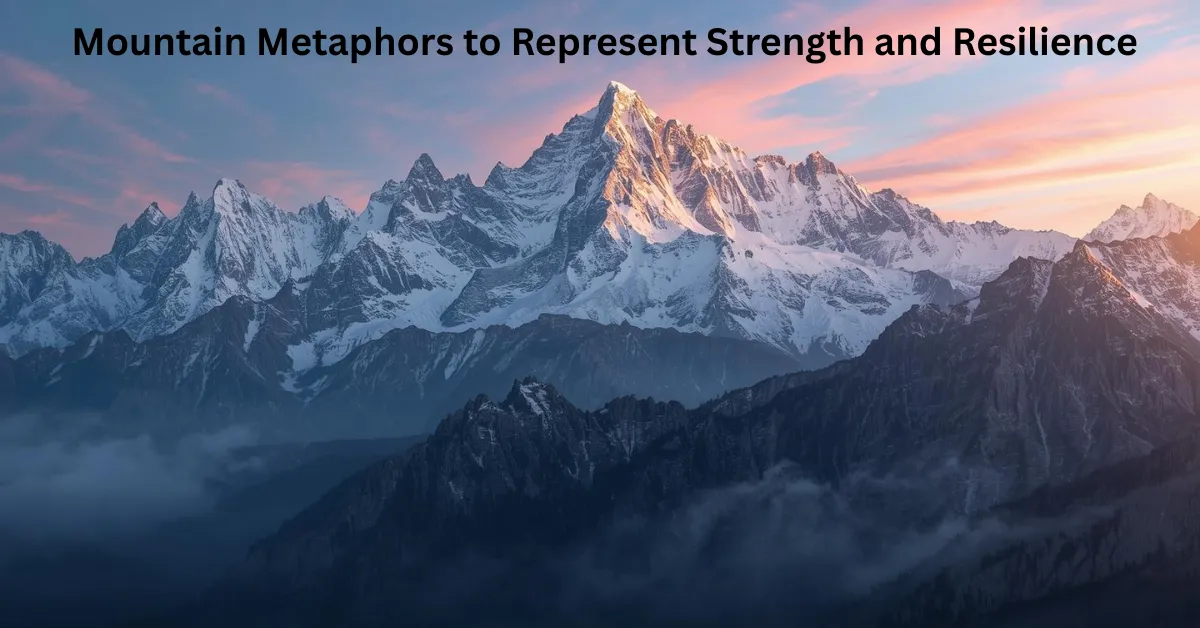
Mountain metaphors transform ordinary descriptions into powerful and inspiring imagery. Mountains aren’t just landforms; they symbolize strength, stability, challenges, and achievement. Saying someone’s determination is “like a mountain” instantly conveys resilience and unwavering commitment. These metaphors allow writers to express abstract ideas, emotions, and struggles with clarity and impact, whether in essays, poems, or stories. Using mountain imagery creatively can make your writing more vivid, memorable, and emotionally engaging. In this article, you’ll explore a variety of mountain metaphors that elevate your words and leave a lasting impression.
If you’re looking for a mountain metaphor, you probably want your writing to feel stronger, bolder, and more inspiring. Mountains aren’t just big rocks; they represent strength, challenges, stability, and triumph. Simply saying “the mountain is tall” or “the mountain looks beautiful” doesn’t capture its power. But when you use a metaphor, a mountain can symbolize obstacles to overcome, personal growth, or unwavering strength, instantly making your words more vivid.
Think about mountains for a moment. They rise high above the land, stand firm through storms, and challenge anyone who tries to climb them. Because of these qualities, writers, poets, and storytellers often use mountains as symbols of resilience, endurance, inspiration, and achievement. A mountain can become a guardian of the valley, a silent mentor, or an unyielding obstacle, and that transforms simple descriptions into powerful imagery.
20 Mountain Metaphor
In this guide, we’ll explore 20 creative mountain metaphors, along with their meanings, explanations, and examples, so you can use them in essays, stories, or everyday writing.
1. Mountains Are Nature’s Guardians
Meaning: Mountains protect the land below.
Explanation: Just like guardians stand watch over something valuable, mountains shield valleys and rivers from harsh weather or danger.
Examples:
- The towering peaks acted as nature’s guardians over the valley.
- Clouds gathered around the mountains, as if guardians were keeping watch.
2. Mountains Are Silent Mentors
Meaning: Mountains teach patience and resilience.
Explanation: Watching mountains endure storms over centuries inspires people to stay strong and persevere.
Examples:
- The climbers learned lessons from the silent mentor of the peaks.
- Standing before the range, she felt guided by a teacher in stone.
3. Mountains Are Nature’s Cathedrals
Meaning: Mountains symbolize awe and reverence.
Explanation: Their majestic height and beauty create a spiritual or inspiring feeling, like a cathedral.
Examples:
- The sunrise over the Himalayas felt like entering nature’s cathedral.
- Tourists were humbled by the cathedral of stone before them.
4. Mountains Are Obstacles of Life
Meaning: Mountains symbolize challenges to overcome.
Explanation: Just as climbers struggle to reach the top, mountains represent difficulties in life.
Examples:
- Passing the exams was a mountain she had to climb.
- The project felt like an immense obstacle, a mountain towering above her.
5. Mountains Are Pillars of the Earth
Meaning: Mountains provide structure and stability to the land.
Explanation: Like pillars holding a building, mountains support the landscape.
Examples:
- The Alps are the pillars of the earth, shaping rivers and valleys.
- These rocky heights act as natural pillars, holding the land steady.
6. Mountains Are Timeless Watchers
Meaning: Mountains symbolize longevity and history.
Explanation: They stand for centuries, witnessing generations come and go.
Examples:
- The Rockies were timeless watchers, silently observing human history.
- Every peak felt like a sentinel of time.
7. Mountains Are Nature’s Fortresses
Meaning: Mountains symbolize protection and strength.
Explanation: Their sheer cliffs and rugged terrain make them natural fortresses.
Examples:
- The fortress-like peaks kept the village safe.
- Hunters avoided the cliffs, knowing the mountains were nature’s fortresses.
8. Mountains Are Silent Giants
Meaning: Mountains symbolize massive power and presence.
Explanation: Their size and immovability make them appear giant-like.
Examples:
- The Himalayas rose like silent giants above the clouds.
- Each peak was a giant standing guard over the land.
9. Mountains Are Symbols of Achievement
Meaning: Mountains represent reaching goals.
Explanation: Climbing to a summit reflects success and accomplishment.
Examples:
- Graduating felt like reaching the mountain of achievement.
- Standing atop the peak, he celebrated the symbol of triumph.
10. Mountains Are Nature’s Mirrors
Meaning: Mountains reflect the mood of the environment.
Explanation: They reflect sunlight, clouds, or storms, showing nature’s state.
Examples:
- The peaks were nature’s mirrors, reflecting the golden sunrise.
- Storm clouds mirrored their fury on the mountain mirrors.
11. Mountains Are Bridges Between Earth and Sky
Meaning: Mountains connect land and heaven.
Explanation: Their height stretches from valleys toward clouds, creating a link between earth and sky.
Examples:
- The peaks formed a bridge between earth and sky.
- Climbing felt like walking on a natural bridge to the heavens.
12. Mountains Are Symbols of Endurance
Meaning: Mountains symbolize lasting strength.
Explanation: They withstand wind, rain, and time, teaching resilience.
Examples:
- The mountain’s rocky face was a symbol of endurance.
- Through centuries, it remained unshaken and steadfast.
13. Mountains Are Guardians of Rivers
Meaning: Mountains protect water sources.
Explanation: Rivers often originate in mountains, so they safeguard life below.
Examples:
- The snow-capped peaks acted as guardians of rivers.
- Streams trickled from the mountains, their protectors.
14. Mountains Are Silent Teachers of Patience
Meaning: Mountains symbolize patience over time.
Explanation: Their slow formation and permanence teach humans about waiting and endurance.
Examples:
- The hikers learned from silent teachers, the mountains, to be patient.
- Watching glaciers carve through peaks revealed lessons in patience.
15. Mountains Are Nature’s Sculptures
Meaning: Mountains represent artistry and beauty.
Explanation: Wind, rain, and erosion shape them into sculpted forms.
Examples:
- The jagged peaks looked like nature’s sculptures.
- Each ridge and cliff was a work of art carved by time.
16. Mountains Are Symbols of Stability
Meaning: Mountains represent firmness and reliability.
Explanation: Their immovability symbolizes steadiness in life or thought.
Examples:
- The village relied on the mountain of stability in storms.
- His presence was as solid as a steady mountain.
17. Mountains Are Silent Witnesses
Meaning: Mountains witness human events over centuries.
Explanation: Their long existence allows them to “observe” history unfold.
Examples:
- The ancient peaks stood as silent witnesses to battles and triumphs.
- Every festival felt tiny against the witnessing mountains.
18. Mountains Are Obstacles to Conquer
Meaning: Mountains symbolize challenges and goals.
Explanation: Scaling a mountain mirrors overcoming a difficult task.
Examples:
- Completing the marathon felt like climbing a mountain to conquer.
- Life presented a steep mountain he had to face.
19. Mountains Are Nature’s Guardians of Life
Meaning: Mountains protect ecosystems and habitats.
Explanation: Forests, rivers, and wildlife depend on mountains for survival.
Examples:
- The peaks acted as guardians of life, sheltering countless species.
- Snow-fed rivers showed how mountains are protectors of life.
20. Mountains Are Symbols of Inspiration
Meaning: Mountains inspire awe and motivation.
Explanation: Their sheer size and majesty push humans to dream bigger and reach higher.
Examples:
- The Himalayas were a symbol of inspiration for climbers.
- Artists often painted mountains of motivation to inspire others.
FAQs
1. What is a mountain metaphor?
A mountain metaphor is a figure of speech that compares mountains to something else to symbolize strength, challenges, stability, or achievement.
2. Why are mountains used as metaphors?
Mountains represent endurance, resilience, obstacles, and inspiration, making them perfect for vivid storytelling.
3. What are some common mountain metaphors?
Common examples include nature’s guardians, silent mentors, mountains of achievement, pillars of the earth, and symbols of endurance.
4. How do mountain metaphors improve writing?
They make descriptions more powerful and symbolic, helping readers understand deeper meanings.
5. Can mountain metaphors be used in essays?
Yes, especially when discussing personal growth, challenges, resilience, or natural beauty.
6. What metaphor describes mountains as obstacles?
Obstacles of life or mountains to conquer illustrate challenges to overcome.
7. What metaphor represents stability in mountains?
Mountains as pillars of the earth or symbols of stability highlight firmness and steadiness.
8. Are mountain metaphors common in poetry?
Yes, poets often use them to represent strength, endurance, and inspiration.
9. What metaphor shows mountains as teachers?
Silent mentors or silent teachers of patience symbolize lessons in endurance and wisdom.
10. How can I create my own mountain metaphor?
Think about a mountain’s qualities: height, strength, challenge, or permanence, and compare it to something familiar, like a guardian, obstacle, or source of inspiration.
Conclusion:
Using a mountain metaphor can transform ordinary writing into something majestic and powerful. Mountains can represent strength, challenges, resilience, stability, and inspiration, depending on how you describe them. In stories, essays, or poems, mountain metaphors allow you to convey achievement, endurance, or awe creatively. By using examples like silent mentors, mountains to conquer, or guardians of life, your writing becomes more vivid, symbolic, and memorable.