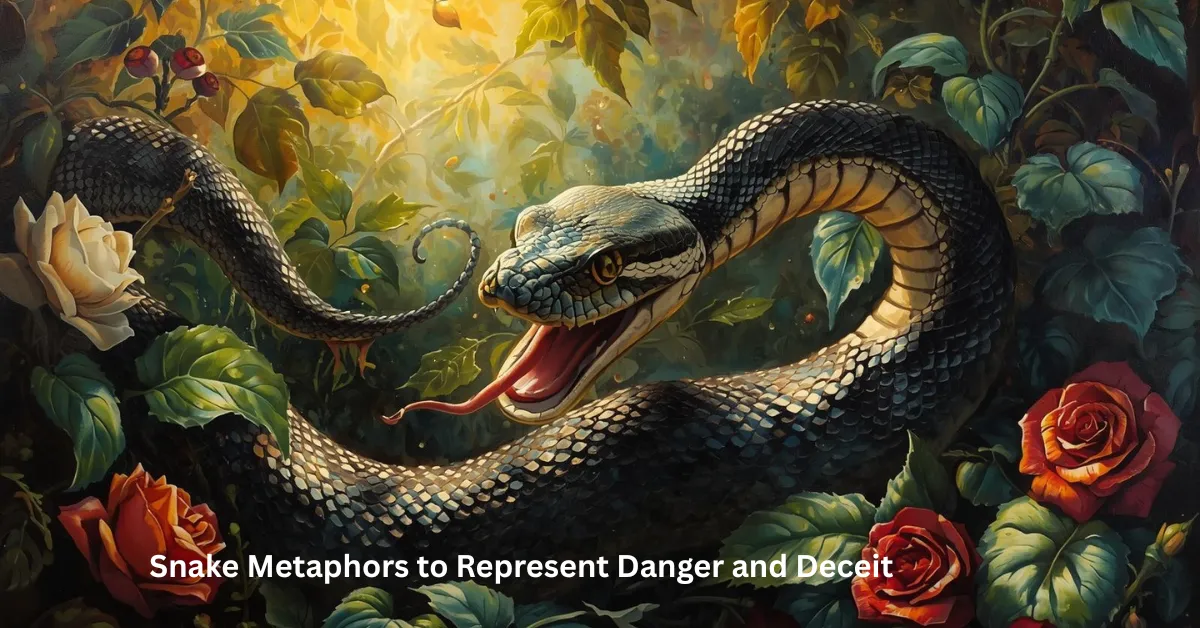
Snake metaphors give your writing a sharp, vivid edge. A snake isn’t just a reptile; it can symbolize danger, temptation, cunning, or transformation. Saying someone is “like a snake” instantly conveys deceit, slyness, or hidden threats, making your description more powerful than plain words. Metaphors for snakes allow writers to express complex emotions and ideas with impact, whether in stories, poems, or essays. Using snake imagery creatively can turn a simple sentence into a striking mental picture, leaving readers intrigued and engaged. In this article, you’ll explore a variety of snake metaphors that elevate your writing.
If you’re looking for a snake metaphor, you probably want to make your writing more vivid and expressive. Snakes are fascinating creatures; they can be dangerous, clever, slippery, or even wise. But simply saying “the snake is dangerous” or “the snake slithered quietly” feels flat. When you use a metaphor, though, snakes can take on a deeper meaning. They can represent deception, transformation, wisdom, or danger, depending on how you describe them.
Think about snakes for a moment. They move silently, strike quickly, and shed their skin to grow. Because of these qualities, writers, storytellers, and poets often use snakes as symbols of cunning, rebirth, temptation, and adaptability. A snake can become a slippery trickster, a silent guardian, or a symbol of change, and that instantly makes your writing more engaging.
20 Snake Metaphor
In this guide, we’ll explore 20 creative snake metaphors, along with their meanings, explanations, and examples, so you can use them in your stories, essays, or everyday writing.
1. Snakes Are Slippery Tricksters
Meaning: Snakes symbolize deceit or cunning.
Explanation: Just like tricksters who deceive others, snakes are often seen as sneaky or unpredictable.
Examples:
- The politician slithered through the debate like a slippery trickster.
- That employee was a trickster snake, always finding ways to avoid responsibility.
2. Snakes Are Silent Guardians
Meaning: Snakes can symbolize hidden protectors.
Explanation: Some snakes silently defend their territory, representing protection that isn’t obvious.
Examples:
- The cobra acted like a silent guardian over its nest.
- In the garden, the harmless snake was a guardian, keeping pests away.
3. Snakes Are Nature’s Swords
Meaning: Snakes symbolize danger and precision.
Explanation: Their quick strikes and sharp fangs make them like living weapons.
Examples:
- The rattlesnake was nature’s sword, ready to strike.
- Its sudden attack reminded me of a sword in the grass.
4. Snakes Are Agents of Change
Meaning: Snakes represent transformation and rebirth.
Explanation: Snakes shed their skin as they grow, symbolizing personal or spiritual change.
Examples:
- Life’s challenges made him an agent of change, like a snake shedding its skin.
- The snake in the story symbolized rebirth and renewal.
5. Snakes Are Nature’s Shadows
Meaning: Snakes symbolize secrecy or hidden threats.
Explanation: Their stealthy movement makes them appear almost like shadows in their environment.
Examples:
- The snake slid past like one of nature’s shadows.
- In the jungle, predators moved like silent shadows.
6. Snakes Are Serpents of Temptation
Meaning: Snakes symbolize allure and temptation.
Explanation: Traditionally, snakes have represented temptation or forbidden desire.
Examples:
- The villain was a serpent of temptation, luring the hero astray.
- That deal felt like a tempting snake, dangerous but alluring.
7. Snakes Are Silent Teachers
Meaning: Snakes symbolize wisdom and patience.
Explanation: Watching and waiting for the right moment is a trait snakes share with wise figures.
Examples:
- The snake taught patience as a silent teacher.
- He moved cautiously, learning from the teacher snake in nature.
8. Snakes Are Hidden Threats
Meaning: Snakes symbolize danger that isn’t immediately obvious.
Explanation: Their camouflaged bodies make them dangerous even when unseen.
Examples:
- The leak in the plan was a hidden threat, like a snake in the grass.
- Betrayal lurked nearby like a silent snake.
9. Snakes Are Symbols of Rebirth
Meaning: Snakes represent starting anew.
Explanation: Shedding their skin, snakes are associated with renewal and transformation.
Examples:
- After quitting his job, he felt like a symbol of rebirth, shedding old constraints.
- The snake’s molt reminded me of personal transformation.
10. Snakes Are Nature’s Whisperers
Meaning: Snakes symbolize quiet observation and subtlety.
Explanation: They move silently and sense their surroundings keenly.
Examples:
- The snake slithered as nature’s whisperer, sensing every movement.
- He watched quietly, a whispering snake in the crowd.
11. Snakes Are Cold Strategists
Meaning: Snakes symbolize calculated thinking.
Explanation: Their patience and planning before striking show strategy and cunning.
Examples:
- The hacker was a cold strategist, like a patient snake.
- In business, she moved like a snake, calculating every move.
12. Snakes Are Nature’s Mirrors
Meaning: Snakes symbolize reflection and self-awareness.
Explanation: Watching snakes can reflect our own hidden fears or desires.
Examples:
- The serpent acted as nature’s mirror, reflecting my inner fears.
- He realized his actions were mirrored by a silent snake nearby.
13. Snakes Are Slithering Shadows
Meaning: Snakes represent stealth and subtlety.
Explanation: Their movement is smooth and hidden, like shadows gliding.
Examples:
- The snake moved like a slithering shadow through the grass.
- Danger often appears like a quiet shadow, much like a snake.
14. Snakes Are Symbols of Cunning
Meaning: Snakes symbolize cleverness or sly behavior.
Explanation: Their hunting methods and stealth make them perfect symbols of cunning.
Examples:
- The negotiator was as sly as a symbol of cunning, like a snake.
- In politics, he moved like a cunning serpent.
15. Snakes Are Nature’s Artists
Meaning: Snakes symbolize precision and skill.
Explanation: Their movements are smooth, controlled, and almost artistic.
Examples:
- The python struck with the grace of nature’s artist.
- The dance of the cobra looked like an artistic snake performance.
16. Snakes Are Messengers of Danger
Meaning: Snakes symbolize warning signals.
Explanation: Seeing a snake often serves as a natural warning.
Examples:
- The rattlesnake was a messenger of danger in the desert.
- His warning felt like a signal from a lurking snake.
17. Snakes Are Agents of Mystery
Meaning: Snakes symbolize the unknown and mysterious.
Explanation: Their secretive behavior makes them enigmatic creatures.
Examples:
- The serpent in the story was an agent of mystery.
- The jungle was full of mysterious snakes hiding unseen.
18. Snakes Are Symbols of Tempting Danger
Meaning: Snakes represent something alluring but risky.
Explanation: They are often beautiful yet dangerous, symbolizing risk.
Examples:
- The deal was a symbol of tempting danger, like a snake.
- He couldn’t resist the alluring snake, though it posed a risk.
19. Snakes Are Nature’s Guardians
Meaning: Snakes can protect their space and territory.
Explanation: Despite being feared, snakes also defend their environment.
Examples:
- The snake protected its burrow like a guardian of nature.
- Even venomous snakes act as guardians of their ecosystems.
20. Snakes Are Symbols of Adaptability
Meaning: Snakes represent flexibility and survival.
Explanation: They adapt to environments and conditions, surviving in many forms.
Examples:
- The snake was a symbol of adaptability, thriving in harsh conditions.
- In life, we should learn from the adaptable snake.
FAQs
1. What is a snake metaphor?
A snake metaphor is a figure of speech that compares snakes to something else to highlight qualities like cunning, danger, wisdom, or transformation.
2. Why are snakes commonly used as metaphors?
Snakes are fascinating and symbolic creatures that represent deception, adaptability, rebirth, danger, and wisdom, making them perfect for storytelling.
3. What are some common snake metaphors?
Common examples include slippery trickster, silent guardian, agent of change, serpent of temptation, and symbol of rebirth.
4. How do snake metaphors improve writing?
Snake metaphors make writing more engaging, vivid, and symbolic, allowing readers to imagine deeper meanings.
5. Can snake metaphors be used in essays?
Yes, especially in essays about human behavior, danger, transformation, or nature, snakes can provide strong imagery.
6. What metaphor describes snakes as dangerous?
The metaphorical nature’s sword or hidden threat shows snakes as dangerous creatures.
7. What metaphor represents wisdom in snakes?
Snakes can be silent teachers, symbolizing patience and careful observation.
8. Are snake metaphors common in literature?
Yes, snakes have appeared in literature for centuries as symbols of danger, temptation, or transformation.
9. What metaphor shows snakes as cunning or sly?
Slippery trickster or symbol of cunning highlights a snake’s clever and sly behavior.
10. How can I create my own snake metaphor?
Think about a snake’s qualities: stealth, danger, adaptability, or transformation, and compare it to something familiar like a trickster, guardian, or agent of change.
Conclusion:
Using a snake metaphor can transform ordinary writing into something vivid, symbolic, and memorable. Snakes can represent danger, cunning, wisdom, transformation, and adaptability, depending on how you describe them. In essays, stories, or poems, snake metaphors allow you to convey deeper ideas creatively. By using examples like slippery tricksters, silent teachers, or agents of change, you can add intrigue, tension, or insight into your writing. The key is to match the metaphor to the message you want to share.