Imagine sitting across from me at a table while I explain this—because that’s the exact tone I want to set. Metaphors aren’t scary, confusing, or “too grown-up.” They’re simply a fun way to compare one thing to another so kids can understand the world more clearly.
Kids already think in pictures—metaphors just give those pictures words. Once children “get” that one thing can help explain another, language becomes more colorful, learning becomes easier, and communication becomes a whole lot more fun.
20 Metaphors for Kids (With Meaning, Explanation & Examples)
1. “The classroom was a zoo today.”
Meaning: The room was loud and full of activity.
Explanation: It compares a noisy class to a zoo.
Examples:
- The moment recess ended, the classroom was a zoo.
- When the teacher left, the room became a zoo again.
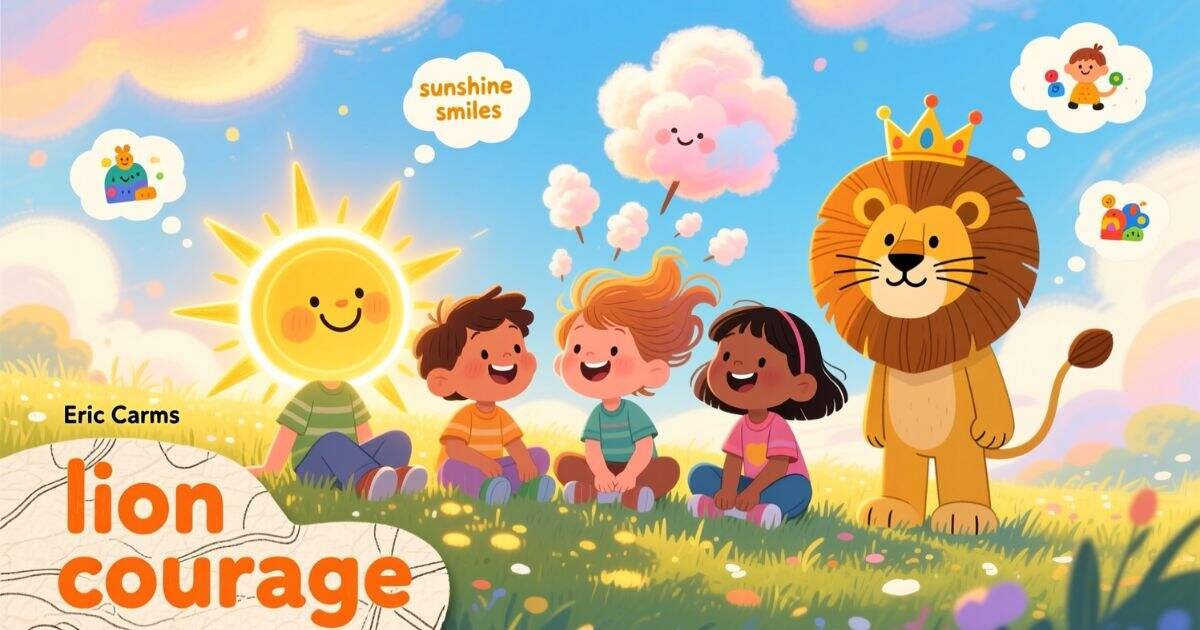
2. “Her smile is sunshine.”
Meaning: Her smile brings warmth and happiness.
Explanation: Sunshine represents joy.
Examples:
- When she arrived, her smile was sunshine.
- His sister’s sunshine smile brightened everyone’s day.
3. “He’s a walking dictionary.”
Meaning: He knows a lot of words or information.
Explanation: A person’s knowledge is compared to a dictionary.
Examples:
- Ask him any word—he’s a walking dictionary.
- My friend is a walking dictionary during spelling tests.
4. “Time is a thief.”
Meaning: Time passes quickly and steals moments.
Explanation: Time is compared to something that takes things away.
Examples:
- Childhood goes fast because time is a thief.
- Summer break disappears—time is a thief.
5. “Her voice is music to my ears.”
Meaning: Her voice is pleasant.
Explanation: Nice sounds are compared to music.
Examples:
- My mom’s voice is music to my ears.
- His baby sister’s laughter was music to his ears.
6. “The snow was a white blanket.”
Meaning: Snow covers everything evenly.
Explanation: The snow is compared to a soft blanket.
Examples:
- By morning, the snow was a white blanket.
- The field turned into a white blanket.
7. “He has a heart of gold.”
Meaning: He is very kind.
Explanation: Gold represents purity and goodness.
Examples:
- My grandpa has a heart of gold.
- She helped everyone because she had a heart of gold.
8. “The clouds were cotton candy in the sky.”
Meaning: The clouds looked soft and fluffy.
Explanation: Clouds are compared to cotton candy.
Examples:
- At sunset, the clouds looked like cotton candy.
- Kids pointed at the cotton-candy clouds.
9. “My backpack is a mountain.”
Meaning: It feels heavy.
Explanation: A heavy load is compared to a mountain.
Examples:
- With all my books, my backpack is a mountain.
- His sports gear made his bag a mountain.
10. “She’s a shining star.”
Meaning: She stands out or excels.
Explanation: Stars represent brightness and success.
Examples:
- In math class, she’s a shining star.
- His performance made him a shining star.
11. “The wind was a wild wolf howling.”
Meaning: The wind sounded loud.
Explanation: Wind noise is compared to wolf howls.
Examples:
- Last night, the wind was a wild wolf.
- The storm made the wind howl like a wolf.
12. “His temper is a volcano.”
Meaning: He gets angry quickly.
Explanation: A volcano represents sudden eruptions.
Examples:
- Be gentle—his temper is a volcano.
- Her little brother’s temper was a volcano today.
13. “My mind is a sponge.”
Meaning: The mind absorbs information easily.
Explanation: The brain is compared to something that soaks things up.
Examples:
- When I like a subject, my mind is a sponge.
- Kids’ minds are sponges in school.
14. “Her words were a warm blanket.”
Meaning: Her words made someone feel safe.
Explanation: Comforting words are compared to warmth.
Examples:
- When I was scared, her words were a warm blanket.
- The teacher’s encouragement felt like a warm blanket.
15. “The playground was a beehive.”
Meaning: It was full of busy movement.
Explanation: Kids’ activity is compared to buzzing bees.
Examples:
- During recess, the playground was a beehive.
- The hallway became a beehive after the bell.
16. “He’s a night owl.”
Meaning: He stays up late.
Explanation: Night owls are active at night.
Examples:
- My brother is a night owl on weekends.
- She studied late like a night owl.
17. “My imagination is a roller coaster.”
Meaning: It goes up and down with big ideas.
Explanation: Imagination is compared to a fast ride.
Examples:
- When I write stories, my imagination is a roller coaster.
- His imagination was a roller coaster of ideas.
18. “Her courage is a lion.”
Meaning: She is brave.
Explanation: Lions symbolize strength.
Examples:
- She faced the stage—her courage was a lion.
- His courage turned into a lion when helping his friend.
19. “The computer is a brain.”
Meaning: It stores and processes information.
Explanation: A computer is compared to a thinking mind.
Examples:
- My computer is a brain full of games.
- Their robot worked like a smart brain.
20. “Laughter is a spark.”
Meaning: Laughter can start joy or excitement.
Explanation: A spark represents the start of something bright.
Examples:
- One joke and the room lit up—laughter was a spark.
- Their laughter became a spark for fun.
Conclusion
Metaphors help kids understand big ideas through simple comparisons, making language richer and learning more enjoyable. Teaching them early encourages creativity, confidence, and clearer communication. With these examples, children can start recognizing metaphors everywhere and even create their own.
Practical Exercise (10 Questions + Answers)
- What is being compared in the metaphor “Her smile is sunshine”?
Answer: A smile and sunshine. - What does “The classroom was a zoo” suggest?
Answer: The class was loud or chaotic. - If someone is a “walking dictionary,” what are they like?
Answer: Very knowledgeable. - What does “time is a thief” mean?
Answer: Time passes quickly. - If snow is a “white blanket,” how does it look?
Answer: Soft and covering everything. - What does a “heart of gold” describe?
Answer: Kindness. - If the playground is a “beehive,” what does that mean?
Answer: Busy and active. - A “volcano temper” suggests what?
Answer: Sudden anger. - What does “laughter is a spark” mean?
Answer: Laughter starts joy or excitement. - When someone is a “night owl,” what do they do?
Answer: Stay awake late.