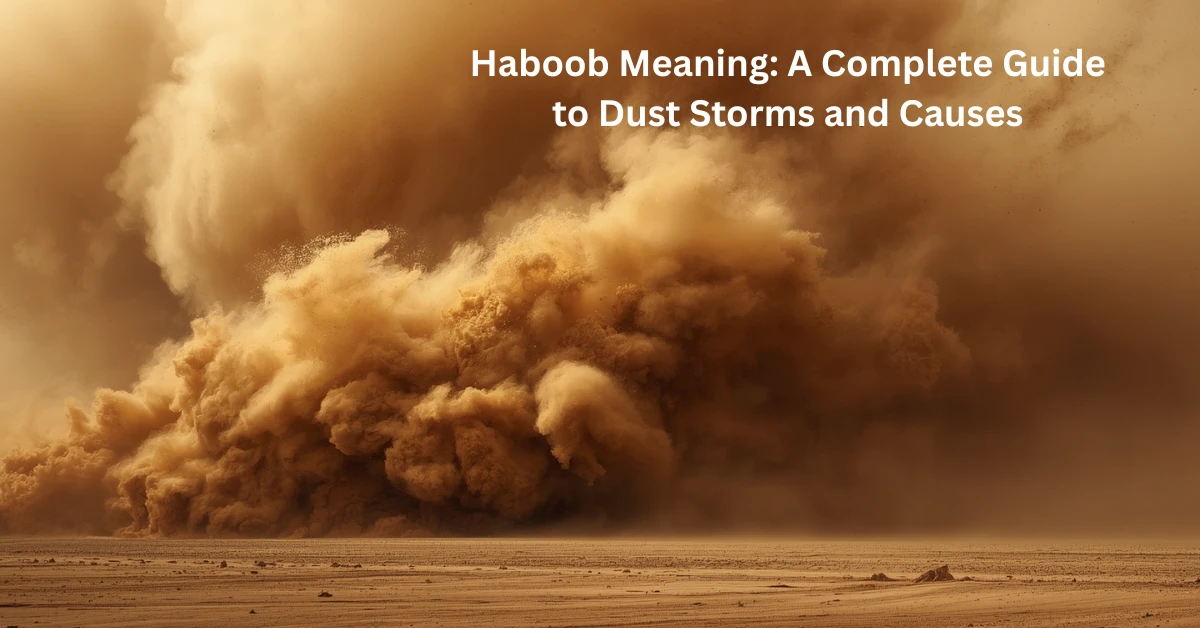
The Haboob meaning is something many people search for after hearing the term in weather reports, news stories, or documentaries about extreme climate events. A haboob is a powerful dust storm caused by strong winds that lift large amounts of sand and dust into the air, often creating a massive wall of debris that reduces visibility and disrupts daily life. The word is commonly associated with desert regions and can appear suddenly, making it both fascinating and dangerous. Understanding the meaning of haboob can help you interpret weather updates more accurately and expand your vocabulary.
If you’ve ever seen a massive wall of dust rolling across the sky in videos or news reports, you’ve likely witnessed a haboob. The term may sound unusual, but understanding the haboob meaning is increasingly important as extreme weather events become more widely reported around the world. These powerful dust storms can dramatically reduce visibility, disrupt travel, and even impact health within minutes.
In this comprehensive guide, you’ll learn exactly what a haboob is, how it forms, where it occurs, its real-world effects, and why it matters in today’s changing climate. We’ll also explore myths, safety tips, and interesting case studies that make this natural phenomenon easier to understand.
What Is a Haboob? (Simple Definition)
A haboob is a fast-moving, intense dust storm carried by strong winds, usually created by thunderstorm downdrafts.
Quick Definition:
A haboob is a massive wall of dust and sand lifted into the air by powerful winds from a collapsing thunderstorm.
Key Features:
- Thick, towering dust cloud
- Extremely low visibility (sometimes near zero)
- High-speed winds are pushing dust forward
- Short but intense duration (10 minutes to several hours)
Haboob Meaning Explained in Detail
The word haboob comes from the Arabic word “habb” (to blow). It is commonly used in meteorology to describe severe dust storms in arid and semi-arid regions.
Unlike normal windstorms, a haboob is not just wind—it is a wall of airborne dust moving at high speed.
What makes it different?
| Weather Event | Main Feature | Visibility Impact |
| Haboob | Dust wall from thunderstorm winds | Near-zero visibility |
| Sandstorm | Wind-blown sand in deserts | Reduced visibility |
| Dust storm | Loose soil particles in the air | Moderate to severe |
| Tornado dust cloud | Rotating air funnel | Extreme destruction |
How Does a Haboob Form?
A haboob is created through a specific weather process involving thunderstorms.
Step-by-Step Formation:
- A strong thunderstorm develops in a dry region
- Rain falls inside the storm but evaporates before reaching the ground (virga)
- This creates a cold downdraft of air
- The air rushes downward and hits the ground with force
- Winds spread outward, lifting dust and sand
- A moving wall of dust forms → this is the haboob
Simple Explanation:
Think of it like a giant invisible hammer of air hitting the ground and pushing dust upward in all directions.
Where Do Haboobs Occur?
Haboobs are most common in dry and desert regions.
Major Locations:
- Sahara Desert (Africa)
- Arabian Peninsula (Saudi Arabia, UAE)
- Arizona and New Mexico (USA)
- Sudan and Chad
- Parts of India and Pakistan (the Thar Desert region)
- Australia (arid inland areas)
Example in Pakistan:
In regions like Sindh and Balochistan, dust storms similar to haboobs often occur during seasonal weather shifts, especially before monsoon patterns.
Haboob Meaning in Weather Science
In meteorology, a haboob is classified as a mesoscale atmospheric phenomenon.
Scientific Characteristics:
- Wind speeds: 30–60 mph (can be higher)
- Height: up to 3,000–5,000 meters
- Duration: 10 minutes to 3 hours
- Trigger: thunderstorm outflow
Meteorologists study haboobs to understand:
- Air pressure changes
- Storm behavior
- Desert climate patterns
- Visibility hazards for aviation and roads
Real-Life Example of a Haboob
One of the most famous haboobs occurred in Phoenix, Arizona, where a massive dust wall swept across the city, reducing visibility to almost zero within minutes.
What happened:
- Flights were delayed
- Roads were closed
- People were trapped in traffic
- Air quality dropped sharply
This event showed how quickly a haboob can affect daily life.
Effects of a Haboob
Haboobs can have serious environmental and health impacts.
1. Reduced Visibility
- Drivers cannot see beyond a few meters
- High risk of road accidents
- Flight delays and cancellations
2. Health Issues
- Dust inhalation
- Asthma attacks
- Eye irritation
- Allergic reactions
3. Environmental Impact
- Soil erosion
- Damage to crops
- Temporary air pollution spike
4. Infrastructure Disruption
- Power outages
- Blocked roads
- Damaged machinery
Haboob Safety Tips
If you are caught in a haboob, safety is crucial.
What to do:
- Stay indoors if possible
- Close all windows and doors
- Turn off ventilation systems
- If driving, pull over safely
- Use headlights and hazard lights
- Cover nose and mouth with a cloth or a mask
What NOT to do:
- Don’t continue driving blindly
- Don’t stand in open areas
- Don’t ignore warning alerts
Common Myths About Haboobs
Let’s clear up some misunderstandings.
Myth 1: Haboobs are tornadoes
❌ False
✔ Haboobs are dust storms, not rotating wind funnels.
Myth 2: They only happen in deserts
❌ Partly false
✔ They are most common in deserts but can occur in dry regions globally.
Myth 3: Haboobs last for hours and hours
❌ False
✔ Most haboobs are short-lived but intense.
Myth 4: They are rare
❌ False
✔ They are common in many arid climates.
Haboob vs Sandstorm vs Dust Storm
People often confuse these terms.
| Term | Cause | Intensity | Visibility |
| Haboob | Thunderstorm downdraft | Very high | Extremely low |
| Sandstorm | Strong wind over sand | Moderate to high | Low |
| Dust storm | Loose soil lifted by the wind | Moderate | Low to medium |
Why Haboobs Are Important in Climate Studies
Scientists study haboobs to understand:
- Climate change effects on extreme weather
- Desertification trends
- Storm prediction models
- Air pollution patterns
As global temperatures rise, dust storms may become more frequent in certain regions.
Interesting Facts About Haboobs
Here are some fascinating insights:
- Haboobs can stretch hundreds of kilometers wide
- The dust wall can look like a giant “brown tsunami”
- They often occur at the start of thunderstorms
- Some haboobs are visible from space via satellites
- Ancient travelers used to fear them as desert “storms of darkness”
Case Study: Arizona Haboob Event
A major haboob in Arizona caused:
- Visibility drops to near zero in minutes
- Airport shutdowns
- Emergency alerts issued
- Social media viral videos
Lesson Learned:
Early warning systems and weather monitoring are essential for public safety.
Practical Uses of Understanding Haboobs
Knowing the haboob meaning is useful for:
Travelers:
- Avoid dangerous driving conditions
Pilots:
- Adjust flight paths
Farmers:
- Protect crops and soil
Urban planners:
- Design dust-resistant infrastructure
Students & researchers:
- Study climate and atmospheric science
Related Weather Terms
If you’re learning about haboobs, these terms are also useful:
- Thunderstorm outflow
- Microburst
- Sandstorm
- Dust devil
- Arid climate
- Atmospheric pressure
- Visibility index
FAQs
1. What is a haboob in simple words?
A haboob is a large, fast-moving wall of dust caused by strong winds from thunderstorms.
2. Is a haboob dangerous?
Yes, it can be dangerous due to poor visibility, breathing problems, and traffic accidents.
3. How long does a haboob last?
Most haboobs last between 10 minutes and a few hours.
4. Where do haboobs happen most?
They are common in deserts like the Sahara, Arabian Peninsula, and parts of the United States.
5. Can haboobs be predicted?
Meteorologists can sometimes predict conditions that lead to haboobs, but exact timing is difficult.
6. Are haboobs related to climate change?
They are influenced by weather patterns, and some regions may experience changes in frequency due to climate shifts.
7. What should I do during a haboob?
Stay indoors, avoid driving, and protect yourself from dust exposure
Conclusion:
In conclusion, the meaning of haboob helps us understand one of nature’s most powerful dust storms. These massive walls of sand and dust show how extreme weather can quickly change visibility, travel conditions, and daily life in desert regions. By learning about haboobs, we can better interpret weather reports and stay prepared for sudden environmental changes. Overall, understanding this term not only improves vocabulary but also increases awareness of important natural phenomena.
Understanding the haboob’s meaning helps us recognize one of nature’s most dramatic weather events, a powerful dust storm driven by thunderstorm winds. While visually striking, haboobs can also be hazardous due to their impact on visibility, air quality, and transportation