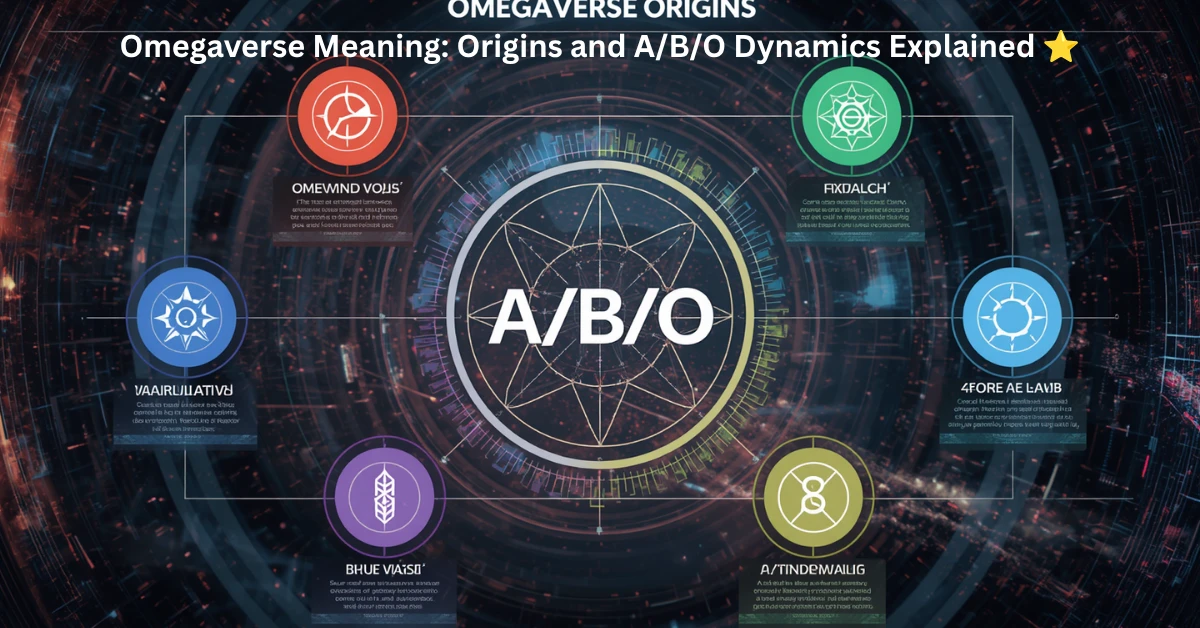
The Omegaverse meaning is a topic that often confuses readers who encounter the term in fan fiction, online communities, or discussions about fictional tropes. Also known as A/B/O (Alpha/Beta/Omega) dynamics, Omegaverse is a subgenre of speculative fiction that creates an alternative social hierarchy built around Alpha, Beta, and Omega roles. Over time, it has grown from a niche fan-created concept into a widely recognized storytelling trope across various fandoms. Understanding the meaning of Omegaverse can help readers navigate fan fiction spaces, interpret character dynamics, and appreciate the themes often explored within this genre.
If you’ve spent time in fanfiction communities, browsed BookTok recommendations, explored online fandom spaces, or stumbled across discussions about romance tropes, you’ve probably encountered the term Omegaverse. For newcomers, it can sound confusing, mysterious, or even intimidating. What exactly does it mean? Why is everyone talking about Alphas, Betas, and Omegas? And how did this unique storytelling concept become a major part of internet fandom culture?
Understanding the Omegaverse meaning is more relevant than ever. What started as a niche fanfiction trope has evolved into a recognizable subgenre that appears in fan works, original novels, comics, and online discussions across the world. Readers are increasingly curious about its terminology, themes, and appeal.
In this comprehensive guide, we’ll explore the meaning of Omegaverse, its history, defining characteristics, common terms, examples, misconceptions, and cultural impact. Whether you’re completely new to the concept or looking to deepen your understanding, this article will help you navigate one of fandom’s most fascinating fictional genres.
Omegaverse Meaning: Quick Answer
Omegaverse is a fictional storytelling subgenre primarily found in fanfiction and romance that imagines societies structured around secondary biological dynamics, typically involving Alphas, Betas, and Omegas.
These fictional roles often influence:
- Social hierarchy
- Relationships
- Attraction
- Family structures
- Power dynamics
- Character interactions
The Omegaverse is entirely fictional and does not reflect real human biology.
What Does Omegaverse Mean?
At its simplest, the Omegaverse is a speculative fictional universe that introduces an additional social and biological system beyond traditional human characteristics.
Characters are generally categorized into three groups:
| Classification | Typical Fictional Traits |
| Alpha | Leadership, confidence, protectiveness |
| Beta | Neutral role without heightened traits |
| Omega | Emotional sensitivity, nurturing qualities |
It’s important to understand that these traits vary widely depending on the author. There is no single “official” version of the Omegaverse.
A Simple Way to Understand It
Think of Omegaverse as an alternate universe (AU) where society functions differently because characters possess an additional set of fictional characteristics that shape relationships and social expectations.
The Origin and History of the Omegaverse
One of the most interesting aspects of the Omegaverse is its grassroots development within fandom culture.
Early Beginnings
The Omegaverse emerged in online fan communities during the late 2000s and early 2010s.
It first gained traction through fanfiction writers experimenting with:
- Alternative universes
- Unique relationship dynamics
- Expanded world-building
- Social hierarchy concepts
Growth Through Fan Communities
As readers became interested, the trope spread rapidly across fandom platforms.
Contributing factors included:
- Reader recommendations
- Online archives
- Community discussions
- Social media sharing
- Creative reinterpretations
Expansion Beyond Fanfiction
Eventually, Omegaverse concepts appeared in:
- Original romance novels
- Independent publications
- Web comics
- Graphic novels
- Digital storytelling platforms
Today, it’s recognized as a distinct subgenre within fandom and romance spaces.
Understanding the Alpha, Beta, and Omega System
Although interpretations differ, the three classifications remain central.
Alpha
Alphas are often portrayed as:
- Natural leaders
- Protective figures
- Decisive personalities
- Confident individuals
However, modern stories increasingly challenge these stereotypes.
Beta
Betas usually function as:
- The societal middle ground
- Characters without enhanced traits
- Stabilizing influences
- Every day, members of society
Some stories minimize Beta roles, while others explore them extensively.
Omega
Omegas are often depicted as:
- Emotionally expressive
- Compassionate
- Resilient
- Complex individuals navigating expectations
Contemporary authors frequently reimagine Omegas as powerful and independent protagonists.
Common Omegaverse Terms Explained
Understanding the vocabulary makes reading easier.
Heat
A fictional biological cycle experienced by some characters.
Rut
A corresponding fictional cycle experienced by others.
Bonding
A symbolic or emotional connection between characters.
Pack
A chosen or biological family unit within the story.
Scenting
A fictional method of recognition, comfort, or communication.
Alternate Universe (AU)
A version of characters placed into a different setting or reality.
Why Is the Omegaverse So Popular?
Many readers wonder why this niche concept gained such a devoted following.
Several reasons explain its popularity.
1. Creative Freedom
Writers can reshape social norms and explore “what if” scenarios.
2. Rich World-Building
The additional societal structures create opportunities for immersive storytelling.
3. Emotional Intensity
Relationships often involve heightened stakes and vulnerability.
4. Character Exploration
Authors can examine identity, power, belonging, and acceptance.
5. Community Participation
Fandom thrives on shared creativity and reinterpretation.
Omegaverse Themes and Storytelling Elements
Despite its diversity, several recurring themes appear.
Identity
Characters often question who they are versus who society expects them to be.
Acceptance
Stories explore belonging and self-worth.
Social Expectations
Many narratives critique rigid systems and stereotypes.
Choice
Characters frequently struggle between duty and personal desire.
Family
Found-family dynamics are especially common.
Omegaverse in Fanfiction vs Original Fiction
There are notable differences.
| Fanfiction Omegaverse | Original Fiction Omegaverse |
| Uses existing characters | Features original characters |
| Builds on familiar worlds | Requires complete world-building |
| Reader familiarity aids understanding | Authors explain systems directly |
| Often experimental | More structured narratives |
Both approaches have passionate audiences.
Common Misconceptions About the Omegaverse
Because of internet discussions, misunderstandings are common.
Myth 1: Every Omegaverse Story Is the Same
Reality:
Each author creates their own interpretation.
Myth 2: It’s Only About Romance
Reality:
Many stories focus heavily on politics, identity, family, or societal structures.
Myth 3: You Need Fandom Experience
Reality:
Many readers begin with original fiction and learn naturally.
Myth 4: The Roles Are Fixed Stereotypes
Reality:
Modern authors frequently subvert traditional expectations.
Myth 5: It’s Based on Real Science
Reality:
The Omegaverse is fictional and should not be mistaken for actual biology.
Practical Applications: Why Readers Study Omegaverse
You don’t have to be a fanfiction writer to find value in understanding the concept.
Literature Students
Can analyze evolving internet storytelling traditions.
Writers
Gain inspiration for world-building and character development.
Fandom Researchers
Explore digital communities and participatory culture.
Curious Readers
Better understand references encountered online.
Pop Culture Enthusiasts
Recognize emerging literary trends.
How the Omegaverse Reflects Broader Social Questions
One reason the trope resonates is its ability to examine real-world ideas through fictional lenses.
Stories may explore:
- Social inequality
- Gender expectations
- Personal autonomy
- Discrimination
- Class systems
- Community support
- Identity formation
By exaggerating social structures, fiction invites readers to question assumptions.
A Case Study: Reimagining Expectations
Imagine an Omega character expected to follow traditional societal rules.
Instead, they become:
- A respected leader
- An accomplished professional
- An advocate for reform
Their journey challenges the world’s assumptions.
Readers connect with such stories because they mirror universal experiences of overcoming labels and expectations.
Tips for New Readers Exploring Omegaverse
Interested in learning more?
Consider these suggestions.
Start Slowly
Read introductory explanations and glossaries.
Keep an Open Mind
Every author interprets the trope differently.
Pay Attention to Tags
Story descriptions often explain themes and tone.
Explore Multiple Perspectives
Different creators emphasize different aspects.
Respect Community Spaces
Fandom thrives on courtesy and appreciation for creative diversity.
Related Concepts You Might Encounter
The Omegaverse often overlaps with other fandom terms.
Alternate Universe (AU)
Characters placed into new settings.
Found Family
Unrelated individuals forming close bonds.
Slow Burn
Relationships that develop gradually.
Enemies to Lovers
Characters move from conflict to affection.
World-Building
Creating detailed fictional societies.
Understanding these concepts enriches the reading experience.
The Cultural Impact of the Omegaverse
What began as niche internet creativity has influenced broader media conversations.
Its impact includes:
- Expanding discussions about fan creativity
- Encouraging independent publishing
- Challenging traditional storytelling norms
- Demonstrating fandom’s cultural influence
- Highlighting the power of online communities
The Omegaverse represents how digital audiences actively shape modern literature.
FAQs
What is the Omegaverse?
The Omegaverse is a fictional subgenre featuring societies structured around Alpha, Beta, and Omega dynamics that influence relationships and social systems.
Is the Omegaverse based on real biology?
No. It is entirely fictional and should not be interpreted as a scientific fact.
Did the Omegaverse start as fanfiction?
Yes. It originated within online fanfiction communities before expanding into original works.
Do all Omegaverse stories follow the same rules?
No. Authors frequently adapt, modify, or reinvent the concept.
Is Omegaverse only about romance?
Not necessarily. Many stories explore themes such as identity, family, politics, and social expectations.
What does AU mean in Omegaverse?
AU stands for “Alternate Universe,” meaning characters exist in a setting different from their source material.
Why is the Omegaverse so popular?
Readers appreciate its creative freedom, emotional storytelling, world-building opportunities, and exploration of complex themes.
Final Thoughts
Understanding the Omegaverse meaning opens a window into one of the internet’s most inventive storytelling traditions. Far more than a collection of unfamiliar terms, the Omegaverse demonstrates how fandom communities can transform simple ideas into rich fictional worlds filled with emotional depth, social commentary, and imaginative possibilities.
If you approach it as a curious newcomer, an aspiring writer, a literature enthusiast, or a dedicated fandom participant, the key takeaway is this: the Omegaverse is ultimately about creativity. Its flexibility allows authors to challenge expectations, explore identity, and tell stories that resonate with readers in deeply personal ways.
As digital culture continues to influence publishing and entertainment, understanding concepts like the Omegaverse helps us appreciate the evolving relationship between audiences and storytelling. Stay curious, explore with an open mind, and don’t be afraid to discover new fictional worlds; you never know which one might become your next favorite.