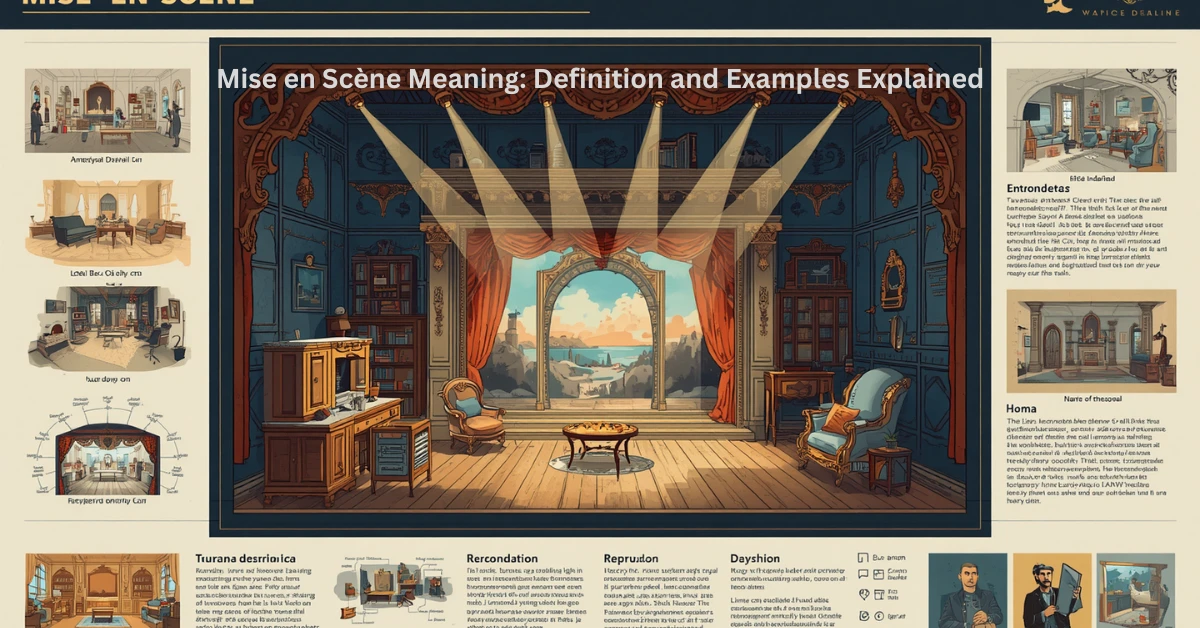
The Mise en scène’s meaning is a topic many people explore when studying film, theater, or visual storytelling. Borrowed from French, mise en scène literally means “placing on stage” and refers to everything the audience sees within a scene, including the setting, lighting, costumes, props, actor positioning, and overall visual composition. These elements work together to create mood, reveal character traits, and support the story being told. Understanding the meaning of mise en scène can deepen your appreciation of movies, plays, and other visual media by showing how directors use visual details to shape the audience’s experience. In this guide, you’ll learn what mise en scène means, its origins, key components, and why it is one of the most important concepts in film and theater studies.
Have you ever watched a movie scene and instantly understood the mood before a single word was spoken? Maybe the dim lighting made you feel uneasy, the costumes revealed a character’s personality, or the arrangement of objects hinted at an upcoming twist. This powerful visual storytelling technique is known as mise en scène.
Understanding the mise en scène’s meaning is essential for anyone interested in film studies, cinematography, theater, storytelling, or visual communication. More than just a fancy French phrase, mise en scène is the foundation of how directors shape what audiences see and feel. It influences emotions, builds atmosphere, reveals character traits, and helps communicate themes without relying solely on dialogue.
In this comprehensive guide, we’ll explore the meaning of mise en scène, its origins, key elements, practical applications, examples from famous films, common misconceptions, and tips for analyzing or creating effective visual storytelling. Whether you’re a student, filmmaker, movie enthusiast, or aspiring critic, this article will help you see films in an entirely new way.
Mise en Scène Meaning: Quick Answer
Mise en scène is a French term that means “placing on stage” or “putting into the scene.”
In film and theater, it refers to everything visible within the frame that contributes to storytelling.
Simple Definition
Mise en scène is the arrangement of visual elements in a scene, including setting, lighting, costumes, actors, and props, to create meaning and mood.
What Does Mise en Scène Mean?
At its core, mise en scène involves the director’s control over what the audience sees.
It includes all the elements placed before the camera to support the story.
Key Characteristics
- Visual storytelling
- Intentional composition
- Emotional influence
- Character development
- Thematic communication
- Atmospheric design
Rather than relying entirely on dialogue, filmmakers use mise en scène to show audiences what they need to understand.
Origin and History of Mise en Scène
French Origins
The phrase comes from French.
| French Term | English Meaning |
| Mise | Placement |
| En | In |
| Scène | Stage or Scene |
Combined, the phrase literally means:
“Putting into the scene.”
Early Use in Theater
Originally, the term described stage directors’ responsibilities, including:
- Actor placement
- Set arrangement
- Costume decisions
- Stage movement
Transition to Film
As cinema evolved, critics and filmmakers adopted the concept to analyze visual storytelling.
Today, mise en scène remains one of the most important concepts in film studies.
Why is Mise en Scène Important?
Great filmmakers don’t leave visual details to chance.
Every object, costume, and lighting choice can shape audience perception.
Benefits of Effective Mise en Scène
- Creates mood and atmosphere
- Reveals character personalities
- Reinforces themes
- Directs audience attention
- Builds realism or fantasy
- Enhances emotional impact
Without a strong mise en scène, even a well-written script can feel flat.
The Five Main Elements of Mise en Scène
Film scholars often divide mise en scène into several components.
1. Setting and Production Design
The setting refers to where the action takes place.
Includes
- Locations
- Architecture
- Furniture
- Background details
- Decorations
Example
A cluttered apartment might suggest:
- Financial struggles
- Emotional chaos
- Isolation
Meanwhile, a luxurious mansion could imply wealth and status.
2. Lighting
Lighting influences mood more than viewers often realize.
Types of Lighting
High-Key Lighting
Characteristics:
- Bright
- Minimal shadows
- Cheerful atmosphere
Common in:
- Romantic comedies
- Sitcoms
Low-Key Lighting
Characteristics:
- Strong contrast
- Deep shadows
- Mystery
Common in:
- Horror films
- Thrillers
- Film noir
Example
A villain emerging from darkness immediately creates tension.
3. Costume, Makeup, and Hairstyle
These elements communicate information before characters speak.
They Reveal
- Social status
- Personality
- Occupation
- Historical period
- Emotional condition
Example
A superhero’s costume symbolizes identity and power.
A disheveled appearance may indicate stress or hardship.
4. Props
Props are objects that actors interact with.
Examples
- Books
- Weapons
- Phones
- Jewelry
- Photographs
Why They Matter
Props often symbolize deeper meanings.
Example:
A broken watch may represent lost time or regret.
5. Blocking and Performance
Blocking refers to how actors move and position themselves.
Includes
- Body language
- Facial expressions
- Distance between characters
- Movement patterns
Example
Two characters standing far apart can visually suggest emotional distance.
Mise en Scène vs Cinematography
People frequently confuse these concepts.
Key Differences
| Aspect | Mise en Scène | Cinematography |
| Focus | What appears in the frame | How it is filmed |
| Includes | Sets, costumes, props | Camera angles, lenses |
| Controlled By | Directors and designers | Cinematographers |
| Purpose | Visual storytelling | Image capture |
Simple Explanation
- Mise en scène = The ingredients.
- Cinematography = How those ingredients are photographed.
Examples of Mise en Scène in Famous Films
1. Horror Films
Dark hallways.
Flickering lights.
Creaking doors.
These visual choices build fear.
2. Romantic Movies
Warm lighting.
Soft colors.
Elegant costumes.
These elements encourage emotional connection.
3. Science Fiction
Futuristic architecture.
Advanced technology.
Unique costumes.
These establish imaginative worlds.
4. Historical Dramas
Period-accurate clothing.
Authentic settings.
Traditional props.
These enhance realism.
How Directors Use Mise en Scène to Tell Stories
Skilled directors communicate without exposition.
They Use Visual Clues To:
- Reveal hidden motives.
- Establish relationships.
- Foreshadow events.
- Create suspense.
- Express themes.
Example
A character surrounded by mirrors might symbolize identity struggles.
Practical Applications of Mise en Scène
Understanding this concept extends beyond movie analysis.
Film Students
Learn visual storytelling techniques.
Aspiring Filmmakers
Improve scene composition.
Theater Directors
Strengthen stage productions.
Content Creators
Enhance video quality and engagement.
Critics and Reviewers
Analyze artistic choices more effectively.
Case Study: The Power of Visual Storytelling
Imagine two scenes featuring the same character.
Scene A
Bright sunlight.
Neat clothing.
Colorful surroundings.
Result:
The audience perceives optimism.
Scene B
Dim lighting.
Messy appearance.
Sparse environment.
Result:
The audience senses loneliness.
The dialogue remains unchanged.
Only the mise en scène shifts.
This demonstrates its enormous storytelling power.
Common Misconceptions About Mise en Scène
Myth 1: It’s Only About Sets
❌ False
✔ It includes costumes, lighting, props, and performances.
Myth 2: Viewers Don’t Notice It
❌ False
✔ Audiences subconsciously respond to visual cues constantly.
Myth 3: Only Big-Budget Films Use It
❌ False
✔ Independent films rely heavily on thoughtful mise en scène.
Myth 4: It Doesn’t Affect Emotion
❌ False
✔ Visual design strongly shapes audience feelings.
Myth 5: It Is the Same as Cinematography
❌ False
✔ They are related but distinct concepts.
How to Analyze Mise en Scène
Ask yourself these questions while watching a scene:
Setting
Where does it take place?
Lighting
Is it bright or shadowy?
Costumes
What do they reveal about characters?
Props
Do any objects carry symbolic meaning?
Blocking
How are actors positioned?
Color
What emotions do the colors suggest?
These observations can transform casual viewing into deeper analysis.
Related Concepts
If you’re studying mise en scène, these terms are also valuable.
- Cinematography
- Production design
- Visual symbolism
- Film theory
- Narrative structure
- Blocking
- Color theory
- Composition
- Screen direction
- Auteur theory
Together, these concepts provide a richer understanding of filmmaking.
FAQs
What is the simple meaning of mise en scène?
Mise en scène means the arrangement of everything visible within a scene to support storytelling.
Is mise en scène French?
Yes. The phrase comes from French and means “placing on stage.”
What are the main elements of mise en scène?
Setting, lighting, costumes, props, and actor blocking are considered the primary elements.
Why is mise en scène important?
It creates mood, reveals character, communicates themes, and enhances storytelling.
Is mise en scène the same as cinematography?
No. Mise en scène focuses on what appears in the frame, while cinematography focuses on how it is filmed.
Can mise en scène be used in theater?
Absolutely. The concept originated in theatrical productions before becoming central to film studies.
How can students analyze mise en scène?
By examining settings, lighting, costumes, props, actor positioning, and their contribution to meaning.
Conclusion:
Understanding the mise en scène’s meaning opens the door to a deeper appreciation of film and theater. What may appear to be simple background details are often carefully planned choices designed to influence emotion, reveal character, and reinforce themes.
Mise en scène is a fundamental concept in film and theater that encompasses all the visual elements within a scene. From lighting and costumes to set design and actor placement, each detail contributes to the mood, meaning, and emotional impact of a story. Understanding the meaning of mise en scène allows viewers to appreciate the artistry behind visual storytelling and recognize how directors guide audience perception through carefully crafted scenes. Ultimately, learning this concept enhances both critical analysis and enjoyment of films and theatrical productions.