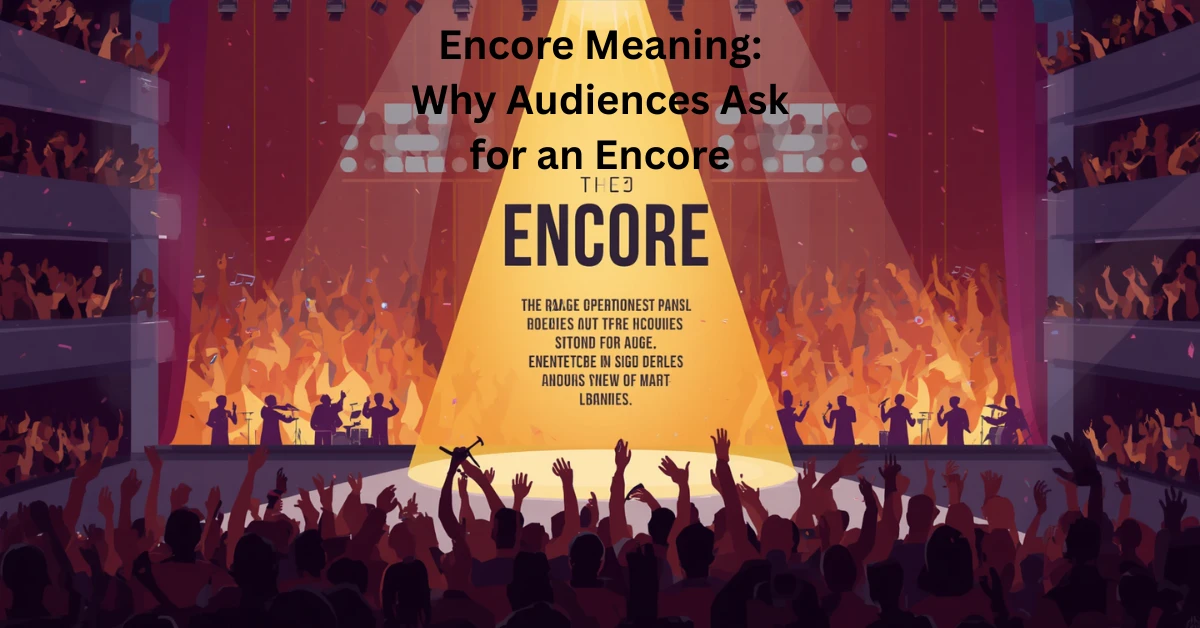
Encore meaning is a phrase many people search for after hearing it at concerts, talent shows, or in everyday conversations. If you’ve ever wondered what encore means, where it comes from, and how to use it correctly, you’re in the right place. Originally borrowed from French, the word encore is used when an audience enthusiastically requests an additional performance after a singer, musician, comedian, or performer has finished. Over time, its meaning has expanded beyond the stage and can also describe wanting “more” of something enjoyable. In this article, you’ll discover the exact encore meaning, its origin, examples of how it’s used in real life, and why this simple word continues to play an important role in entertainment and everyday language.
Have you ever attended a concert where the audience clapped, cheered, and refused to leave until the performers returned to the stage? That exciting moment is often called an encore. Whether you’re a music lover, theater enthusiast, student, or English learner, understanding the encore meaning can help you appreciate an important tradition in live entertainment and everyday language.
The word encore is commonly associated with concerts, theatrical performances, comedy shows, and public appearances. However, its meaning extends beyond the stage. Today, people use the term metaphorically to describe a repeat success, an additional performance, or a highly anticipated return.
In this comprehensive guide, we’ll explore the meaning of encore, its history, origin, pronunciation, examples, practical uses, common misconceptions, and why it remains a beloved tradition around the world.
Encore Meaning: Quick Answer
Encore is a French word that means “again” or “one more time.”
In entertainment, an encore refers to:
An additional performance given by performers after the scheduled program has ended, usually because the audience enthusiastically requests it.
Simple Definition
An encore is a bonus performance presented after a concert, play, or show due to audience demand.
What Does Encore Mean in English?
In English, encore functions as both:
- A noun
- An exclamation
As a Noun
An encore is an extra performance.
Example:
“The singer returned for an encore after the crowd’s applause.”
As an Exclamation
Audience members may shout:
“Encore!”
to request another song or performance.
How to Pronounce Encore
Many people are unsure about the pronunciation.
Pronunciation
Encore
/ˈɑːn.kɔːr/
Sounds Like
“On-core”
Origin and History of Encore
The history of Encore reveals how audience participation shaped live entertainment.
French Roots
The word comes directly from French.
| Word | Meaning |
| Encore | Again |
| Encore! | Again! One more time! |
French audiences traditionally shouted “Encore!” when they wanted performers to continue.
Arrival in English
The term entered English during the 18th century.
As opera, theater, and classical music became popular, audiences adopted the practice of demanding additional performances.
Over time, encore became a standard entertainment term worldwide.
Why Do Audiences Ask for an Encore?
An encore is a sign of appreciation.
Common Reasons
- Exceptional performance
- Emotional connection
- Popular songs
- Audience excitement
- Desire for more entertainment
When audiences refuse to stop applauding, performers often respond with an additional appearance.
Types of Encores
Not all encores are the same.
1. Musical Encore
The most common type.
Occurs after:
- Concerts
- Music festivals
- Orchestra performances
Example:
A band returns to perform its biggest hit.
2. Theater Encore
Sometimes actors return to acknowledge applause.
This is common in:
- Broadway productions
- Stage plays
- Musicals
3. Comedy Encore
Comedians may return to tell additional jokes or thank the audience.
4. Dance Encore
Ballet and dance companies occasionally repeat a popular performance segment.
How an Encore Typically Happens
Most encores follow a familiar pattern.
Step 1
The scheduled show ends.
Step 2
Performers leave the stage.
Step 3
The audience applauds enthusiastically.
Step 4
Crowds chant:
- Encore!
- One more song!
- More!
Step 5
Performers return for an additional performance.
Are Encores Always Spontaneous?
Many people believe encores are completely unexpected.
The reality is more interesting.
Historically
Encores were often genuine audience requests.
Today
Many artists plan an encore in advance.
Reasons include:
- Audience expectations
- Show structure
- Marketing strategy
- Fan engagement
Even when planned, the encore remains exciting.
Famous Encore Moments
Throughout entertainment history, legendary encores have become memorable highlights.
Rock Concerts
Many iconic bands save their most popular songs for the encore.
Classical Music
Orchestras may perform a short bonus piece after standing ovations.
Pop Music
Artists often conclude encores with chart-topping hits.
Encore in Everyday Language
Encore isn’t limited to entertainment.
People often use it figuratively.
Example 1
“He launched a successful company and followed it with an encore business venture.”
Meaning:
A second major success.
Example 2
“The athlete delivered an encore performance next season.”
Meaning:
Repeated excellence.
Encore vs Repeat
These terms are related but different.
| Word | Meaning |
| Encore | Additional performance due to audience demand |
| Repeat | Any repetition |
| Replay | Playing again |
| Return | Coming back |
Key Difference
An encore usually implies enthusiasm, appreciation, and audience involvement.
Benefits of an Encore
Why do performers continue this tradition?
Audiences
- More entertainment
- Emotional satisfaction
- Memorable experience
Performers
- Stronger fan connection
- Positive audience engagement
- Increased excitement
Events
- Better reputation
- Greater audience satisfaction
- Stronger word-of-mouth marketing
Encore in Different Industries
The concept appears outside entertainment.
Business
A successful follow-up product may be called an encore.
Sports
An athlete repeating success may deliver an encore season.
Education
A speaker invited back for another presentation could be described as giving an encore performance.
Media
Television and streaming services sometimes use “encore presentation” for reruns.
Common Misconceptions About Encore
Myth 1: Every Show Has an Encore
❌ False
Some performances end without one.
Myth 2: Encores Are Always Unplanned
❌ False
Many are scheduled beforehand.
Myth 3: Encore Only Applies to Music
❌ False
It can apply to theater, comedy, dance, sports, and everyday achievements.
Myth 4: Encore Means Replay
❌ False
An encore is usually a live additional performance.
Myth 5: Only Famous Artists Perform Encores
❌ False
Artists at every level may perform encores.
Real-Life Example of an Encore
Imagine attending a concert.
The singer finishes the final song and leaves the stage.
The crowd erupts with applause.
Fans begin chanting:
“Encore! Encore!”
After several minutes, the artist returns and performs two additional songs.
Those extra songs are the encore.
For many fans, this becomes the most memorable part of the night.
Related Words and Concepts
Understanding encore becomes easier when you know similar terms.
Related Vocabulary
- Standing ovation
- Curtain call
- Performance
- Applause
- Show finale
- Live entertainment
- Audience engagement
- Repeat performance
These concepts often appear together in entertainment discussions.
Why Encore Remains Popular Today
Despite changing technology and entertainment trends, encores remain relevant.
Reasons for Continued Popularity
- Creates excitement
- Rewards loyal fans
- Builds emotional connection
- Makes events memorable
- Encourages audience participation
The tradition transforms spectators into active participants.
FAQs
What is the meaning of encore?
An encore is an additional performance given after a show because the audience requests more.
Is encore a French word?
Yes. Encore comes from French and means “again” or “one more time.”
Why do people shout encore?
They are asking performers to return and continue performing.
Are encores planned?
Sometimes. Many modern performers schedule encores as part of their show.
Can encore be used outside of music?
Yes. It can describe repeated success in business, sports, education, and other areas.
What is the difference between an encore and a curtain call?
A curtain call is when performers return to acknowledge applause. An encore involves an additional performance.
Is an encore always the last part of a show?
Usually, yes. It typically occurs after the main performance has officially ended.
Conclusion:
Understanding the encore meaning helps explain one of the most beloved traditions in live entertainment. Originating from the French word for “again,” an encore is an extra performance requested by an enthusiastic audience. It symbolizes appreciation, excitement, and the special connection between performers and spectators.
Understanding the encore meaning helps you appreciate a word that carries excitement, admiration, and the desire for more. Whether shouted by enthusiastic fans at a concert or used casually to express wanting another enjoyable experience, an encore represents appreciation for something truly memorable. Knowing its origin, pronunciation, and correct usage can help you use the term confidently in both conversations and writing. The next time you hear someone call out “Encore!”, you’ll understand that it’s more than just a word—it’s a heartfelt request for one more unforgettable moment.