The color of mucus meaning is a common topic people search when they notice that mucus looks different from usual. Mucus can appear clear, white, yellow, green, or other shades, and changes in color may happen for several reasons. While mucus color alone cannot always tell you what is causing a symptom, understanding what different colors may indicate can help you make sense of common changes. In this article, you’ll learn the color of mucus meaning, what different mucus colors can suggest, and when a change may be worth discussing with a healthcare professional.
Have you ever blown your nose and noticed that your mucus has changed color? You might see clear, white, yellow, green, or even pink mucus and immediately wonder whether it means you are sick. The color of mucus meaning can sometimes provide clues about what is happening in your nose or respiratory system, but mucus color alone does not always tell the whole story.
Mucus is a normal and useful substance produced by the body. It helps trap dust, allergens, germs, and other particles before they travel deeper into the respiratory system. When you have a cold, allergies, irritation, or another respiratory problem, the amount and appearance of mucus can change.
In this guide, we’ll explain what different mucus colors may mean, why mucus changes color, what other symptoms matter, common misconceptions, and when it may be a good idea to seek medical advice.
What Is Mucus?
Mucus is a slippery substance produced by mucous membranes throughout the body. It is found in areas such as:
- The nose
- Sinuses
- Throat
- Lungs
- Mouth
- Digestive tract
In the respiratory system, mucus helps keep tissues moist and traps unwanted particles.
Tiny structures called cilia help move mucus through the respiratory tract so that trapped particles can be removed.
Why Does the Body Produce Mucus?
Mucus can help:
- Keep nasal passages moist
- Trap dust and pollutants
- Catch allergens
- Remove microorganisms and debris
- Protect sensitive tissues
So, having mucus is normal. The concern usually comes when its amount, thickness, color, or other symptoms change.
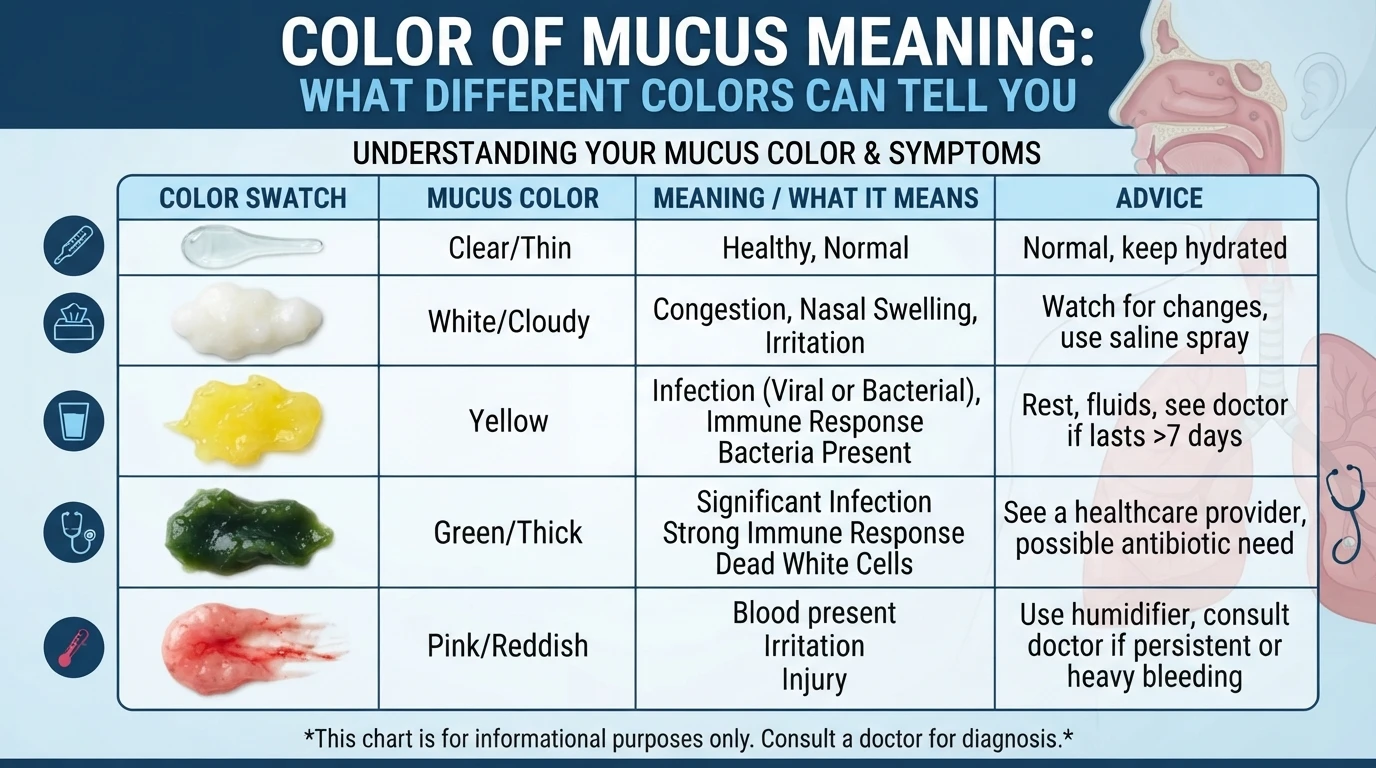
Color of Mucus Meaning: Quick Guide
The following table provides a general overview.
| Mucus Color | Possible Meaning |
| Clear | Normal mucus, allergies, or early irritation |
| White | Congestion or inflammation |
| Yellow | Immune response or respiratory infection |
| Green | Increased immune activity; not automatically bacterial |
| Pink | Small amount of blood mixed with mucus |
| Red | More noticeable blood |
| Brown | Old blood, dust, smoke, or debris |
| Black | Heavy environmental exposure or, rarely, certain medical conditions |
These colors are clues rather than diagnoses. Other symptoms and the length of time they last are often more important than color alone.
Clear Mucus Meaning
Clear mucus is usually considered normal.
Healthy nasal mucus is often:
- Thin
- Clear
- Slightly watery
You may notice more clear mucus when you:
- Have seasonal allergies
- Are exposed to irritants
- Have a runny nose
- Are in cold or dry air
Example
If your nose is running with clear mucus while you are around pollen, allergies may be contributing to the symptoms.
Clear mucus does not necessarily mean that everything is perfectly normal, however. A person can have a viral infection while producing clear mucus, especially early in the illness.
White Mucus Meaning
White mucus can occur when nasal passages become congested or inflamed.
It may appear:
- Thick
- Cloudy
- Cream-colored
A cold can cause mucus to become thicker as nasal tissues swell.
What Does White Mucus Usually Indicate?
It can be associated with:
- Nasal congestion
- A common cold
- Dehydration
- Irritation
- Inflammation
White mucus by itself usually cannot tell you exactly what is causing your symptoms.
Yellow Mucus Meaning
Yellow mucus can appear when the immune system is responding to an infection or inflammation.
The yellow color can result partly from immune cells and other cellular material mixing with mucus.
Does Yellow Mucus Mean a Bacterial Infection?
Not necessarily.
This is one of the most common misconceptions about mucus.
Both viral and bacterial infections can cause yellow mucus. Therefore, mucus color alone cannot reliably determine whether antibiotics are needed.
Example
Someone with a common cold may develop yellow mucus after several days. If the person is otherwise improving, the color change does not automatically mean the illness has become bacterial.
Green Mucus Meaning
Green mucus is often associated with an active immune response.
The green appearance can be influenced by substances released by immune cells during inflammation.
Does Green Mucus Mean You Need Antibiotics?
No.
Green mucus does not automatically mean you have a bacterial infection.
A viral cold can also produce green mucus.
Doctors generally consider the entire picture, including:
- How long symptoms have lasted
- Whether symptoms are improving
- Fever
- Facial pain
- Breathing problems
- Other signs of illness
Pink Mucus Meaning
Pink mucus can occur when a small amount of blood mixes with nasal mucus.
This can happen when the delicate blood vessels inside the nose become irritated.
Possible causes include:
- Frequent nose blowing
- Dry air
- Nose picking
- Minor irritation
- Allergies
- Nasal congestion
A small, occasional amount of pink mucus is often related to minor irritation.
However, repeated or unexplained bleeding should be discussed with a healthcare professional.
Red Mucus Meaning
Red mucus usually indicates a more noticeable amount of blood.
Possible causes can include:
- Nosebleeds
- Nasal irritation
- Injury
- Dry nasal passages
- Frequent or forceful nose blowing
If you see a large amount of blood, have repeated bleeding, or have other concerning symptoms, medical evaluation may be appropriate.
Brown Mucus Meaning
Brown mucus may contain old blood, dust, smoke particles, or other debris.
For example, someone exposed to significant amounts of dust may notice darker mucus afterward.
Brown mucus can also appear after a nosebleed when older blood mixes with mucus.
If brown mucus continues for a long time without an obvious explanation, consider discussing it with a healthcare professional.
Black Mucus Meaning
Black mucus is less common.
It can sometimes result from inhaling:
- Dirt
- Dust
- Smoke
- Other dark particles
In some circumstances, particularly in people with weakened immune systems, black nasal or respiratory material can be associated with serious infections. This is uncommon, but persistent or unexplained black mucus deserves medical attention.
Why Does Mucus Change Color?
Mucus can change appearance because of several factors.
1. Immune Cells
When your body responds to an infection or inflammation, immune cells and cellular debris can mix with mucus.
2. Blood
Small amounts of blood can turn mucus pink, red, or brown.
3. Environmental Particles
Dust, smoke, pollution, and other particles can change mucus color.
4. Dehydration
When you are dehydrated, mucus may become thicker and appear more cloudy or concentrated.
5. Inflammation
Swelling and inflammation in the nasal passages can change how mucus looks and feels.
Mucus Color vs. Other Symptoms
Color is only one part of the picture.
For example:
Green mucus + improving symptoms
may be less concerning than:
Green mucus + worsening symptoms + severe facial pain + persistent fever.
Other factors can be more useful when determining what may be happening.
Pay Attention To:
- How long symptoms have lasted
- Whether symptoms are improving or worsening
- Fever
- Facial pressure
- Cough
- Shortness of breath
- Chest pain
- Severe headache
- Blood
- Dehydration
When Should You Contact a Doctor?
Mucus color alone usually isn’t enough to determine whether medical care is needed.
Consider seeking medical advice if you experience:
- Difficulty breathing
- Chest pain
- Significant or repeated bleeding
- Severe facial pain or swelling
- A high or persistent fever
- Symptoms that are getting significantly worse
- Symptoms that persist longer than expected
- Persistent black mucus without an obvious environmental explanation
People with certain underlying health conditions may need medical advice sooner.
Common Misconceptions About Mucus Color
Myth 1: Green Mucus Always Means Bacteria
False.
Viral infections can also cause green mucus.
Myth 2: Clear Mucus Means You Are Definitely Healthy
False.
Clear mucus can occur with allergies, irritation, and viral infections.
Myth 3: Yellow Mucus Means You Need Antibiotics
False.
Antibiotics treat certain bacterial infections, not viruses, and mucus color alone cannot determine whether antibiotics are appropriate.
Myth 4: Dark Mucus Always Means Something Serious
False.
Brown or dark mucus can result from old blood, dust, or smoke. However, unexplained persistent black mucus should be evaluated.
Myth 5: You Should Judge an Illness Only by Mucus Color
False.
The duration, severity, and combination of symptoms are important.
How to Keep Nasal Mucus Healthy
You can support normal nasal function by:
Stay Hydrated
Drinking enough fluids can help prevent mucus from becoming excessively thick.
Use Humidified Air
A humidifier may help when dry air irritates your nasal passages.
Avoid Smoke
Smoke can irritate the respiratory system and increase mucus production.
Practice Good Hygiene
Regular handwashing can reduce exposure to respiratory viruses.
Avoid Excessive Nose Blowing
Forceful or frequent nose blowing can irritate delicate blood vessels and cause bleeding.
A Simple Example
Imagine someone develops a runny nose.
Day 1
The mucus is clear and watery.
Day 3
The mucus becomes thicker and white.
Day 5
It becomes yellow or green.
This progression can happen during an ordinary viral respiratory infection. The color change does not automatically mean the infection has become bacterial.
If the person is gradually feeling better, the color alone is generally not a reason to assume they need antibiotics.
FAQs
What does mucus color mean?
Mucus color can provide clues about irritation, inflammation, infection, blood, or environmental exposure, but it cannot diagnose a condition by itself.
What does clear mucus mean?
Clear mucus is often normal and can also occur with allergies, irritation, or the early stages of a respiratory infection.
Does green mucus mean a bacterial infection?
No. Green mucus can occur with both viral and bacterial infections.
What does yellow mucus mean?
Yellow mucus can occur when the immune system is responding to inflammation or infection. It does not automatically mean that antibiotics are necessary.
Why is my mucus brown?
Brown mucus may contain old blood, dust, smoke particles, or other debris.
Is black mucus dangerous?
Black mucus can sometimes come from environmental particles such as dust or smoke, but persistent or unexplained black mucus should be medically evaluated.
When should I worry about mucus?
Seek medical advice for symptoms such as difficulty breathing, chest pain, significant bleeding, severe facial pain, persistent high fever, worsening symptoms, or unexplained persistent dark mucus.
Conclusion:
Understanding the Color of mucus meaning can help you notice changes in your body, but mucus color should not be treated as a diagnosis. Clear, white, yellow, and green mucus can all occur during ordinary respiratory conditions, while pink, red, brown, or black mucus may have different explanations involving blood, irritation, or environmental exposure.
The most important thing is to consider the whole picture. Pay attention to how long your symptoms last, whether they are improving or getting worse, and whether you have other symptoms such as fever, breathing difficulty, severe pain, or significant bleeding.
Instead of assuming that green or yellow mucus automatically means a bacterial infection, use mucus color as just one piece of information. If symptoms are severe, persistent, worsening, or unusual, getting professional medical advice is the safest approach.